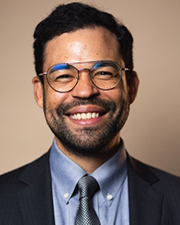



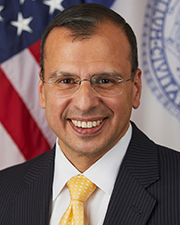
Manhattan, NY The Mayor’s Office of Climate & Environmental Justice (MOCEJ) executive director Elijah Hutchinson, chief climate officer Rohit Aggarwala, and partner agencies listed key accomplishments during the Adams administration landmarking progress toward a safer, cleaner, and more resilient New York City.
In addition to key accomplishments, MOCEJ also collaborated with city agencies — and states and cities across the country—to preserve regulations that protect vulnerable communities and fight to keep funding for projects and services that make New York City a safer, healthier place to live. To this end, MOCEJ testified about the importance of the Federal Emergency Management Agency’s Building Resilient Infrastructure and Communities projects to our city’s resiliency, submitted declarations and fought for U.S. Environmental Protection Agency’s environmental justice funding, and challenged the U.S. Department of Energy’s recission of important rules that protect communities.
As the first climate office in city history to have environmental justice in its name, effectuated under this Administration through Executive Order 4 of 2022, MOCEJ oversees the Mayor’s Office of Urban Agriculture, the New York City Office of the Utility Consumer Advocate, the Mayor’s Office of Environmental Remediation, and the Mayor’s Office of Environmental Coordination.
“We took office with a simple promise: to ‘Get Stuff Done,’ and, four years later, our administration can say that we delivered on that promise every day for working-class New Yorkers,” said mayor Eric Adams. “We drove shootings to record lows and pushed jobs and small businesses to record highs. We rewrote the playbook on homelessness and mental health to finally get New Yorkers living on our streets the help they need, and, after decades of half-measures, passed historic housing legislation to turn New York into a ‘City of Yes.’ We overhauled the way our students learn to read and do math, cut the cost of child care, and forgave medical debt. We eliminated taxes for low-income families, launched free universal after-school programming, and advanced PlaNYC goals, completing or advancing nearly 95% of initiatives through expanded organics collection, electric rides, and broad climate education at New York City public schools. We got scaffolding off our buildings, trash bags off our streets, and opened up new public spaces for New Yorkers to enjoy. The haters may have doubted us, but the results are clear. On issue after issue, we brought common-sense leadership to create a safer, more affordable city, and our work has changed our city for the better; it will stand the test of time because we made New York City the best place to live and raise a family.”
“Throughout this administration, we’ve faced extraordinary challenges, yet we still delivered real, measurable progress: a 10% cut in city government greenhouse gas emissions bringing us to over 30% since tracking began in 2005, outpacing the private sector two to one; a 94% Local Law 97 engagement rate; and an almost 95% of PlaNYC initiatives completed or on track,” said Hutchinson. “What gives me hope is the city we’re building: from meeting over 70% of our solar goals and opening more than 20 resilient playgrounds citywide to introducing climate education in schools, expanding composting to every resident, building record miles of bike lanes and coastal protections, investing in parks and tree planting, and electrifying transportation. We are building the green economy of the future, all while focused on making New York City an easier place to live, in thriving and health communities.”
“We faced record heat, flooding, drought, smoke, and the most difficult city budget environment in ages and still made New York safer and stronger. This administration turned climate risks into climate resilience, especially for the New Yorkers who need it most,” said Aggarwala. “In just four years, we modernized the city’s energy, transportation, and resilience systems. These achievements aren’t abstract goals: they’re real protections for millions of New Yorkers.”
Delivering on PlaNYC: Getting Sustainability Done for New Yorkers
During this administration, nearly 95% of PlaNYC initiatives — such as efforts to strengthen climate resilience, expand clean energy, and improve public spaces — have been completed or are on track, helping protect New Yorkers from climate threats, enhance quality of life, and grow the green economy. The New York City Department of Sanitation (DSNY) rolled out the nation’s largest citywide curbside organics collection program, while the Department of Environmental Protection (DEP) completed three bluebelt projects on Staten Island and delivered the first cloudburst project at the South Jamaica Houses, capable of holding 330,000 gallons of stormwater to reduce flash-flood risks at NYCHA sites. DEP also established its new Bureau of Coastal Resilience to lead the city’s coastal protection efforts. The Department of Transportation (DOT) and Metropolitan Transportation Authority advanced congestion pricing with environmental justice measures, and the Taxi and Limousine Commission’s (TLC) Green Rides Initiative has completed nearly 2.5 million electric ride-hail trips, supported by DOT’s installation of EV charging infrastructure that will put 95% of New Yorkers within 2.5 miles of a fast-charging hub by the end of 2025. DOT added 29.3 miles of protected bike lanes in 2024 — one of the highest annual totals ever — and has built a record 87.5 miles during the administration while identifying a vendor to install 500 secure bike-parking structures citywide. New York City Public Schools trained more than 1,000 teachers in climate education and launched annual Climate Action Days with participation from over 1,000 schools. NYC Parks made major investments in pools and swim-safety programs in underserved communities — the largest in decades — and MOCEJ, along with agency partners, advanced large-scale renewable energy projects that will bring hydro and wind power directly into the city’s grid.
Using Science, Data, and Budgeting to Detect and Assess Climate Change Problems
MOCEJ published the 2024 Citywide and City Government Greenhouse Gas (GHG) Inventories, showing that the Adams administration reduced GHG emissions at a faster rate than any previous administration. City government has led by example and reduced GHG emissions 10% since the start of the administration (31% reduction since 2006 baseline) while citywide emissions have also reduced by 7% (25% reduction since 2005 baseline). The inventory demonstrates that since 2022, electric vehicle use in the city has more than doubled and pollution from dirty building fuels has dropped sharply, improving the air New Yorkers breathe. New Yorkers are also sending more of their food and yard waste to composting and anaerobic digestion, helping reduce waste and protect the environment. In 2024, MOCEJ released the New York City Panel on Climate Change’s (NPCC) fourth climate assessment, confirming that New York City will face warmer temperatures, more extreme heat, and greater risks from intense rainfall and inland flooding. The office also installed over 300 FloodNet sensors providing real-time street-level flood data, introduced the city’s first climate budgeting with OMB, and incorporated food-related emissions into the city’s GHG inventory.
Planning for the Future
During this administration, MOCEJ released “PlaNYC: Getting Sustainability Done,” and PowerUp NYC, long-term plans that guide the city’s sustainability and clean-energy goals. MOCEJ also published the Environmental Justice NYC (EJNYC) Report, the city’s first comprehensive study on environmental inequality and the EJNYC Mapping Tool, a free public resource that analyzes neighborhood-scale environmental threats. In 2025 the first phase of the city’s first Urban Forest Plan was kicked off with NYC Parks, City Parks Foundation, and other stakeholders, which will chart out a path to equitably expand the city’s tree canopy to 30% to keep New Yorkers safer from extreme heat and flooding, beautify streets and clean the air. Through Climate Strong Communities, a first-of-its-kind resilience program for at-risk environmental justice neighborhoods, MOCEJ has worked with more than 15 neighborhoods citywide and secured over $10 million for projects that reduce flooding and heat risks and expand local green space. MOCEJ also released the Renewable Rikers Feasibility Study Report, and reconvened the Rikers Island Advisory Committee to advance recommendations on the future of Rikers Island. Working with New York City Economic Development Corp. (NYC EDC) and DOT, MOCEJ supported developing the Blue Highways Action Plan, to shift large-scale freight from trucks onto the city’s waterways, thereby reducing road congestion, emissions, and infrastructure wear. The Blue Highways Pilot Program launched in December 2025. Finally, MOCEJ released the Green Economy Action Plan, in partnership with NYC EDC, estimating 400,000 ‘green-collar’ jobs in New York City by 2040.
Protecting New Yorkers
MOCEJ launched the city’s first voluntary Resilient Acquisitions program, allowing New Yorkers to sell high-flood-risk homes and relocate, and advanced 12 miles of coastal resilience infrastructure through construction, with 14 more miles in planning, protecting over 300,000 residents in partnership with DEP, NYC Parks, DOT, NYC EDC, Department of Design and Construction, Battery Park City Authority, and U.S. Army Corps of Engineers. The office also introduced Rainproof NYC, releasing recommendations to address heavy rain challenges, piloted Climate Resiliency Design Guidelines on 38 municipal capital projects to mitigate risks from heat, stormwater, and flooding, and launched pop-up cooling stations in Queens and The Bronx to help residents during extreme heat events. In addition, MOCEJ partnered with the Trust for Public Land to open 25 climate-resilient school playgrounds, which capture rainwater and expand community access to green spaces.
Mobilizing Government, Industry, and Building Owners on Local Law 97
MOCEJ launched “Getting 97 Done,” a comprehensive plan to reduce carbon emissions from the city’s largest buildings under Local Law 97, and supported implementation through the NYC Accelerator program, which has assisted over 32,000 buildings and helped start more than 35,000 retrofit projects to make buildings healthier and safer. The office also facilitated 94% Local Law 97 reporting compliance for 2025 with DOB and HPD, created the GreenHOUSE Fund to allow building owners to purchase offsets that fund decarbonization in affordable housing, and adopted NYSERDA guidance on C-PACE financing, enabling electrification projects that have already supported a record-setting $156 million loan for two film production facilities in Brooklyn.
Advancing Clean Energy and Making Buildings Healthy and Comfortable
During the Adams administration, MOCEJ facilitated large-scale renewable energy projects like Champlain Hudson Power Express and Empire Wind, completed 200 solar installations on municipal properties totaling over 32 MW (with more than 80% on public schools) through the leadership of DCAS and City agencies, and helped implement Clean Construction Executive Order 23, embedding low-carbon cement specifications into city construction contracts. The office also partnered with NYC EDC to select the initial design and development teams for the NYC Mass Timber Studio, supporting sustainable mass timber projects, six of which are located in environmental justice neighborhoods. Participation in the NYC Carbon Challenge grew to 104 organizations, achieving a 32% reduction in carbon emissions per square foot — equivalent to removing roughly 220,000 gasoline-powered vehicles from the road annually. Additionally, MOCEJ launched the North American Electric Construction Coalition to expand electric construction equipment and reduce pollution, while the NYCHA Clean Heat For All Challenge installed 120 heat pumps, with over 12,000 more planned, which will cut costs and emissions across public housing.
Electrifying Transit
Launched the Electric School Bus Task Force, which resulted in NYC school bus vendors being awarded $174 million for 533 electric school buses. To date, there are 70 electric school buses on the road, and vendors actively working to deploy additional electric buses as soon as possible. Achieved a 95% rate of New Yorkers who now live no more than 2.5 miles from an electric vehicle fast charger, nearing the 100% goal targeted for 2035. In partnership with City Council, developed legislation (Local Law 55 of 2024) requiring parking garages and lots to install EV chargers at 20% of spaces by 2035. With NYC EDC, unveiled proposals for a freight-focused charging hub at Hunts Point Food Distribution Center.
Supporting Innovation, Small Businesses, and Workforce
During this administration, MOCEJ and NYC EDC established BATWorks at the Brooklyn Army Terminal, a 200,000-square-foot climate innovation hub designed to support 150 startups, create roughly 600 jobs, and generate an estimated $2.6 billion in economic impact over ten years. The City also relaunched the Business Preparedness and Resiliency Program (BPREP), helping small business owners identify vulnerabilities, take practical preparedness steps, and access grants for resiliency measures, serving 145 tenants and reimbursing 90 grantees for approximately $420,000 since 2024. MOCEJ supported the launch of key workforce and climate-focused centers, including the Bronx Green Jobs Center, The New York Climate Exchange, The Workforce Development Hub at Hunts Point Food Distribution Center, Urbantech Hub at Newlab, and Harbor Climate Collective. In addition, following commitments made in the Green Economy Action Plan, the new Mayor’s Office of Talent and Workforce Development was established with a green job focus.
Delivering Climate and Affordability focused Legislation and Utility Advocacy
During the Adams administration, MOCEJ advocated for the “City of Yes for Carbon Neutrality and Housing Opportunity,” expanding opportunities for solar installations, energy storage, and establishing flood-prone areas where Accessory Dwelling Units (ADUs) are prohibited. The office also championed key city and state legislation to make New York City more equitable, affordable, and safe, including the J-51 tax abatement, Green Roof Tax Abatement, and Industrial & Commercial Abatement Program Extender, and partnered with the City Council to pass Local Law 149 of 2025, a new framework that will enable New Yorkers to understand the comprehensive long-term vison for the city’s climate future every four years. Additionally, MOCEJ is currently advancing landmark indirect source rule and maximum indoor air temperature policies, and has engaged in multiple utility rate cases to protect energy affordability, reliability, equity, and the city’s clean energy transition.
Advancing Urban Agriculture through the Office of Urban Agriculture
During this administration, the Mayor’s Office of Urban Agriculture released New York City’s first-ever urban agriculture plan and completed a successful two-year pilot of the Reimagining Farm to School in NYC program, engaging public school children in hands-on agriculture education, refurbishing existing school gardens, and building new ones with support from USDA and New York State Farm to School grants. The office also convened the city’s first school food procurement training for small food and farm businesses as part of the NYC School Food EATS program, launched the Urban Agrivoltaics Rooftop Pilot to explore co-locating crops and solar panels, and began revitalizing the fallow orchard at Adlai Stevenson High School in the Bronx to advance local food sovereignty. In addition, the Office of Urban Agriculture introduced the Urban Agriculture Explorer Data Hub, the city’s first tool to track urban food production, wellness, commercial activity, and climate mitigation across school gardens, urban farms, community gardens, and underutilized city-owned land.
Cleaning Land for Affordable Housing Units, Schools and Community Space through the Office of Environmental Remediation
The Office of Environmental Remediation reached 1,100 cleanups in its 16 years overseeing cleanups citywide, the most cleanups of any municipal program in the country. These efforts have transformed 195 acres of contaminated land into new uses, including 35,000 housing units — 14,900 of them affordable — 20 new schools, 3.4 million s/f of community space, and 7 million square feet of commercial space, creating a healthier, more vibrant, and socially resilient city.
Supporting Housing and Climate Infrastructure through the Office of Environmental Coordination
During this administration, led environmental impact reviews for key Adams administration legacy projects, including South Brooklyn Marine Terminal, Willets Point Phase II, Kingsbridge Armory, Red Hook Resiliency Project, and Hunts Point Produce Market, while supporting reviews for agency-led initiatives such as City of Yes, Long Island City Rezoning, Fulton Elliot Chelsea Houses, and numerous School Construction Authority and Department of Homeless Services projects. The office also adopted Green Fast Track rules to exempt small-scale, low-impact residential projects from environmental review, updated capital green building rules (Local Law 51 of 2023) to expand compliance across city infrastructure, and implemented state law amendments requiring analysis of disproportionate impacts on disadvantaged communities. In addition, the office developed a pilot for an upgraded interagency City Environmental Quality Review (CEQR) View project management database to improve coordination and tracking.


 (2).gif)