



News:
Brokerage
Posted: September 18, 2018
NKF Capital Markets secures $60 million for 325 Lafayette recapitalization for Slate Property Group through JP Morgan Asset Mgmt.
Brooklyn, NY NKF Capital Markets arranged a $60 million loan on behalf of Slate Property Group, secured through JP Morgan Asset Management, for the recapitalization of 325 Lafayette Ave. The team was led by NKF Capital Markets’ vice chairmen and co-heads, debt & structured finance, Dustin Stolly and Jordan Roeschlaub, along with senior managing director Daniel Fromm. The financing will be used for the recapitalization of the class-A apartment development expected for substantial completion in the fall.
Located in the Clinton Hill neighborhood, the eight-story property will comprise 116 apartment units, with 40 parking spaces and 16,943 s/f of street level retail space pre-leased to Key Food and Starbucks.
325 Lafayette Avenue will offer condo-quality finishes and a premier amenity package featuring a fully-equipped rooftop, state-of-the-art fitness center and resident’s media and gaming lounge.
“325 Lafayette’s comprehensive, modern amenity package, as well as excellent transit access enabled lenders to underwrite an accelerated lease-up program,” said Stolly. “This maximized loan proceeds before completion and facilitated the swift launch of this project.”
“The pre-leased commitment of Key Food and Starbucks further speaks to the premier location in the heart of the rapidly transforming Clinton Hill neighborhood,” said Roeschlaub.
NKF Capital Markets, operated by Newmark Group, Inc., is one of the world’s leading commercial real estate advisory firms. Together with London-based partner Knight Frank and independently-owned offices, our 16,000 professionals operate from 430 offices in established and emerging property markets on six continents.
Tags:
Brokerage
MORE FROM Brokerage
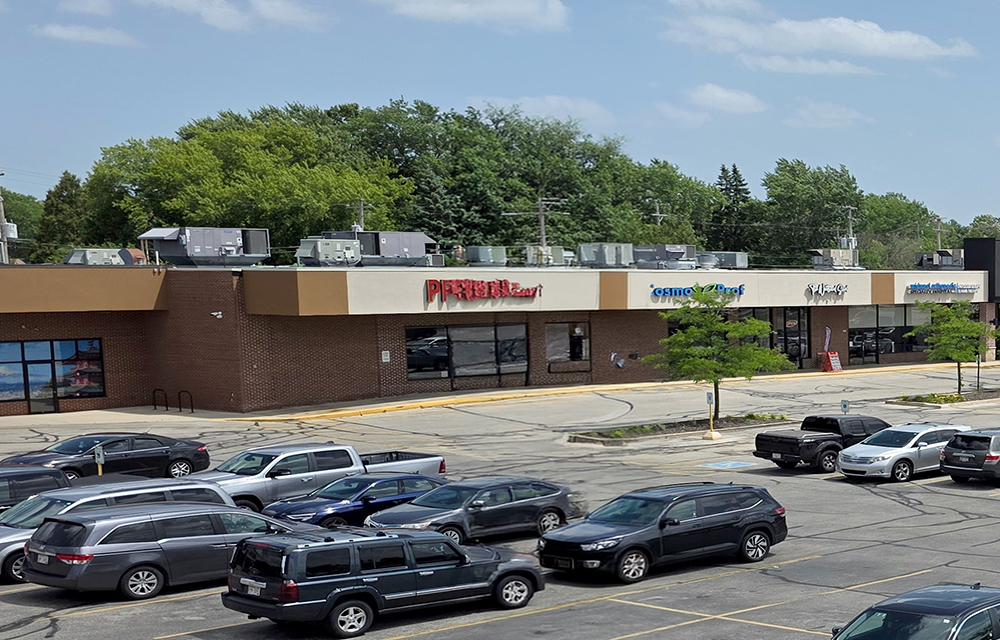
United Properties Corp. expands Wisconsin and Illinois retail presence adding 200,000 s/f
West Allis, WI United Properties Corp. completed two retail acquisitions totaling $27.4 million across Illinois and Wisconsin, adding 205,000 s/f of shopping center space to its portfolio






Columns and Thought Leadership

Positive forecast for New York’s pro-housing push? - by Philip Butler
New York’s housing crisis remains a hot button topic despite growing consensus that varied and affordable housing is desperately needed statewide. Governor Hochul has recently introduced several initiatives to overcome N.Y.’s anti-housing

Hunt commercial real estate question and answer: Fortune 500 wisdom - by David Hunt
Yes, there are lessons to be learned from the largest companies in America when comes to managing your real estate. But the decision to buy or lease real estate may not be one of

A guide to finding the right NYC property management company - by Sanjay Gandhi
Being a small to midsize landlord in NYC is an increasingly demanding endeavor. From navigating complex regulations, increased compliance demands to dealing with tenant issues and remediating violations. It is wise to enlist the assistance of a partner, a professional

New York’s streets are full again, and the retail numbers prove it - by Noam Aziz
Walk down any New York block this year and you can feel it. The sidewalks are crowded, the storefronts are lit, and the energy that defines this city is back at full volume.
.gif)