



News:
Brokerage
Posted: August 25, 2015
Molloy and Cox of Hunt Mortgage Group refinances $6.75 million loan for a cooperative multifamily property in Flushing

Kristian Molloy, Hunt Mortgage Group

Steve Cox, Hunt Mortgage Group
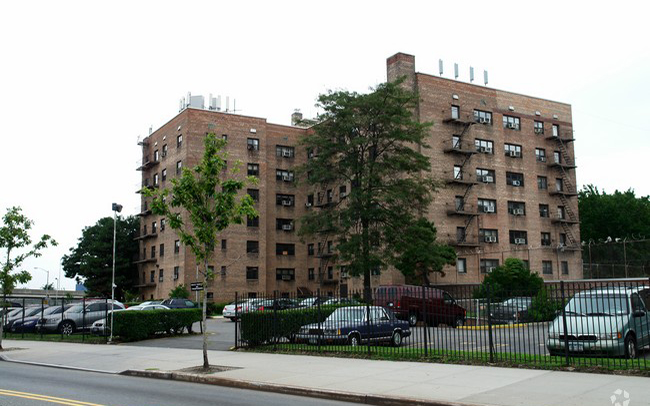
Linden Towers Cooperative - Queens, NY
QUEENS, NY Hunt Mortgage Group, a commercial real estate lender, has provided a $6.75 million loan, through the Freddie Mac Co-Op program, to refinance a multifamily property located in Flushing.
Linden Towers Cooperative Number 5 is located at 29-10, 29-30 and 29-50 137th St., within the New York-Northern New Jersey-Long Island consolidated MSA. The property was built in 1960 and consists of 208 units housed in three, six-story buildings on a 4.27-acre parcel of land. The loan is a ten-year fixed rate loan, amortizing over 30 years.
“Linden Towers Cooperative has operated successfully as a cooperative for 54 years, and is currently 99% occupied,” said Kristian Molloy, vice president at Hunt Mortgage Group. “In addition, there are no investor units and the borrower does not allow for sublets.”
“Proceeds from the new loan will be used to pay off the current balance on an existing loan and to make capital repairs throughout the property,” said Molloy. “Planned improvements include roof work, replacing piping, and additional interior work.”
“The property also benefits from good visibility and overall curb appeal,” said Molloy. “We were pleased to deliver on this loan.”
The Hunt Mortgage Group team involved in structuring this loan includes Steve Cox who served as originator and Molloy who was the originating associate.
The unit mix includes 95 one-bedroom apartments, 95 two-bedroom units and 18 three-bedroom apartments. Linden Towers Cooperative also features 187 parking spaces, including 90 open stalls and 97 spaces spread between two parking garages.
Linden Towers Cooperative is located in Queens County in a residential neighborhood with good access to area amenities and transportation.
Tags:
Brokerage
MORE FROM Brokerage
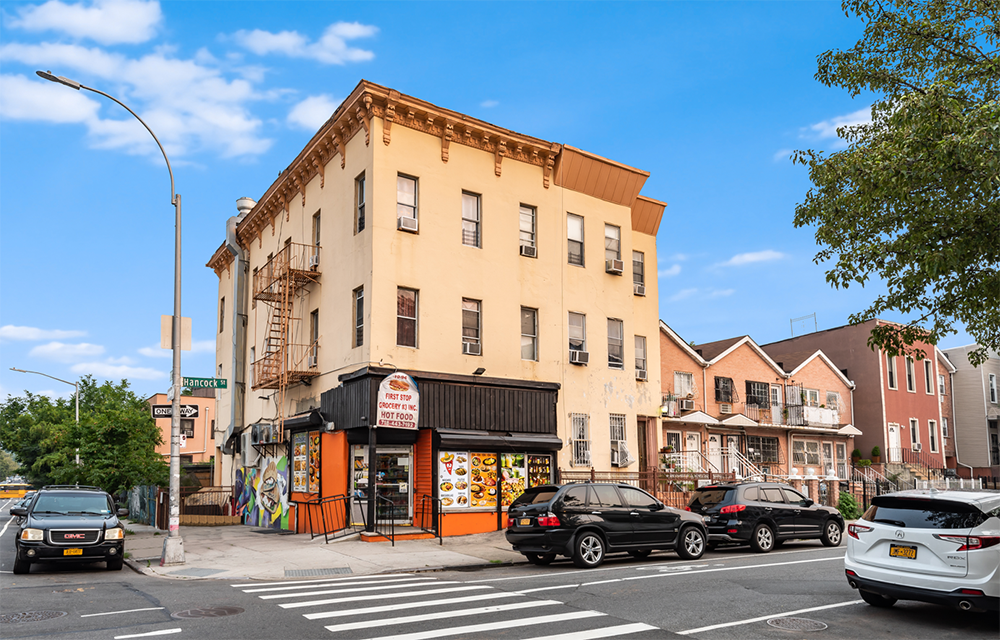
Investment Property Realty Group closes $1.75 million sale of 1094 Hancock Street in Brooklyn
Brooklyn, NY Investment Property Realty Group (IPRG), a New York-based commercial investment firm, has closed the sale of 1094 Hancock St., a mixed-use building in the Bushwick section, for $1.75 million.


Quick Hits
 (2).gif)

Columns and Thought Leadership

New York’s streets are full again, and the retail numbers prove it - by Noam Aziz
Walk down any New York block this year and you can feel it. The sidewalks are crowded, the storefronts are lit, and the energy that defines this city is back at full volume.

Hunt CRE question and answer: Choosing a real estate agent - by David Hunt
First, we will only work with one agent exclusively. The primary reason is that we want that agent to legally represent our client’s interests. In New York State, a real estate agent has a fiduciary

A guide to finding the right NYC property management company - by Sanjay Gandhi
Being a small to midsize landlord in NYC is an increasingly demanding endeavor. From navigating complex regulations, increased compliance demands to dealing with tenant issues and remediating violations. It is wise to enlist the assistance of a partner, a professional

Hunt commercial real estate question and answer: Fortune 500 wisdom - by David Hunt
Yes, there are lessons to be learned from the largest companies in America when comes to managing your real estate. But the decision to buy or lease real estate may not be one of
.gif)