



News:
Brokerage
Posted: June 24, 2013
Mesa West provides $145 million refinancing loan to Savanna for 1375 Broadway; Estreich of Estreich & Co. arranges debt on behalf of borrower
Savanna, a New York-based real estate private equity and asset management firm, has refinanced $145 million in first mortgage debt for 1375 Broadway with Mesa West Capital, including capital for future leasing costs.
The loan is secured by 1375 Broadway, a 513,401 s/f multi-tenant office building located at the northwest corner of Broadway and West 37th St. in the Midtown South office market. Jon Estreich, president of Estreich & Co., arranged the debt on behalf of the borrower.
"The refinancing of 1375 Broadway illustrates the substantial progress that Savanna has made in repositioning the building as an institutional quality asset. We initiated a major capital improvement program, including a new lobby and new retail storefronts. These improvements have transformed the building into a core asset and have led to successful leasing of both office and retail space. We thank the teams at Estreich and Mesa West for their collaboration and diligence to close the transaction," said Cooper Kramer, vice president at Savanna.
The borrower, Savanna, purchased 1375 Broadway in December 2010 and completed a major capital investment and repositioning initiative, which included renovation of the lobby, building entrance, retail storefronts, as well as façade and roof improvements. Savanna is marketing 80,000 s/f of available office space, including a penthouse with a wraparound terrace.
"This is the first loan in our new lending program that is focused on financing core commercial real estate assets," said Raphael Fishbach, Mesa West principal in the firm's New York City office. "This complements our traditional program of originating bridge loans on more transitional properties. Both programs focus on asset sizes of between $15 million and $150 million throughout the United States."
Mesa West Capital has originated $3.5 billion in financings on multifamily, office, retail, industrial and hotel properties and $500 million in the New York area.
Tags:
Brokerage
MORE FROM Brokerage
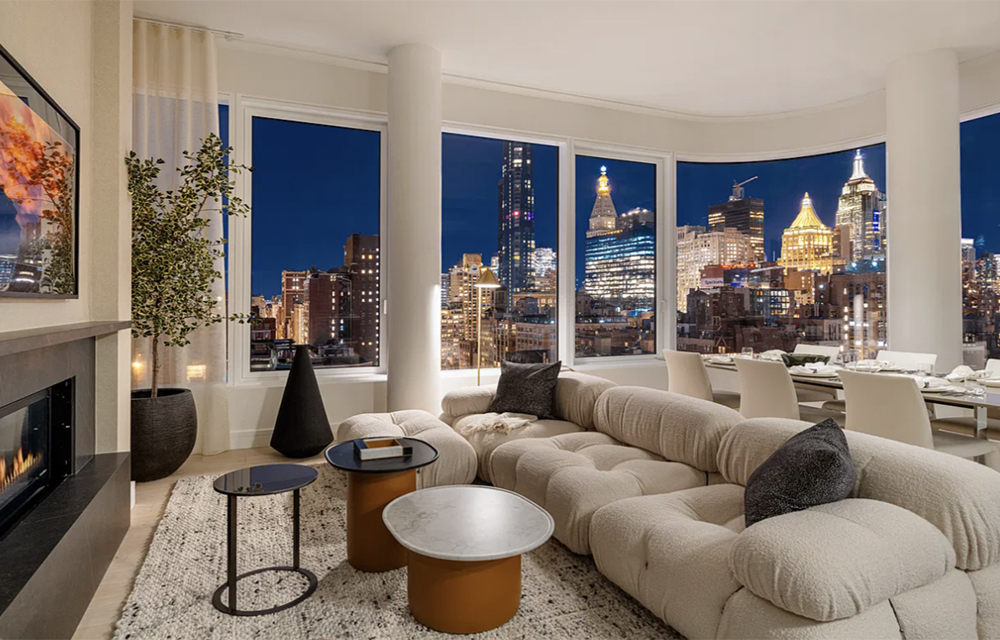
200E20TH sells out in Gramercy, penthouse A closes out sales at the CetraRuddy-designed condominium residences
Manhattan, NY 200E20TH, the CetraRuddy-designed architectural masterwork that brought a curved, contemporary sensibility to Gramercy’s Beaux-Arts streetscape, has



Quick Hits

Columns and Thought Leadership

New York’s streets are full again, and the retail numbers prove it - by Noam Aziz
Walk down any New York block this year and you can feel it. The sidewalks are crowded, the storefronts are lit, and the energy that defines this city is back at full volume.

The art of investing in real estate - by Thomas Donovan
Real estate investing is as much an art as it is a skill. No one can time the market, or the factors that drive it, perfectly. Location, zoning, size, transportation, and neighborhood density give you a baseline for

Hunt CRE question and answer: Choosing a real estate agent - by David Hunt
First, we will only work with one agent exclusively. The primary reason is that we want that agent to legally represent our client’s interests. In New York State, a real estate agent has a fiduciary

Hunt commercial real estate question and answer: Fortune 500 wisdom - by David Hunt
Yes, there are lessons to be learned from the largest companies in America when comes to managing your real estate. But the decision to buy or lease real estate may not be one of
.gif)