



News:
Brokerage
Posted: August 25, 2014
Meridian is able to work with numerous lenders to get high finance for smaller size deals
Meridian is fortunate to serve both institutional and individual clients. In the institutional space, there is a robust set of financing options, ranging from long-term fixed-rate to short-term floating-rate, inexpensive low-leverage to still reasonable high-leverage. In many cases we have provided financing of up to 90% loan-to-value on acquisitions and refinances, though typically this is on transactions of $25 million or greater.
The widely publicized debt executions in the institutional space leave a lot of room for questions by the individual or smaller sponsorship group that is interested in applying sophisticated financing techniques to the deals in their universe, that is, those typically under $25 million. The simple question is, can I get the same terms? Is there an outlet for these deals to benefit from something other than traditional formulaic financing? The answer is yes.
Given the number of transactions under $25 million that we work on at Meridian, we have been able to work with numerous lenders, including banks, finance companies and capital market firms, to execute creative financing on smaller and middle market deals. For example, one of my clients who recently started a new platform to purchase manufactured housing communities with a significant value-add opportunity was a perfect candidate. The first deal in the venture was the purchase of a community that had been foreclosed upon and somewhat neglected, with occupancy at 60%. Typically a deal of this size would get financed by a bank that would look at the in-place cash flow to size the loan, with no regard for the significant opportunity to add value through lease-up of the vacancy. Rather than pursue this route, we worked with a lender to structure a five-year floating-rate mortgage that not only provided funds to purchase the property, but additional capital to purchase manufactured homes that will go on the vacant lots, to be sold. That money can continually get recycled as homes are sold to purchase additional homes for sale. The lender benefits in providing this additional funding as the homes that are added and occupied will generate additional ground rents for the pads where they reside and in turn increase the property net operating income. The floating-rate structure allows for minimal prepayment penalties, so that in 12 to 24 months, the client may refinance or sell the property based on the significantly higher NOI. This was a situation where the client received more money, more flexibility, and a better financial structure to effectuate the business plan than would normally be available from a traditional bank loan.
In another example, a client purchased a 20-unit property with little cash flow in place which was 25% vacant. Again, rather than size the loan simply on the in-place cash flow, a loan was structured to provide acquisition financing as well as capital to renovate five vacant units. Having successfully illustrated to the lender that the vacant units would be renovated and leased for rents that were in excess of the prior tenants, the lender understood the value that would be added in the process. While the cash flow justified a loan of only 50% of the purchase price, the lender understood the business plan and provided financing that was 75% of the purchase price, holding back the monies to be spent on renovations. This created a win-win solution for the client, as he was able to finance a higher level of the costs, and the lender, who understood that the 75% funded today would actually be only 65% of the stabilized value.
There are many other examples of financing techniques Meridian employs daily on behalf of our clients, but the bottom line is that you don't have to be an 800 pound gorilla to get the benefit of "high finance."
Tal Bar-Or is a managing director at Meridian Capital Group, LLC, New York, N.Y.
Tags:
Brokerage
MORE FROM Brokerage
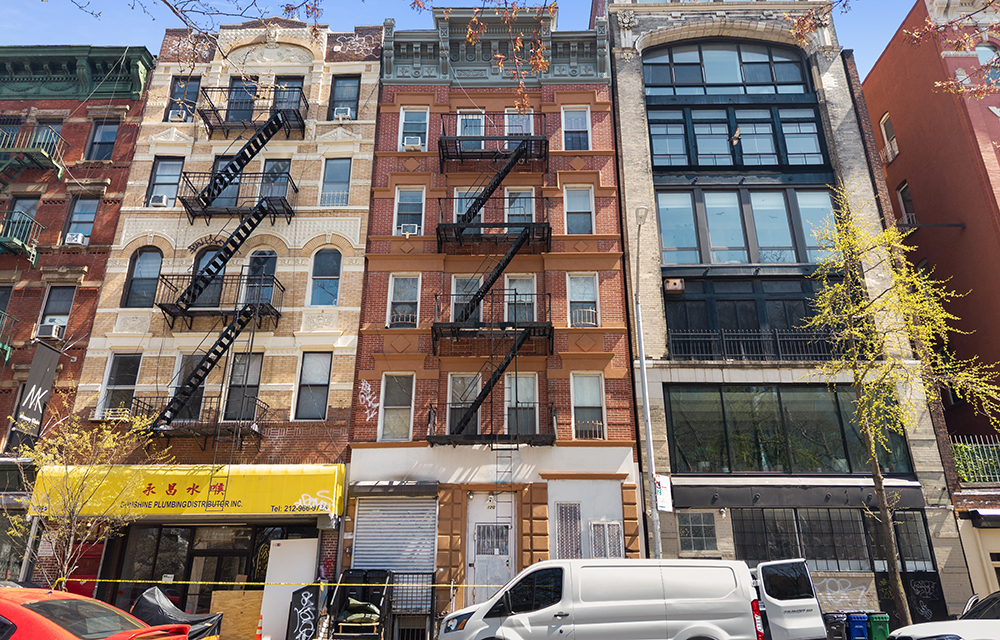
Investment Property Realty Group sells 120 Forsyth St. for $1.35 million
Manhattan, NY Investment Property Realty Group (IPRG) closed the sale of 120 Forsyth St., a mixed-use building located in the Lower East Side section of the city, for $1.35 million.





Quick Hits
 (2).gif)

Columns and Thought Leadership

New York’s streets are full again, and the retail numbers prove it - by Noam Aziz
Walk down any New York block this year and you can feel it. The sidewalks are crowded, the storefronts are lit, and the energy that defines this city is back at full volume.

Positive forecast for New York’s pro-housing push? - by Philip Butler
New York’s housing crisis remains a hot button topic despite growing consensus that varied and affordable housing is desperately needed statewide. Governor Hochul has recently introduced several initiatives to overcome N.Y.’s anti-housing

Hunt commercial real estate question and answer: Fortune 500 wisdom - by David Hunt
Yes, there are lessons to be learned from the largest companies in America when comes to managing your real estate. But the decision to buy or lease real estate may not be one of

A guide to finding the right NYC property management company - by Sanjay Gandhi
Being a small to midsize landlord in NYC is an increasingly demanding endeavor. From navigating complex regulations, increased compliance demands to dealing with tenant issues and remediating violations. It is wise to enlist the assistance of a partner, a professional
.gif)