



News:
Brokerage
Posted: April 16, 2024
Marx Realty signs UpSlide to 9,536 s/f at 10 Grand Central
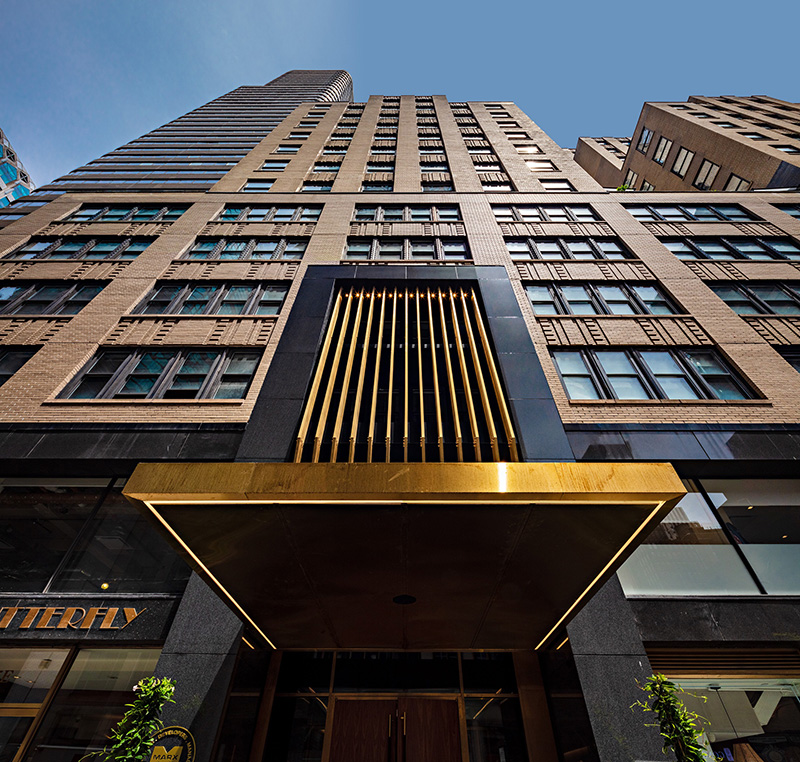
Manhattan, NY According to Marx Realty, UpSlide has signed a 10-year, 9,536 s/f lease on the sixth floor at 10 Grand Central.
“We welcome UpSlide to 10 Grand Central’s unique and exceptional tenant roster,” said Craig Deitelzweig, president and CEO of Marx Realty. “UpSlide’s lease comes on the heels of announcing 24,000 s/f of new and renewed office leases at the building last month. The leasing velocity here stands as a testament to the success of 10 Grand Central’s one-of-a-kind hospitality-infused offering while companies continue to compete for the few remaining available spaces.”
UpSlide was represented by Lexie Perticone of Cushman & Wakefield. JLL’s Mitchell Konsker, Kyle Young, Carlee Palmer, Simon Landmann, and Thomas Schwartz are leading a team handling leasing for Marx Realty. Asking rent for the building ranges from $68 to $130 per s/f.
 Marx Realty implemented $45 million repositioning of 10 Grand Central including a new façade with marquee brass fins and oversized walnut doors, attended by a uniformed doorman, as well as a lobby featuring walnut wood and brushed brass accents. The 7,500 s/f indoor/outdoor lounge and club floor equipped with a café, a 40-seat conference space, and The Ivy Terrace, an outdoor space reminiscent of a 1930s garden party. The building is also home to the MarxMobile, an electric Porsche Taycan that serves as the building’s house car.
“10 Grand Central’s tenant roster represents a dynamic ecosystem that serves as a complement to finance, law, media and tech firms while providing collaborative spaces for employees to thrive,” said Deitelzweig. “With its state-of-the-art amenities, cutting-edge design, and an unparalleled warm and inviting atmosphere, UpSlide is poised to flourish in the building’s vibrant environment.”
The redesign was led by David Burns, principal of Studios Architecture. 10 Grand Central has signed over 94,000 s/f of office and ground floor retail space in the last year; the building’s roster of tenants includes bank holding company Merchants Bancorp; global asset manager Fin Capital; and global independent fund manager DIF Capital Partners. High-profile tenants also include Dwayne “The Rock” Johnson’s production company, Seven Bucks Productions (as reported by the New York Post); insurance giant MassMutual, and international news agency Agence France-Presse.
Tags:
Brokerage
MORE FROM Brokerage

Residential real estate consultancy and brokerage firm Nancy Packes, Inc. rebrands as NPI
Manhattan, NY The NYC-based premier residential real estate consultancy and brokerage firm, Nancy Packes Inc., has rebranded as NPI. Helmed by Seth Rosner, most recently the firm’s managing partner and now president, the company has been intricately involved in hundreds of Tri-State new developments and conversions, spearheading the full project life cycle, from assessment/pre-dev.





 (2).gif)

Columns and Thought Leadership

New York’s streets are full again, and the retail numbers prove it - by Noam Aziz
Walk down any New York block this year and you can feel it. The sidewalks are crowded, the storefronts are lit, and the energy that defines this city is back at full volume.

Hunt commercial real estate question and answer: Fortune 500 wisdom - by David Hunt
Yes, there are lessons to be learned from the largest companies in America when comes to managing your real estate. But the decision to buy or lease real estate may not be one of

A guide to finding the right NYC property management company - by Sanjay Gandhi
Being a small to midsize landlord in NYC is an increasingly demanding endeavor. From navigating complex regulations, increased compliance demands to dealing with tenant issues and remediating violations. It is wise to enlist the assistance of a partner, a professional

Hunt CRE question and answer: Choosing a real estate agent - by David Hunt
First, we will only work with one agent exclusively. The primary reason is that we want that agent to legally represent our client’s interests. In New York State, a real estate agent has a fiduciary
.gif)