



News:
Brokerage
Posted: June 23, 2015
Mark Scott's CMC arranges $12.5 million in construction financing
Mark Scott's Commercial Mortgage Capital (CMC), one of the leaders in arranging permanent, construction and mezzanine loans for commercial real estate, closed $12.5 million in construction financing for Phase II of The Pearl, a residential project on New Jersey's Gold Coast that will consist of 63 condominium units on the waterfront. The financing was arranged with CIT on behalf of National Resources.
Strategically located on Edgewater Harbor at 45 River Rd., this residential project is already 50% sold. The new condominiums will offer panoramic views of the Hudson River and New York City skyline, and will feature 10-foot ceilings with full-height windows, high-end natural finishes, sustainable energy systems, and an array of five-star amenities. including 24-hour concierge service, state-of-the-art fitness center, outdoor heated pool with views of Manhattan, exclusive rooftop deck, and elegant restaurants and shops as well as riverside parks.
"The continuing demand for residential property in this high barrier-to-entry market, together with a strong economic climate, enabled us to secure competitive rates and terms for construction of Phase II of The Pearl," said Mark M. Scott, Founder and Principal of Mark Scott's Commercial Mortgage Capital. "With constrained supply and little new product on the horizon, lenders continue to compete for prime multifamily properties, and the lender recognized the quality of the asset and the creditworthiness of the borrower."
The Pearl offers easy access to Manhattan via nearby ferry terminals and close proximity to the George Washington Bridge and Lincoln Tunnel, and is a short drive from three major international airports, as well as many of Hudson County's renowned recreation destinations.
"Market fundamentals remain solid, and with interest rates still historically low, we anticipate the current strong activity to continue for the foreseeable future," said Scott.
Originally designed by world renowned architects Skidmore Owings & Merrill for Lever Brothers in 1953, the developer partnered with Lessard Design Associates and Alan Tanksley Interiors to transform this former commercial building into a six-story distinctive residence on the Hudson River waterfront.
Tags:
Brokerage
MORE FROM Brokerage
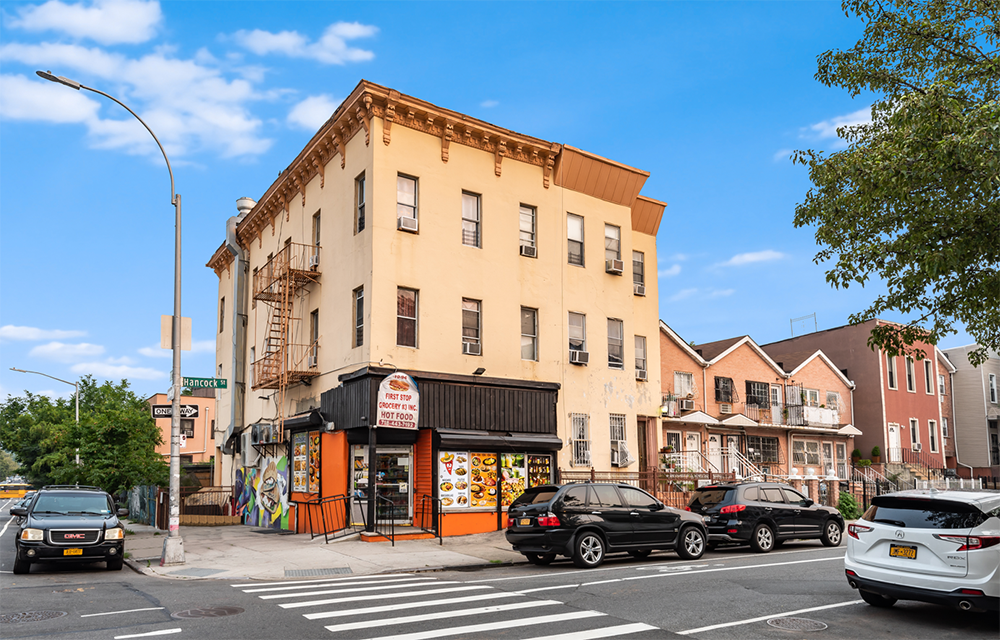
Investment Property Realty Group closes $1.75 million sale of 1094 Hancock Street in Brooklyn
Brooklyn, NY Investment Property Realty Group (IPRG), a New York-based commercial investment firm, has closed the sale of 1094 Hancock St., a mixed-use building in the Bushwick section, for $1.75 million.


Quick Hits

Columns and Thought Leadership

Hunt commercial real estate question and answer: Fortune 500 wisdom - by David Hunt
Yes, there are lessons to be learned from the largest companies in America when comes to managing your real estate. But the decision to buy or lease real estate may not be one of

Hunt CRE question and answer: Choosing a real estate agent - by David Hunt
First, we will only work with one agent exclusively. The primary reason is that we want that agent to legally represent our client’s interests. In New York State, a real estate agent has a fiduciary

New York’s streets are full again, and the retail numbers prove it - by Noam Aziz
Walk down any New York block this year and you can feel it. The sidewalks are crowded, the storefronts are lit, and the energy that defines this city is back at full volume.

A guide to finding the right NYC property management company - by Sanjay Gandhi
Being a small to midsize landlord in NYC is an increasingly demanding endeavor. From navigating complex regulations, increased compliance demands to dealing with tenant issues and remediating violations. It is wise to enlist the assistance of a partner, a professional
.gif)