



News:
Brokerage
Posted: September 10, 2024
Marchese and Choudhury join Cassin & Cassin
Manhattan, NY Samuel Marchese and Farhana Hassan Choudhury have joined Cassin & Cassin LLP. Marchese has joined the firm as a partner. Choudhury joins the affordable housing and agency lending practice as an associate.
Marchese joins Cassin from a New York-based law firm, where he served as partner. He brings with him substantial experience in representing property owners, developers, purchasers, sellers, and lenders in connection with matters relating to rent regulatory law, tax incentives, and landlord tenant administrative proceedings. Marchese’s rent regulatory due diligence reviews have led to favorable results in litigation and transactional matters for clients. In addition, Marchese represents owners of rent regulated buildings in administrative proceedings before the New York State Division of Housing and Community Renewal (DHCR), the New York City Department of Housing Preservation and Development (HPD), the New York City Department of Buildings (DOB), and other city and state agencies in all stages of administrative and judicial review. He has advocated and litigated harassment and non-compliance proceedings before DHCR. He also has experience representing numerous clients in Bankruptcy Courts and advises clients on creditor’s rights and bankruptcy proceedings.
Prior to joining Cassin, Choudhury was an Assistant General Counsel at the New York City Housing Development Corporation (HDC) where she negotiated, structured, and closed bond issuances and multifamily affordable housing financings. She began her legal career in the affordable housing finance industry as a New York City HPD-HDC Housing Fellow. She represents lenders in the financing of multifamily properties through the Fannie Mae Delegated Underwriting & Servicing program and the Freddie Mac Seller-Servicer program, with an emphasis on affordable housing.
“We’re delighted to welcome Sam and Farhana to the firm and excited to be able to expand the breadth and depth of our services offerings for our clients,” said Michael Hurley, Managing Partner of Cassin & Cassin LLP.
Tags:
Brokerage
MORE FROM Brokerage
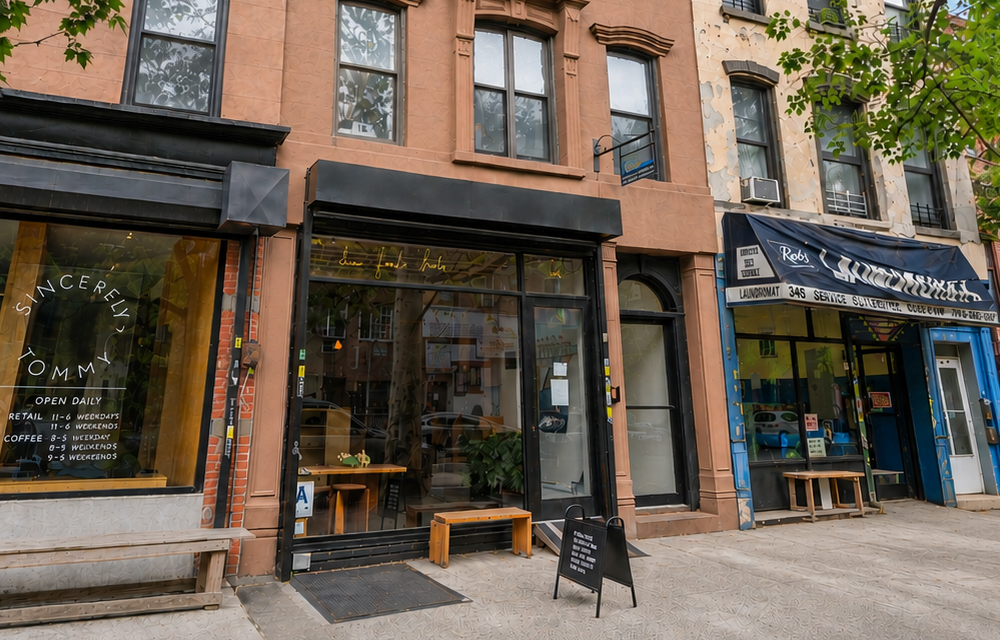
Bestreich, Reynolds, Davila, and Flaherty of Investment Property Realty Group close $1.97 million sale of 343A Tompkins Ave. in Bed-Stuy
Brooklyn, NY Investment Property Realty Group (IPRG) closed the sale of 343A Tompkins Ave., a mixed-use building located in the Bed-Stuy section of the borough, for $1.97 million.



Columns and Thought Leadership

A guide to finding the right NYC property management company - by Sanjay Gandhi
Being a small to midsize landlord in NYC is an increasingly demanding endeavor. From navigating complex regulations, increased compliance demands to dealing with tenant issues and remediating violations. It is wise to enlist the assistance of a partner, a professional

Hunt CRE question and answer: Choosing a real estate agent - by David Hunt
First, we will only work with one agent exclusively. The primary reason is that we want that agent to legally represent our client’s interests. In New York State, a real estate agent has a fiduciary

New York’s streets are full again, and the retail numbers prove it - by Noam Aziz
Walk down any New York block this year and you can feel it. The sidewalks are crowded, the storefronts are lit, and the energy that defines this city is back at full volume.

Hunt commercial real estate question and answer: Fortune 500 wisdom - by David Hunt
Yes, there are lessons to be learned from the largest companies in America when comes to managing your real estate. But the decision to buy or lease real estate may not be one of
.gif)