News: Brokerage

Lopez and Wadler of Kalmon Dolgin arrange 18,000 s/f for Dock Studios

Vincent Lopez,
Kalmon Dolgin Affiliates

 

Jacques Wadler,
Kalmon Dolgin Affiliates


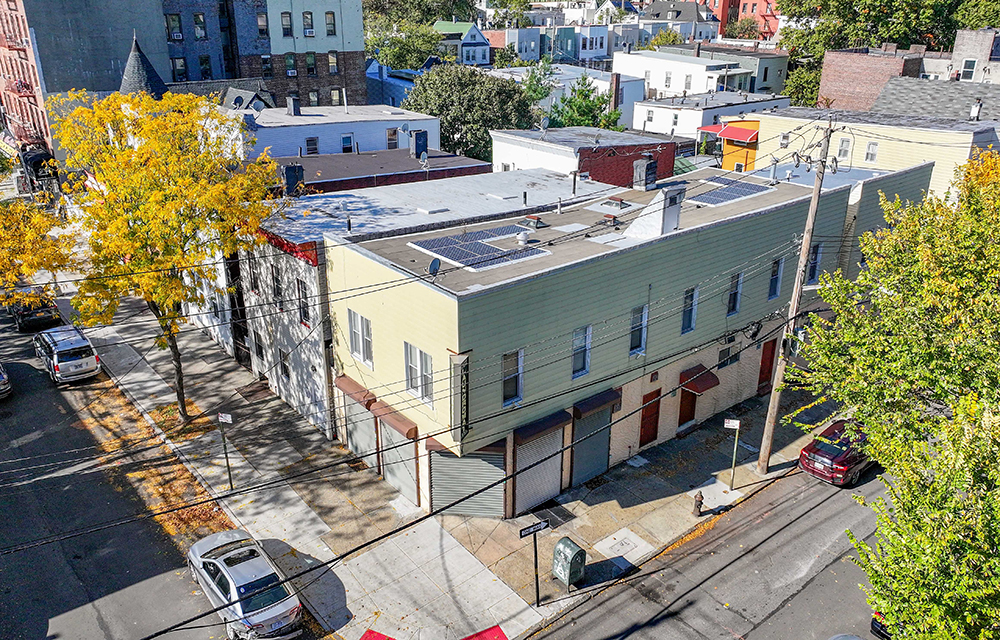
Brooklyn, NY Kalmon Dolgin Affiliates (KDA) has arranged a new, 18,000 s/f, long-term lease at 349 Scholes St. in East Williamsburg for Dock Studios, a provider of artist workspace. The deal will double the studio’s square footage in the area. 

Vincent Lopez and Jacques Wadler of KDA represented the tenant, Dock Studios, and the landlord, Meisel-Peskin, in lease negotiations. 

Dock Studios will occupy the entirety of the three-story space, which was recently upgraded after spending 90 years as the fur manufacturing facility for Meisel-Peskin. Dock Studios will use the full 18,000 s/f across three stories for artist workspaces. 

In 2014, Lopez and Wadler arranged a 16,000 s/f lease for Dock Studios’ second location at 1006 Metropolitan Ave. in East Williamsburg. The company also has a studio at 1027 Grand St. 

“After closing its fur business, Meisel-Peskin completely renovated 349 Scholes St., adding features that would cater to tenants looking for quality creative/industrial space in Brooklyn,” said Neil Dolgin. “With its roots in East Williamsburg, Dock Studios was searching for a large space that would be close to its two other locations. The large windows on all four sides provide an abundance of natural light, which allows Dock Studios to build fantastic studio space.” 

The newly renovated 349 Scholes St. features 13-foot ceilings, new windows, an automatic freight elevator that stops on all three floors, gas heat and heavy power. The building is also fully sprinklered. A loading dock with paved land is adjacent to the building, and Dock Studios will have exclusive access. Transportation options include the L subway and B60 bus route, access to the Brooklyn Queens Expressway, and several major thoroughfares like Metropolitan Ave. 
MORE FROM Brokerage

AmTrustRE secures 5,754 s/f lease with GKV Architects at 360 Lexington Avenue

Manhattan, NY AmTrustRE has executed a 5,754 s/f lease at its premier boutique Midtown East office tower, 360 Lexington Ave., with longtime partner GKV Architects. The award-winning firm will occupy a portion of the 14th floor. >“GKV Architects has been a trusted partner to AmTrustRE for over two decades, playing an integral role in shaping and elevating several
READ ON THE GO
DIGITAL EDITIONS
Subscribe
Columns and Thought Leadership
A fresh start - by Shallini Mehra and Amit Doshi

A fresh start - by Shallini Mehra and Amit Doshi

For the past several years, the New York City multifamily housing market has been defined by disruption. The combined impact of the HSTPA rent laws and a sharply higher interest rate environment has fundamentally reduced
The death of the generic offering memorandum: What buyers expect in 2025 - by Kimberly Zar Bloorian

The death of the generic offering memorandum: What buyers expect in 2025 - by Kimberly Zar Bloorian

There was a time when an offering memorandum (OM) was pretty bare bones, some photos, a few bullet points on income, and a rent roll thrown in at the back. That used to get the job done. Not anymore. In 2025, buyers are sharper, faster, and more selective. They’re looking
The anticipated effect of Basel III and ISO 20022 implementation on commercial real estate - by Michael Zysman

The anticipated effect of Basel III and ISO 20022 implementation on commercial real estate - by Michael Zysman

July 1, 2025 is the deadline for US banks to begin to adopt Basel III banking standards and July 14, 2025 is the deadline for U.S. banks to adopt ISO 20022 messaging standards. Both will have a significant effect on the banking and commercial real estate (CRE) finance sectors.
Tri-state capital  migrates nationally amid  regulation pressure - by Reese Weaver

Tri-state capital migrates nationally amid regulation pressure - by Reese Weaver

New York tri-state multifamily investors are increasingly reallocating capital to less-regulated markets across the U.S. as rent control and legislative risk erode returns at home. With over 60% of New York City’s rental housing stock classified as rent-stabilized, the traditional value-add model — buying under-performing buildings,