



News:
Brokerage
Posted: October 11, 2022
Leasing under an industrial development agency transaction - by Louis Fiore

A commercial property owner has just closed an industrial development agency (IDA) transaction providing real estate, sales and use and mortgage recording tax exemptions through a lease/leaseback structure. There are a number of considerations to keep in mind when leasing space to third-party businesses.
Typically, commercial leases, if not approved as part of the IDA transaction, will require the IDA Board’s consent which are only considered at the IDA’s monthly meetings. Also, there will be limits to the percentage of the property which can be used for retail uses (including medical office use).
Furthermore, tenants must enter into an agreement with the IDA called a Tenant Agency Compliance Agreement (TACA) providing, among other things: (i) increased insurance obligations, (ii) a broad indemnity, (iii) an obligation to provide annual financial statements, (iv) a requirement to list job openings with the Department of Labor and give preference to referrals therefrom, (v) with some IDA’s, hiring preferences for local residents, and (vi) annual reporting of jobs and salary/benefit ranges or averages. Therefore, an owner will want to consider the optimal timing to disclose the TACA requirement to a potential tenant.
The owner should also consider the following lease form changes. The definition of “taxes” in the lease must include PILOT Payments. If the lease provides a base year for taxes, the parties may have to negotiate how to handle the built-in burn-down of the PILOT benefits. Also, the lease should be subject and subordinate to the IDA lease/leaseback documents. Finally, the tenant should indemnify the owner against IDA related defaults caused by the tenant which cause a termination of the IDA documents and/or a recapture of past benefits.
Taking these considerations into account as early as possible can facilitate a smoother leasing process and avoid problems with the IDA.
Louis Fiore is a partner at Forchelli Deegan Terrana LLP, Uniondale, N.Y.
Tags:
Brokerage
MORE FROM Brokerage
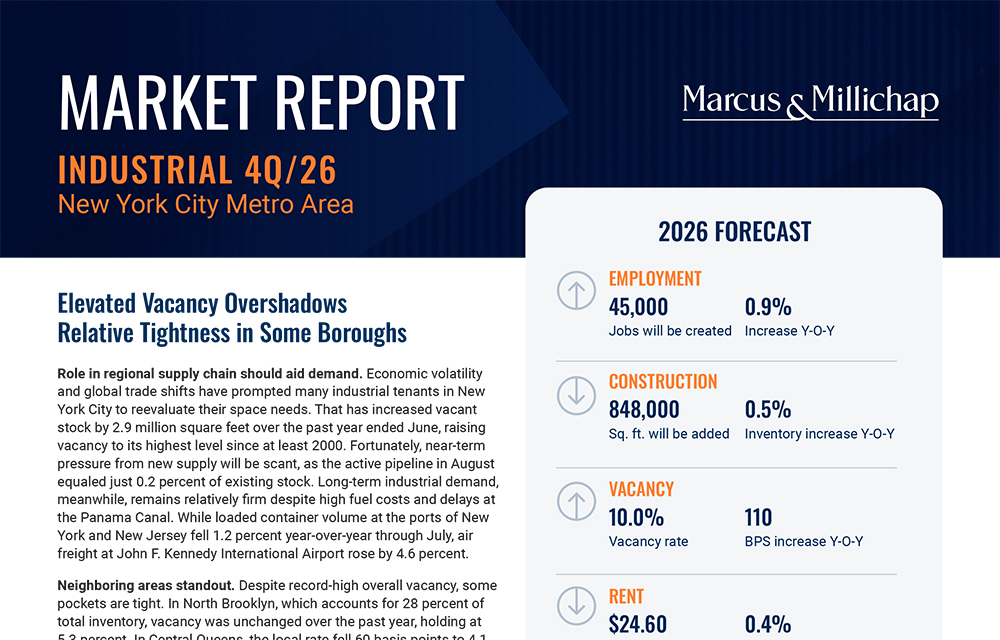
Marcus & Millichap releases fourth-quarter 2026 NYC industrial market report
Manhattan, NY Marcus & Millichap has published its fourth-quarter 2026 New York City Industrial Market Report. “New York City’s industrial market is showing a clear





Quick Hits
 (2).gif)

Columns and Thought Leadership

The art of investing in real estate - by Thomas Donovan
Real estate investing is as much an art as it is a skill. No one can time the market, or the factors that drive it, perfectly. Location, zoning, size, transportation, and neighborhood density give you a baseline for

Hunt commercial real estate question and answer: Fortune 500 wisdom - by David Hunt
Yes, there are lessons to be learned from the largest companies in America when comes to managing your real estate. But the decision to buy or lease real estate may not be one of

Hunt CRE question and answer: Choosing a real estate agent - by David Hunt
First, we will only work with one agent exclusively. The primary reason is that we want that agent to legally represent our client’s interests. In New York State, a real estate agent has a fiduciary

New York’s streets are full again, and the retail numbers prove it - by Noam Aziz
Walk down any New York block this year and you can feel it. The sidewalks are crowded, the storefronts are lit, and the energy that defines this city is back at full volume.
.gif)