



News:
Spotlight Content
Posted: November 20, 2009
Landow and Landow Architects AIA designs research facility
Landow and Landow Architects AIA served as architects for the State University of New York Maritime College's Tode Hall Engineering Laboratories located on the college's 55-acre campus on the Throg's Neck peninsula.
Led by Landow architect Glen Landow AIA, NCARB, LEED AP, the Landow team designed the renovations to enable SUNY Maritime College to achieve the institution's goal of creating modernized research facilities for students and faculty. The project includes a fluid mechanics laboratory, electronics laboratory, diesel maintenance laboratory, strength of materials laboratory, power laboratory and classroom space. Each space was designed with modern finishes, lighting, upgraded electrical power and new research equipment.
The Landow team worked in collaboration with AKF Engineering and Severud Associates who served as structural consultant.
Two of the laboratories, electronics and diesel maintenance, are new facilities. The Landow design team designed the electronics laboratory within an existing section of the fluid mechanics laboratory. The fluid mechanics laboratory space is dedicated space for students to design model ships and to test their creations against water moving at varying speeds.
The Landow team created a separation between the existing testing space and the new electronics laboratory which includes desk space with electronics equipment and computer hook-ups at each station. The design features "borrowed" light as well as an exhaust system to keep out humidity that develops in the fluid mechanics space. Tenemec coating was used to inhibit moisture throughout the space and a new ceiling design was incorporated, featuring exposed duct work, new lighting and the removal of an existing drop ceiling.
According to Landow, "The goal of this project was to achieve SUNY's goal of creating a state-of-the-art, modern research center. The project included the introduction of new and modern construction materials as well as creating new spaces to allow students to explore expanded research areas within one laboratory facility."
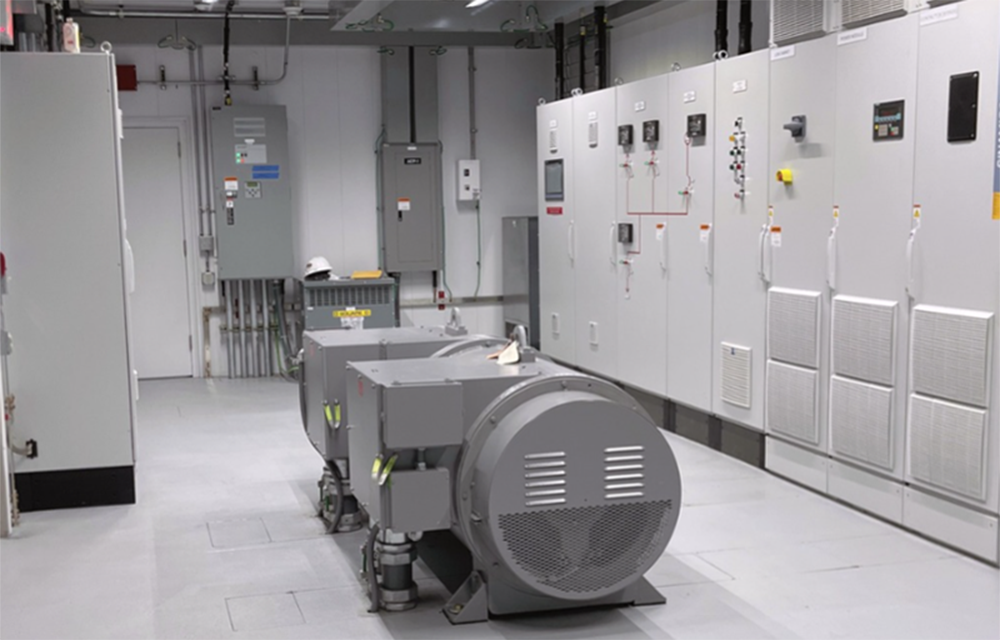
The diesel maintenance laboratory was designed within an existing two-story space allowing space for a diesel engine and student work space. This facility offered ample space for lift equipment and the design features a new ceiling, new flooring and new lighting to create an academic and testing center. All electrical power was upgraded in the new lab facilities, including modernized electrical panels and circuits.
Tags:
Spotlight Content
MORE FROM Spotlight Content

NYREJ's 2026 Developing Long Island Spotlight is here!
This spotlight showcases projects completed and currently under construction across Long Island as well as highlights improvements made to the region through Industrial and Economic Development Agencies and BIDs.



.png)

Quick Hits
 (2).gif)

Columns and Thought Leadership

2026 Developing Queens: Long Island Board of Realtors advances commercial growth and advocacy in Queens
The Long Island Board of Realtors (LIBOR) Commercial Network continues to play a key role in advancing opportunities and strengthening the commercial real estate landscape across Queens. Through targeted programming and global outreach

Properly serving a lien law Section 59 Demand - by Bret McCabe
Many attorneys operating within the construction space are familiar with the provisions of New York Lien Law, which allow for the discharge of a Mechanic’s Lien in the event the lienor does not commence an action to enforce following the service of a “Section 59 Demand”.

CRE Guide Featured Company: Merritt Environmental Consulting Corp.
Merritt Environmental Consulting Corp. (MECC) was established in June of 2009 after being part of a larger engineering firm for almost 20 years. The focus of the company is to assist lending institutions, attorneys, real estate investors, and property owners with environmental concerns. Today, MECC has offices in New York, Florida, and Vermont and has grown into a regional consulting firm serving clients along the East Coast.

From vacancy to vitality: How adaptive reuse is reshaping Long Island’s CRE landscape - by Andrea Tsoukalas Curto
Adaptive reuse has become one of the most important conversations in commercial real estate today. Long Island has a large inventory of aging retail, office and industrial