


 (2).gif)
News:
Spotlight Content
Posted: March 21, 2017
Kelly of WSP | Parsons Brinckerhoff honored by Beverly Willis Architectural Foundation
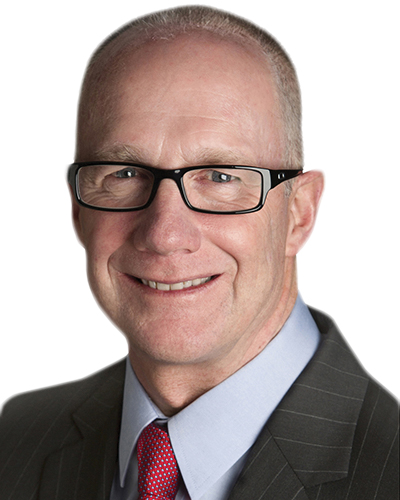 Gregory Kelly, WSP | Parsons Brinckerhoff
New York, NY Gregory Kelly, president and CEO of the U.S. and Latin America region of WSP | Parsons Brinckerhoff, has received the 2017 Foundation Award from the Beverly Willis Architectural Foundation (BWAF).
BWAF is a non-profit organization dedicated to “advancing the knowledge and recognition of women’s contributions to architecture.”
The BWAF Foundation Award is given annually to “a transformational firm for influencing and expanding opportunities for the careers of women in the building industry.”
In bestowing the award on Kelly, BWAF cited his “commitment to making a difference in this arena, through your expressed mission and values, your programs, and also as displayed through your ongoing attendance and active participation at our Industry Leaders Roundtable.”
“I am honored to receive the BWAF Foundation Award,” said Kelly. “Fostering equal opportunity for women starts at home, continues through school and flourishes in the workplace. Eliminating gender pay gaps is an important part of attracting and retaining the best talent and I am pleased to report that at WSP | Parsons Brinckerhoff we have made great strides in promoting a workplace with a fair and equitable pay ratio.”
Kelly oversees a workforce nearly 8,000 employees in the U.S. and Latin America that generates $1.7 billion in annual revenue in such markets as buildings, transportation, energy, water, and environment. In addition, he is a member of WSP | Parsons Brinckerhoff’s global leadership team, responsible for operations, policy and direction for an engineering and professional services organization of 36,700 employees in more than 500 offices in 40 countries. During his tenure he has emphasized a commitment to diversity and the promotion of women to key leadership positions in the firm.
Under Kelly’s direction, WSP | Parsons Brinckerhoff has significant roles on major projects throughout the U.S. and Latin America, including One World Trade Center, 432 Park Ave., and the La Guardia Airport Central Terminal; the National Museum of African American History and Culture in Washington, D.C.; the 30th St. Station master plan in Philadelphia; Levi’s Stadium in Santa Clara, Calif.; and Salesforce Tower, the Transbay Transit Center and 181 Fremont in San Francisco.
Active in the infrastructure services industry, Kelly frequently speaks on engineering and construction issues and participates on the executive boards of many leading industry organizations.
Kelly was elected to the National Academy of Construction in 2014. He is on the executive committee of the Design Professionals Coalition and is a member of the board of the Association for the Improvement of Americas Infrastructure.
Kelly has served as a member of the civil engineering advisory board of the Polytechnic Institute at New York University and the civil engineering and environmental advisory committee of the New Jersey Institute of Technology.
Giving back to the community is vital to Kelly. He chairs the Salvadori Center, a non-profit focused on innovative Science, Technology, Engineering and Math (STEM) based programs in the New York City Schools. He is also the co-chair of the New York City March of Dimes Transportation and Construction Luncheon.
He has a B.S. degree in civil engineering and construction technology from Temple University and an M.S. degree in civil engineering from the New Jersey Institute of Technology. He is a registered professional engineer in several states.
WSP | Parsons Brinckerhoff, one of the world’s leading engineering and professional services consulting firms, provides services designed to transform the built environment and restore the natural one. The firm’s expertise ranges from environmental remediation and urban planning, to engineering iconic buildings and designing sustainable transport networks, to developing the energy sources of the future and enabling new ways of extracting essential resources. Approximately 36,700 employees, including engineers, technicians, scientists, planners, surveyors, program and construction management professionals, as well as various environmental experts, work for this dynamic organization in more than 500 offices across 40 countries worldwide.
Tags:
Spotlight Content
MORE FROM Spotlight Content

NYREJ's 2026 Developing Long Island Spotlight is here!
This spotlight showcases projects completed and currently under construction across Long Island as well as highlights improvements made to the region through Industrial and Economic Development Agencies and BIDs.



.png)

Quick Hits
 (2).gif)

Columns and Thought Leadership

From vacancy to vitality: How adaptive reuse is reshaping Long Island’s CRE landscape - by Andrea Tsoukalas Curto
Adaptive reuse has become one of the most important conversations in commercial real estate today. Long Island has a large inventory of aging retail, office and industrial

2026 Developing Queens: Long Island Board of Realtors advances commercial growth and advocacy in Queens
The Long Island Board of Realtors (LIBOR) Commercial Network continues to play a key role in advancing opportunities and strengthening the commercial real estate landscape across Queens. Through targeted programming and global outreach

Properly serving a lien law Section 59 Demand - by Bret McCabe
Many attorneys operating within the construction space are familiar with the provisions of New York Lien Law, which allow for the discharge of a Mechanic’s Lien in the event the lienor does not commence an action to enforce following the service of a “Section 59 Demand”.

CRE Guide Featured Company: Merritt Environmental Consulting Corp.
Merritt Environmental Consulting Corp. (MECC) was established in June of 2009 after being part of a larger engineering firm for almost 20 years. The focus of the company is to assist lending institutions, attorneys, real estate investors, and property owners with environmental concerns. Today, MECC has offices in New York, Florida, and Vermont and has grown into a regional consulting firm serving clients along the East Coast.