



News:
Spotlight Content
Posted: November 21, 2008
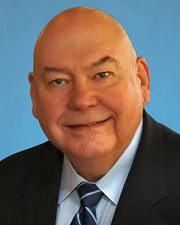
Kaye joins Gotham Organization a vice president of development
According to Gotham Organization, Jeffrey Kaye has joined the firm as vice president of development. Kaye will use his 15 years of experience in development, finance, construction and architecture to manage Gotham's existing projects and cultivate new development opportunities.
"I'm thrilled to be joining Gotham Organization, which has a unique and exciting platform in the real estate market," said Kaye. "The company has proven itself for four generations, and has a great reputation for providing a high level of service and integrity. They are one of only a handful of firms that will be poised to capitalize in this current market downturn."
One of the projects Kaye will be overseeing includes a 19-story luxury rental tower now under construction at the intersection of 72nd St. and Broadway. "This is really a one-of-a-kind development perched on one of Manhattan's most iconic corners," notes Kaye. "It's exciting to be working on such an exceptional project right out of the gate."
Prior to joining Gotham, Kaye was a principal and founder of Sterling Kaye Development, Inc., a real estate company with a focus on situational development as well as investment opportunities throughout Manhattan. He also served as a director at Anbau Enterprises, Inc., a boutique development company known for its high-end residential projects, such as Harsen House and 110 Central Park South. Kaye kicked off his career in the mid-1990s as an architect at Perkins Eastman Architects, one of the New York City's largest architectural firms.
"Jeffrey has an extensive background in real estate development, and throughout his career has proven himself as a leader in the field," said David Picket, president of Gotham Organization. "He's a fantastic addition to our team."
Kaye graduated from Lehigh University with a degree in architecture in 1995.
Tags:
Spotlight Content
MORE FROM Spotlight Content
The commercial classroom: Capital gains taxes - by Edward Smith
Generally, when you sell the home you live in and any commercial property you own, it may be subject to capital gains taxes. Always, before you take a listing, advise your client to speak to their accountant about




.png)

Quick Hits
 (2).gif)

Columns and Thought Leadership

2026 Developing Long Island: ERG Commercial Real Estate launches its new Retail Leasing division
North Hempstead, NY ERG Retail Leasing is the dedicated leasing division of ERG Commercial Real Estate, an established full-service commercial real estate brokerage for over 35 years.

CRE Guide Featured Company: Merritt Environmental Consulting Corp.
Merritt Environmental Consulting Corp. (MECC) was established in June of 2009 after being part of a larger engineering firm for almost 20 years. The focus of the company is to assist lending institutions, attorneys, real estate investors, and property owners with environmental concerns. Today, MECC has offices in New York, Florida, and Vermont and has grown into a regional consulting firm serving clients along the East Coast.

2026 Developing Queens: Long Island Board of Realtors advances commercial growth and advocacy in Queens
The Long Island Board of Realtors (LIBOR) Commercial Network continues to play a key role in advancing opportunities and strengthening the commercial real estate landscape across Queens. Through targeted programming and global outreach

From vacancy to vitality: How adaptive reuse is reshaping Long Island’s CRE landscape - by Andrea Tsoukalas Curto
Adaptive reuse has become one of the most important conversations in commercial real estate today. Long Island has a large inventory of aging retail, office and industrial