


 (2).gif)
News:
Spotlight Content
Posted: November 21, 2008
Fang rejoins Ehrenkrantz Eckstut & Kuhn Architects as associate principal
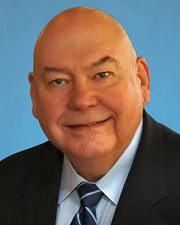
According to Ehrenkrantz Eckstut & Kuhn Architects (EE&K), Eric C. Y. Fang has rejoined the firm's New York office as associate principal.
"Fang's return builds on the firm's successful work in major urban design and large-scale development," said principal Stanton Eckstut FAIA. "It is a strategic move that puts the firm in an even stronger position to create the next generation of great places."
For more than eighteen years, Fang has led large-scale urban redevelopment, transit facility, and campus planning projects for public agencies, private developers and large institutions nationally and internationally. Fang's recent projects include Arverne-by-the-Sea, an award winning new transit-oriented community and the largest waterfront urban renewal site in the United States, and Assembly Square, one of the largest development projects in the Boston area. Fang has worked to promote transit-oriented development and smart growth with agencies throughout the country. His most recent experience as director of planning for a major mixed-use development firm augments EE&K Architect's abilities to anticipate community needs during development.
A lifelong advocate for urbanism, Fang has written and lectured extensively about emerging trends in urban redevelopment; his articles have covered transit-oriented development, and the evolving relationship between healthcare, higher education and cities, for publications such as Urban Land and Architectural Record. Fang has degrees from Columbia University and Harvard University GSD where he co-edited the Harvard Architecture Review. He also co-founded the award-winning journal LINE, a publication of the SFAIA.
Celebrating its 50th year of practice in 2009, EE&K Architects has established a thoughtful, careful approach to designing great places. Throughout a variety of projects, there remains one primary constant: a dedication to complementing form and shape with use and context. EE&K Architects considers each project, no matter its size, worthy of big thinking. After examining how a building or plan affects and is affected by its surroundings, the resulting design is uniquely suited for what it provides, and to whom it is provided.
Tags:
Spotlight Content
MORE FROM Spotlight Content
The commercial classroom: Capital gains taxes - by Edward Smith
Generally, when you sell the home you live in and any commercial property you own, it may be subject to capital gains taxes. Always, before you take a listing, advise your client to speak to their accountant about



.png)

Quick Hits
 (2).gif)

Columns and Thought Leadership

CRE Guide Featured Company: Merritt Environmental Consulting Corp.
Merritt Environmental Consulting Corp. (MECC) was established in June of 2009 after being part of a larger engineering firm for almost 20 years. The focus of the company is to assist lending institutions, attorneys, real estate investors, and property owners with environmental concerns. Today, MECC has offices in New York, Florida, and Vermont and has grown into a regional consulting firm serving clients along the East Coast.

2026 Developing Queens: Long Island Board of Realtors advances commercial growth and advocacy in Queens
The Long Island Board of Realtors (LIBOR) Commercial Network continues to play a key role in advancing opportunities and strengthening the commercial real estate landscape across Queens. Through targeted programming and global outreach

From vacancy to vitality: How adaptive reuse is reshaping Long Island’s CRE landscape - by Andrea Tsoukalas Curto
Adaptive reuse has become one of the most important conversations in commercial real estate today. Long Island has a large inventory of aging retail, office and industrial

2026 Developing Long Island: ERG Commercial Real Estate launches its new Retail Leasing division
North Hempstead, NY ERG Retail Leasing is the dedicated leasing division of ERG Commercial Real Estate, an established full-service commercial real estate brokerage for over 35 years.