



News:
Brokerage
Posted: October 2, 2018
JLL Secures 110,989 s/f for Spaces at Chrysler Building
 Manhattan, NY JLL has completed a new transaction for Spaces at 405 Lexington Ave., also known as the Chrysler Building, with building owner Tishman Speyer Properties. Spaces, which offers creative, flexible workspaces, signed for 110,989 s/f of office space at the historic class A, 1.2 million s/f office building tower.
Spaces was represented by Jim Wenk, executive managing director, and Kirill Azovtsev, executive vice president, both with JLL. Building owner Tishman Speyer was represented in-house by Gregory Conen, managing director of leasing, and Robert Weller, senior director of leasing.
Spaces signed a 15-year lease for 110,898 s/f of office space and will occupy the 7th through 9th floors.
at 405 Lexington Ave., which is located between East 42nd and East 43rd Sts. The new location will add to the company’s growing presence in the city, with three workspaces currently open across the city, three more set to open by the end of 2018, and two more openings in place for 2019.
“The Spaces team is thrilled to partner with Tishman Speyer at the world-renowned Chrysler building and add to the amenities available at the building,” said Wenk. “The firm is keen on making the Chrysler building it’s Midtown ‘mothership.’ Spaces will have a private entrance on the 42nd St. that will also serve as an experience center for existing and potential members.”
“In today’s market, we know that scale and flexibility are crucial for a company’s growth,” said Michael Berretta, vice president of network development for IWG plc, which owns Spaces. “Nowhere in the country is this more evident than in New York City. We’re very excited to have a presence in the historic Chrysler Building, and with locations set to open in Midtown Manhattan, Hudson Yards, Staten Island, Brooklyn and Long Island City in 2018, Spaces provides options for companies of any size, in any location across the city.”
The 77-story Chrysler Building was designed by William van Alen and constructed in 1930. It was the tallest building in the world until 1931, when it was topped by the Empire State Building, but remains the tallest brick building in the world. The Chrysler Building is considered one of finest examples of the Art Deco architectural style. Tishman Speyer Properties acquired the office tower in 1998.
Tags:
Brokerage
MORE FROM Brokerage
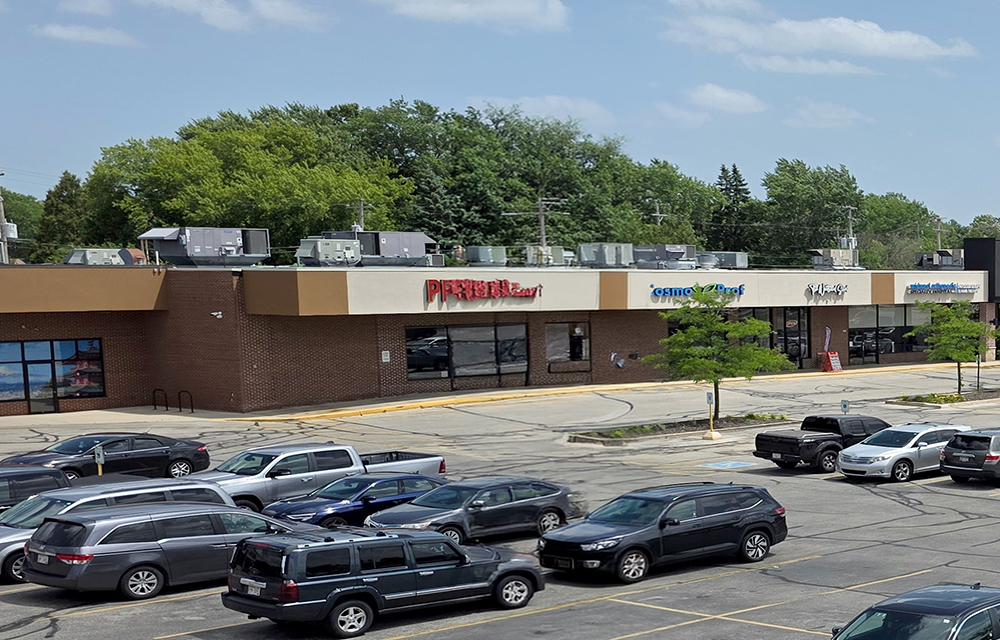
United Properties Corp. expands Wisconsin and Illinois retail presence adding 200,000 s/f
West Allis, WI United Properties Corp. completed two retail acquisitions totaling $27.4 million across Illinois and Wisconsin, adding 205,000 s/f of shopping center space to its portfolio



Quick Hits
 (2).gif)

Columns and Thought Leadership

Hunt commercial real estate question and answer: Fortune 500 wisdom - by David Hunt
Yes, there are lessons to be learned from the largest companies in America when comes to managing your real estate. But the decision to buy or lease real estate may not be one of

Positive forecast for New York’s pro-housing push? - by Philip Butler
New York’s housing crisis remains a hot button topic despite growing consensus that varied and affordable housing is desperately needed statewide. Governor Hochul has recently introduced several initiatives to overcome N.Y.’s anti-housing

New York’s streets are full again, and the retail numbers prove it - by Noam Aziz
Walk down any New York block this year and you can feel it. The sidewalks are crowded, the storefronts are lit, and the energy that defines this city is back at full volume.

A guide to finding the right NYC property management company - by Sanjay Gandhi
Being a small to midsize landlord in NYC is an increasingly demanding endeavor. From navigating complex regulations, increased compliance demands to dealing with tenant issues and remediating violations. It is wise to enlist the assistance of a partner, a professional
.gif)