



News:
Brokerage
Posted: August 12, 2013
JLL adds Queenan as senior vice president
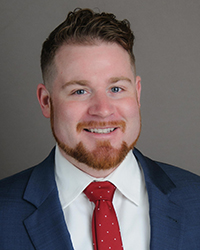
As corporate real estate teams continue to implement a variety of innovative strategies to achieve portfolio-wide productivity, Jones Lang LaSalle (JLL) is increasing its bench strength with the addition of industry veteran John Queenan. Queenan joins JLL as senior vice president, where he will help leadership of some of the world's largest corporations improve organizational effectiveness, operational excellence and environmental sustainability performance.
"John's unique experience as both an in-house senior leader and as a Big Four consultant gives him a holistic perspective on how real estate can increase shareholder value through cost savings, sustainability and productivity," said Peter Shannon, managing director of strategic consulting for JLL.
"John will leverage these real estate insights to help our corporate clients achieve their business goals and drive their triple bottom lines."
Queenan has more than 15 years of experience in designing and deploying environmental, supply chain, compliance, process improvement and change management programs for high-profile global organizations, particularly in the real estate, financial services, technology, consumer goods and retail sectors.
Prior to joining Jones Lang LaSalle, Queenan served as the first Head of Environment and Sustainability for the Americas region of the Royal Bank of Scotland Group (RBS), where he established and oversaw the sustainability program for approximately 10 million square feet of real estate assets that encompassed more than 1,500 locations and served 23,000 employees. In this role, Queenan focused on benchmarking, measuring and delivering environmental-footprint reductions across six key indicators: energy, travel, paper, waste, water and greenhouse gases.
In addition, Queenan led a similar sustainability program for UBS and spent more than 10 years with international Big Four audit and consulting firms to develop, implement and validate corporate responsibility strategies and sustainability programs. He has a master's degree in environmental management and policy from Rensselaer Polytechnic Institute School of Management and a bachelor's of science degree with honors from SUNY Brockport.
Tags:
Brokerage
MORE FROM Brokerage
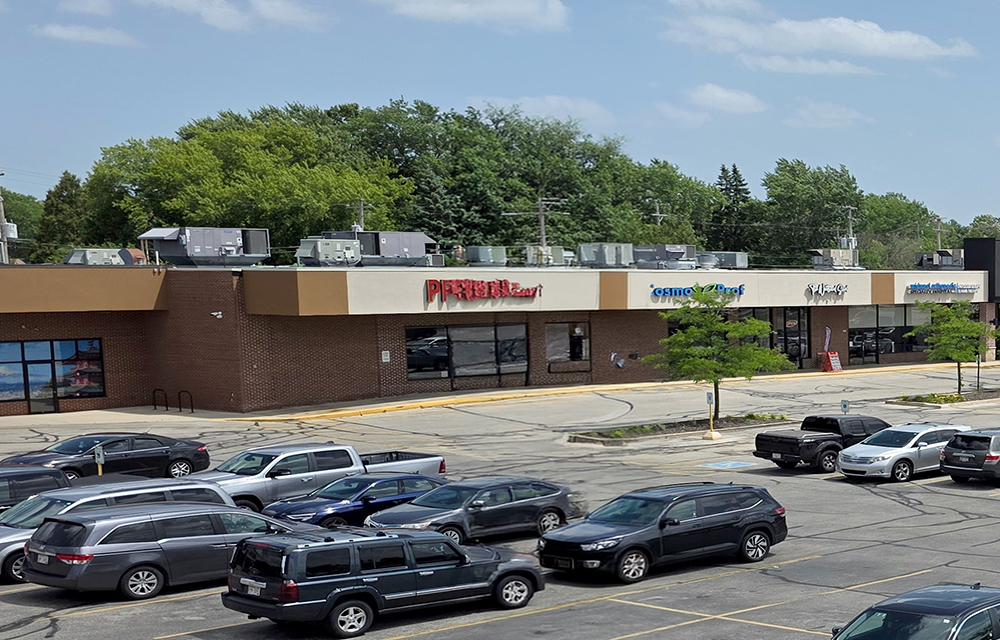
United Properties Corp. expands Wisconsin and Illinois retail presence adding 200,000 s/f
West Allis, WI United Properties Corp. completed two retail acquisitions totaling $27.4 million across Illinois and Wisconsin, adding 205,000 s/f of shopping center space to its portfolio





Quick Hits

Columns and Thought Leadership

A guide to finding the right NYC property management company - by Sanjay Gandhi
Being a small to midsize landlord in NYC is an increasingly demanding endeavor. From navigating complex regulations, increased compliance demands to dealing with tenant issues and remediating violations. It is wise to enlist the assistance of a partner, a professional

New York’s streets are full again, and the retail numbers prove it - by Noam Aziz
Walk down any New York block this year and you can feel it. The sidewalks are crowded, the storefronts are lit, and the energy that defines this city is back at full volume.
Positive forecast for New York’s pro-housing push? - by Philip Butler
New York’s housing crisis remains a hot button topic despite growing consensus that varied and affordable housing is desperately needed statewide. Governor Hochul has recently introduced several initiatives to overcome N.Y.’s anti-housing

Hunt commercial real estate question and answer: Fortune 500 wisdom - by David Hunt
Yes, there are lessons to be learned from the largest companies in America when comes to managing your real estate. But the decision to buy or lease real estate may not be one of
.gif)