


 (2).gif)
News:
Spotlight Content
Posted: December 22, 2020
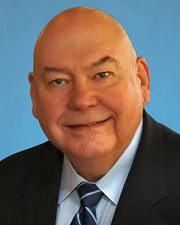
Jeffrey Cook, Cook Properties
 Name: Jeffrey Cook
Job Title: CEO
Company Name: Cook Properties
What was your greatest professional accomplishment in 2020?
We launched Cook Properties Fund 20. It is a $20 million private equity real estate fund focused on purchasing income producing assets in the mobile home park and self storage sectors.
What was your most notable project, deal, or transaction in 2020?
We closed on a 475-pad, four-property mobile home park portfolio in the Rochester NY area for $20 million. We closed $50 million worth of mobile home parks and storage facilities deals in 2020. We expect to double our volume in 2021.
What was the most challenging part of working during the pandemic?
The most challenging part has been keeping in mind that the pandemic is effecting so many people in so many different ways. We have some tenants that are flourishing and doing the best they ever done financially while others have had to shut down due to forced closures or lack of business. We have to keep this fact in mind when dealing with our tenants and other groups in our daily activities. Our business has been pretty much unaffected by COVID. We are doing very well.
What aspects of working from home did you enjoy most?
We are essential workers due to our property management responsibilities; for the most part our office has been open. All of our employees have their own walled offices and we have been able to keep our distance from each other. I personally cannot work from home. I need the separation of home and office to be effective and efficient. I, of course, have my phone with me 24/7 but the “real work” gets done at the office.
What are your predictions for commercial real estate in 2021?
I think commercial office and big box retail will continue to struggle in 2021. I expect to see a bottom by 3rd qtr of 2021 and then a slow rebound through the rest of 2021 and 2022. However, we anticipate continued strong performance for the mobile home park and mini storage sectors. We have seen very consistent and stable rent collections and net operating income in our portfolio and nationally.
Tags:
Spotlight Content
MORE FROM Spotlight Content

Participate in Developing New York Featuring Westchester County - November 24, 2026
Choose how you’d like to participate in this edition of NYREJ’s Developing New York series featuring Westchester County.



.png)

Quick Hits


Columns and Thought Leadership

2026 Developing Queens: Long Island Board of Realtors advances commercial growth and advocacy in Queens
The Long Island Board of Realtors (LIBOR) Commercial Network continues to play a key role in advancing opportunities and strengthening the commercial real estate landscape across Queens. Through targeted programming and global outreach

From vacancy to vitality: How adaptive reuse is reshaping Long Island’s CRE landscape - by Andrea Tsoukalas Curto
Adaptive reuse has become one of the most important conversations in commercial real estate today. Long Island has a large inventory of aging retail, office and industrial

2026 Developing Long Island: ERG Commercial Real Estate launches its new Retail Leasing division
North Hempstead, NY ERG Retail Leasing is the dedicated leasing division of ERG Commercial Real Estate, an established full-service commercial real estate brokerage for over 35 years.

CRE Guide Featured Company: Merritt Environmental Consulting Corp.
Merritt Environmental Consulting Corp. (MECC) was established in June of 2009 after being part of a larger engineering firm for almost 20 years. The focus of the company is to assist lending institutions, attorneys, real estate investors, and property owners with environmental concerns. Today, MECC has offices in New York, Florida, and Vermont and has grown into a regional consulting firm serving clients along the East Coast.