



News:
Brokerage
Posted: April 5, 2016
Seeking infrastructure: A social overview by Barbara Champoux
 Barbara Champoux, Champoux Law Group
As discussed in a prior “Desperately Seeking Infrastructure” Series article (http://nyrej.com/80812), countries around the world are experiencing severe infrastructure needs because of growing populations, economic growth, increasing urbanization, and aging legacy assets. Although demand is skyrocketing, there is a global investment gap of about $1 trillion per year.
As a result, governments worldwide, as well as the private sector and general public, have focused for several years on solving the problem of inadequate and insufficient infrastructure. Due to the potentially dangerous life-threatening ramifications of a bridge collapsing, train derailment and power grid failure, however, that focus has primarily been on developing, expanding, upgrading and maintaining transportation and energy infrastructure, and not on “social infrastructure.” Furthermore, most governments have reduced expectations of resources being available and allocable to fund social infrastructure needs on a sustainable basis, now and for the foreseeable future. These conditions are creating a “social infrastructure” dearth with serious generational implications.
“Social infrastructure,” a subset of infrastructure sector enabling communities to thrive, is generally comprised of assets used for healthcare, education, and certain housing, recreational and other civic uses, including those providing social services (but not the actual provision of those social services). “Social infrastructure” assets include:
Healthcare
Hospitals and medical facilities; ancillary infrastructure (e.g., offices, carparks, training facilities, etc.).
Education
Schools and universities; tertiary facilities; and residential student accommodation.
Housing
State or community housing; and defense force housing.
Civic
Sports, cultural & entertainment facilities; local government facilities; and libraries & recreational facilities.
Corrections & Justice
Prisons, courthouses and half-way homes.
The immediate need for transportation and energy infrastructure funding has caused both public and private sectors to demand the privatization of many “social infrastructure” projects – to effectively kick those projects down the road, in favor of addressing transportation and energy now. Beyond such simplistic notions of privatization, however, there is growing interest in exploring new kinds of agreements to deliver, finance and maintain “social infrastructure” assets, reflecting true partnerships between agencies, private firms, financiers, and the general public.
The GSA, Department of Veterans Affairs, Department of Defense and other federal agencies already regularly partner with private enterprises to deliver major “social infrastructure” facilities (e.g., government offices, court buildings, public healthcare facilities, prisons and military housing), through a variety of procurement approaches and deal structures. State and local governments, including states, counties and cities, also have used similar procurement approaches for the delivery of their schools, college campuses and public sports/recreational facilities. So, the concept of a public/private relationship governing the development and financing of these assets is not new, and has worked.
The U.S. cannot expect to have an “A” economy, with “D+” infrastructure. Without a solution for enabling and accelerating “social infrastructure” projects, however, neither the U.S., nor any other nation, can expect to provide its citizens with adequate healthcare, education and training, and access to resources, which are critical to ensure future generations a successful strong future, as will be discussed in the next series article.
Barbara Champoux, Esq., is a board member and past president of the CREW New York Network, New York, N.Y.
Tags:
Brokerage
MORE FROM Brokerage
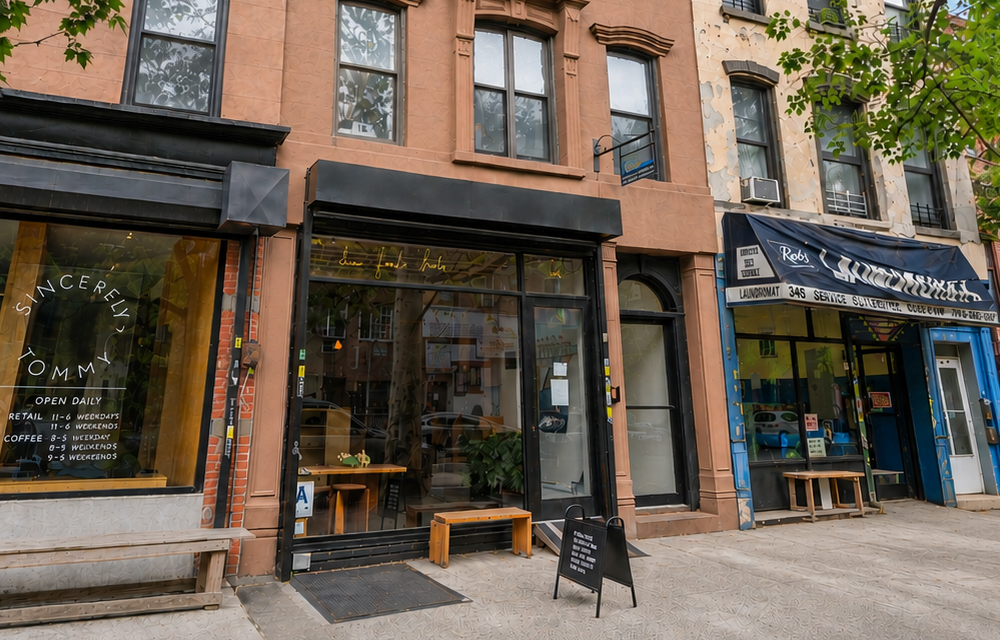
Bestreich, Reynolds, Davila, and Flaherty of Investment Property Realty Group close $1.97 million sale of 343A Tompkins Ave. in Bed-Stuy
Brooklyn, NY Investment Property Realty Group (IPRG) closed the sale of 343A Tompkins Ave., a mixed-use building located in the Bed-Stuy section of the borough, for $1.97 million.


Quick Hits

Columns and Thought Leadership

A guide to finding the right NYC property management company - by Sanjay Gandhi
Being a small to midsize landlord in NYC is an increasingly demanding endeavor. From navigating complex regulations, increased compliance demands to dealing with tenant issues and remediating violations. It is wise to enlist the assistance of a partner, a professional

New York’s streets are full again, and the retail numbers prove it - by Noam Aziz
Walk down any New York block this year and you can feel it. The sidewalks are crowded, the storefronts are lit, and the energy that defines this city is back at full volume.

Hunt commercial real estate question and answer: Fortune 500 wisdom - by David Hunt
Yes, there are lessons to be learned from the largest companies in America when comes to managing your real estate. But the decision to buy or lease real estate may not be one of

Hunt CRE question and answer: Choosing a real estate agent - by David Hunt
First, we will only work with one agent exclusively. The primary reason is that we want that agent to legally represent our client’s interests. In New York State, a real estate agent has a fiduciary
.gif)