



News:
Brokerage
Posted: February 25, 2013
Retroactive tax benefits for real estate owners! Part 2
2012 TRA - For tax years beginning in 2012, the 2012 TRA increases the maximum deduction from $139,000 to $500,000. For the 2013 tax year, the act increases the maximum expensing amount from $25,000 to $500,000. Of importance, the 2012 TRA also increases the phase-out amount for both 2012 and 2013 to $2 million. In 2014, this temporary provision will sunset and the maximum deduction will return to $25,000 and the phase-out amount will reset back to $200,000.
15-Year Write-off for Qualified Leasehold, Retail and Restaurant Property Reinstated and Extended
Section 1250 property that meets specific criteria could be classified as either qualified leasehold improvement property, qualified restaurant property or qualified retail improvement property, and could be recovered over a 15-year period using the straight line method.
2012 TRA - The act retroactively extends for two years the inclusion of qualified leasehold improvement property, qualified restaurant property and qualified retail improvement property in the 15-year MACRS class. Such property qualifies for 15-year recovery if it is placed in service before Jan. 1, 2014.
Retirement of Structural Improvements: Ever since the end of the component depreciation system, owners have complained about a requirement to continue depreciating physically abandoned assets. Those of you who have been around for a while may recall that the component depreciation system conjoined the estimated useful life of an asset and its recovery period. This alleviated the concern of recording a loss on the retirement as long as the asset performed within its life expectancy. However, under the accelerated cost recovery system, the link between the estimated useful life and the recovery period was lost. This resulted in owners continuing to depreciate items that no longer exist.
The roofs, windows and HVAC components do not last 39 years. To make matters worse, IRS guidance required owners to capitalize the costs of the replacement when these systems finally met the end of their useful life. This was not an issue under the component depreciation system if the system performed according to their specification. The system would be 100% depreciated when it was time for replacement.
Fast forward . . . Under the new regulations, the IRS allows owners to write-off the un-depreciated portion of the retired components on a current and retroactive basis back to 1986. If you have a building and replaced a roof, boiler, or elevator over the last 15 years, you are still depreciating components that no longer exist. Therefore, the time has come to write-off all of the abandoned assets that have accumulated over time. If you retire an asset in 2012 or any future years, you are able to take the appropriate write-off in the relevant tax period.
Open a Dialogue that Helps Defer Taxes: Since 2001, Congress has utilized depreciation related tax incentives to induce real estate owners to spend more, as a means to stimulate the economy. The 2012 TRA and the issuance of the new repairs and maintenance regulations earlier this year, which allows the write-off of retired structural components, is in line with this favorable tax strategy.
With the top individual tax rates being reset to over 39% for 2013, and real estate tax incentives being reinstated for both 2012 and 2013, it is a perfect time for tax planning. Carefully balancing these incentives coupled with the ability to take advantage of the new repair and maintenance regulations through the use of cost segregation, opens the door to a productive conversation that can significantly benefit all parties.
Mark de Stefanis, CCA, is president of Construction Cost Recovery, Inc., White Plains, N.Y.
Tags:
Brokerage
MORE FROM Brokerage
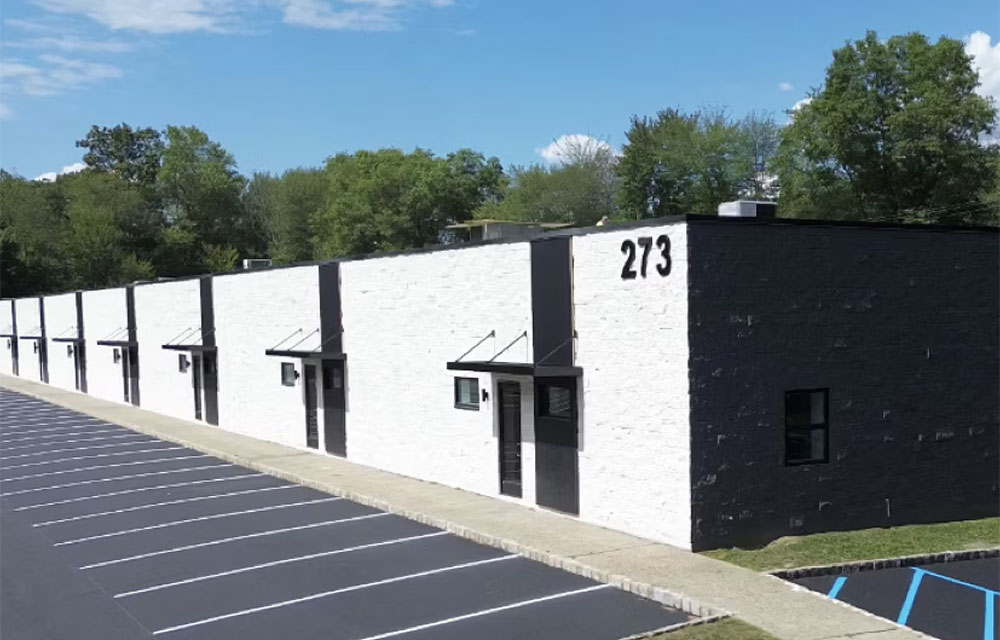
Resource Realty of Northern NJ delivers complete lease-up of 235 Franklin Rd. for Commerce Park Investors
Randolph, NJ Resource Realty of Northern New Jersey (RRNNJ) has completed the lease-up of a 10-unit small-bay industrial property at 273 Franklin Rd., marking the culmination of an investment strategy that began





Quick Hits
 (2).gif)

Columns and Thought Leadership

Hunt commercial real estate question and answer: Fortune 500 wisdom - by David Hunt
Yes, there are lessons to be learned from the largest companies in America when comes to managing your real estate. But the decision to buy or lease real estate may not be one of

New York’s streets are full again, and the retail numbers prove it - by Noam Aziz
Walk down any New York block this year and you can feel it. The sidewalks are crowded, the storefronts are lit, and the energy that defines this city is back at full volume.

Positive forecast for New York’s pro-housing push? - by Philip Butler
New York’s housing crisis remains a hot button topic despite growing consensus that varied and affordable housing is desperately needed statewide. Governor Hochul has recently introduced several initiatives to overcome N.Y.’s anti-housing

A guide to finding the right NYC property management company - by Sanjay Gandhi
Being a small to midsize landlord in NYC is an increasingly demanding endeavor. From navigating complex regulations, increased compliance demands to dealing with tenant issues and remediating violations. It is wise to enlist the assistance of a partner, a professional
.gif)