



News:
Brokerage
Posted: October 16, 2012
Question of the Month: Is rent abatement still automatic when the landlord enters into tenants demised premises?
When dealing with a commercial landlord / tenant eviction there used to be a straightforward and longstanding rule, "the withholding of the entire amount of rent is the proper remedy when there has been a partial eviction by a landlord." (Fifth Ave. Bldg. Co. v. Kernochan, 221 NY 370 (1917)) When a landlord evicted a tenant, even partially, from the use and enjoyment of the demised premises the governing principle in New York state was that a landlord, "is not permitted to apportion his own wrong." (Fifth Ave. Bldg. Co. v. Kernochan, 221 NY 370 at 373), and the tenant's rent was fully abated. Recently, the Court of Appeals added a new wrinkle to this longstanding rule.
In Eastside Exhibition Corp. v. 210 East 86th Street Corp., 18 NY3d 617 (2012) the court added an exception to this rule. The court determined that where, "the interference by the landlord is small and has no demonstrable effect on the tenant's use and enjoyment of the space, total rent abatement is not warranted." (Eastside Exhibition Corp. v. 210 East 86th Street Corp., 18 NY3d 617 at 619)
In Eastside, the plaintiff leased two floors to operate a movie theater. The lease allowed the landlord to make improvements without any abatement of rent. The defendant, in preparation for the addition of two floors to the building, added cross bracing between two existing steel support columns, in the demised premises. The cross bracing occupied approximately 12 s/f out of the 15,000 to 19,000 total s/f of the demised premises. The cross bracing also caused a change in the flow of foot traffic. The plaintiff ceased paying rent, claiming an eviction and started an action seeking a permanent injunction barring any more work, an order directing defendant to remove the cross bracing and an abatement of its rent obligation.
The Supreme Court dismissed the plaintiff's claims and entered judgment for the unpaid rent in favor of the defendant, stating that the taking of 12 s/f of non-essential space was a de minimis taking not warranting afull rent abatement. The plaintiff appealed and the Appellate Division modified the decision, holding that there is no de minimis exception to the rule that any unauthorized taking of demised premises by a landlord constitutes an eviction. The Appellate Division remanded the case to the Supreme Court for a hearing on damages. Surprisingly, the plaintiff was unable to establish any damages.
The Court of Appeals heard the case to address the questions of "whether there can be an intrusion on the demised premises that is of such trifling amount that imposition of the draconian remedy of total rent abatement is unjustified." The court answered its own question by stating, "For an intrusion to be considered an actual partial eviction it must interfere in some, more than trivial, manner with the tenant's use and enjoyment of the premises."
In this specific case, the court determined that the tenant had failed to demonstrate any actual damages or loss of enjoyment to the space. The 12 s/f, less than 1% of the demised premises, within which the landlord installed cross bracing only affected the flow of foot traffic, which the court called, "merely a trivial interference with the tenants use and enjoyment of the premises" and upon which the tenant could not demonstrate any actual damages was de minimis enough that, "neither injunctive, nor monetary relief is warranted" for the tenant.
Had the tenant been able to demonstrate actual damages, or the space taken by the landlord was larger, the outcome may have been different. What is clear, is that for landlord's this ruling is a breath of fresh air in an area which was previously toxic.
Steven Glassberg is the founder of Glassberg & Associates, LLC, New York, N.Y. and Port Washington, N.Y.
Tags:
Brokerage
MORE FROM Brokerage
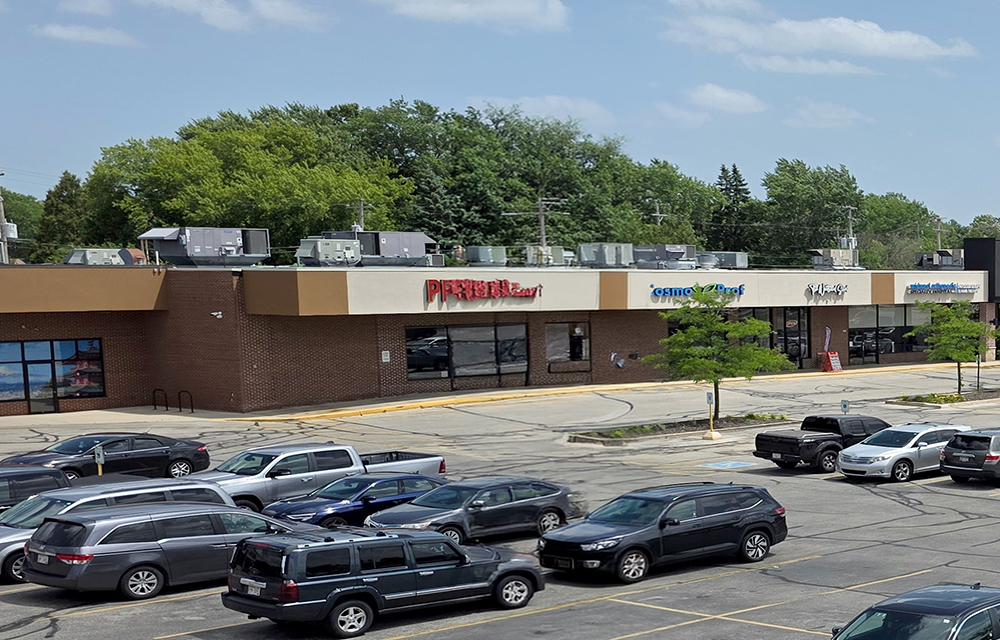
United Properties Corp. expands Wisconsin and Illinois retail presence adding 200,000 s/f
West Allis, WI United Properties Corp. completed two retail acquisitions totaling $27.4 million across Illinois and Wisconsin, adding 205,000 s/f of shopping center space to its portfolio




Quick Hits

Columns and Thought Leadership

Positive forecast for New York’s pro-housing push? - by Philip Butler
New York’s housing crisis remains a hot button topic despite growing consensus that varied and affordable housing is desperately needed statewide. Governor Hochul has recently introduced several initiatives to overcome N.Y.’s anti-housing

New York’s streets are full again, and the retail numbers prove it - by Noam Aziz
Walk down any New York block this year and you can feel it. The sidewalks are crowded, the storefronts are lit, and the energy that defines this city is back at full volume.

A guide to finding the right NYC property management company - by Sanjay Gandhi
Being a small to midsize landlord in NYC is an increasingly demanding endeavor. From navigating complex regulations, increased compliance demands to dealing with tenant issues and remediating violations. It is wise to enlist the assistance of a partner, a professional

Hunt commercial real estate question and answer: Fortune 500 wisdom - by David Hunt
Yes, there are lessons to be learned from the largest companies in America when comes to managing your real estate. But the decision to buy or lease real estate may not be one of
.gif)