



News:
Brokerage
Posted: May 19, 2008
Deals involving partnership interests in a 1031 exchange
Congress passed Section 1031(a)(2)(D) in the Deficit Reduction Act of 1984. Among other things, the bill amended Section 1031 to exclude "any interest in a partnership" from the types of property otherwise eligible for deferral in an exchange transaction. Thus, holding real property in a partnership (or any entity treated as a partnership for federal income tax purposes) will generally limit the ability of an investor owner to sell the partnership interest as relinquished property in a 1031 exchange independent from the other owner partners. Similarly, the partnership interest would not be marketable to a buyer desiring to obtain tax deferral under Section 1031. As a result of this statutory limitation, and for other reasons, the popularity of tenant in common ownership structures has increased dramatically in recent years. Nevertheless, desirable commercial real estate continues to be held in limited liability companies, limited partnerships and other entities that would be characterized under federal law as partnerships (hereinafter collectively "tax partnerships" and individually, "tax partnership"). Recent private letter rulings (PLR) issued under Section 1031 provide guidance concerning the characterization of a transfer of a partnership interests as a transfer of the real property owned by the partnership in certain cases. A working knowledge of these rules is critical to attorneys and accountants advising real estate investors engaged in tax deferred exchanges.
Acquisition of a Tax Partnership
It is well settled that a partner in a tax partnership that owns real estate cannot sell their partnership interests as relinquished property in a tax deferred exchange. The sale of a partnership interest is always characterized as the transfer of a partnership interest under Section 1031(a)(2)(D), but the converse is not always true with respect to a purchase of partnership interests. PLR 200807005 provides that where an investor acquires 100% of the outstanding interests of a tax partnership that owns real property, the investor will be treated for tax purposes as having acquired the real property owned by the tax partnership. Under the facts presented in PLR 200807005, an investor purchased 100% of the outstanding interests in a limited partnership. Immediately following the purchase, the investor owned all of the economic interests of the selling partners, including the interests of the general partner and all limited partners. Upon the acquisition of the partnership interests, the limited partnership would be characterized for federal income tax purposes as a disregarded entity in the hands of the investor. Citing Revenue Ruling 99-6, 1999-1 C.B. 432, the IRS characterized the transaction from the purchaser's point of view as a dissolution of the limited partnership followed by a deemed distribution of the partnership's assets to the selling partners. The purchaser would therefore be treated as acquiring the assets from the selling partners. The PLR notes that the sellers of the partnership are treated as transferring partnership interests.
To summarize the requirements discussed above, the purchase of a partnership interest will be treated as the acquisition of the property of the partnership for purposes of Section 1031(a) and not treated as a partnership interest under Section 1031(a)(2)(D) if the following requirements are met:
1. The selling entity must be characterized as a partnership in the hands of the selling partners for federal income tax purposes. Thus, a general partnership, limited partnership, limited liability company or limited liability partnership that would be treated as dissolved upon the transfer of 100% of the outstanding partnership interests to a single buyer. A corporation, association or any entity that elects to be taxed as a corporation would not satisfy this requirement.
Tags:
Brokerage
MORE FROM Brokerage
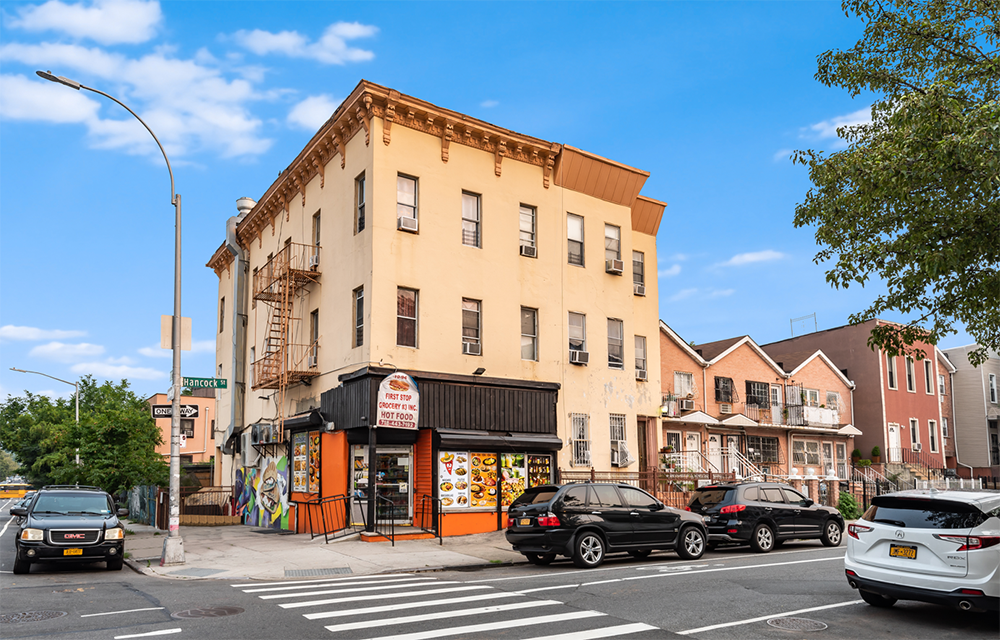
Investment Property Realty Group closes $1.75 million sale of 1094 Hancock Street in Brooklyn
Brooklyn, NY Investment Property Realty Group (IPRG), a New York-based commercial investment firm, has closed the sale of 1094 Hancock St., a mixed-use building in the Bushwick section, for $1.75 million.





Quick Hits
 (2).gif)

Columns and Thought Leadership

Hunt CRE question and answer: Choosing a real estate agent - by David Hunt
First, we will only work with one agent exclusively. The primary reason is that we want that agent to legally represent our client’s interests. In New York State, a real estate agent has a fiduciary

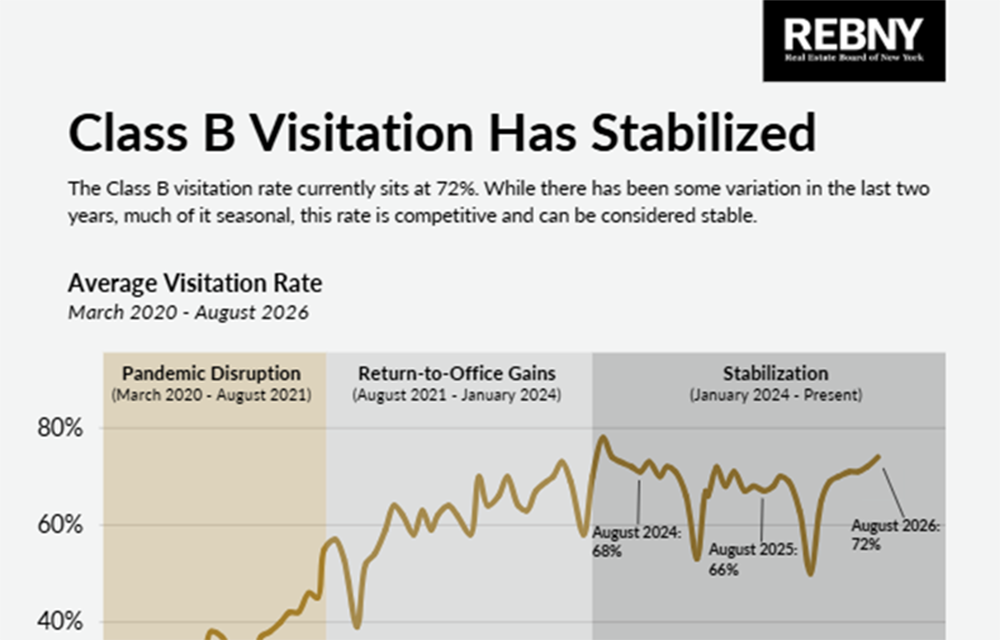
New York’s streets are full again, and the retail numbers prove it - by Noam Aziz
Walk down any New York block this year and you can feel it. The sidewalks are crowded, the storefronts are lit, and the energy that defines this city is back at full volume.

A guide to finding the right NYC property management company - by Sanjay Gandhi
Being a small to midsize landlord in NYC is an increasingly demanding endeavor. From navigating complex regulations, increased compliance demands to dealing with tenant issues and remediating violations. It is wise to enlist the assistance of a partner, a professional

Hunt commercial real estate question and answer: Fortune 500 wisdom - by David Hunt
Yes, there are lessons to be learned from the largest companies in America when comes to managing your real estate. But the decision to buy or lease real estate may not be one of
.gif)