



News:
Brokerage
Posted: September 26, 2007
Considerations when investing in multifamily apartments projects
Rental apartments are still a popular form of housing in this country. According to the 2000 Census-General Housing Characteristics in NYS, alone there are 7.056 million occupied housing units, of which 3.317 million are renter occupied. This statistic certainly reinforces the investment activity taking place in multifamily apartment complexes.
Apartment projects may be 10, 50, 100 or 1,000 units or more. Regardless of size, basic financial principles and financial analysis are essential. Knowing your client's investment criteria and their absolute return percentage is important. For example, a particular investor may not consider any investment that has a cash-on-cash return below 15%. That being said, calculating the cash-on-cash return is necessary for them to make an investment decision. A few percentage points, or depending on the size of the investment, a few basis points could mean a loss of income and thousands of dollars lost. Consider the following:
A 150-unit apartment complex purchased for $6.75 million with $750,000 allocated to the land with a $1.35 million cash down payment.
* $1.25 million gross annual rental income
* $615,000 operating expenses
* $635,000 net operating income
* $432,000 debt service interest only at 8%
* $203,000 net cash flow before taxes
* $153,840 depreciation at 0.02564%
* $49,160 taxable income
* $17,206 taxes (35% bracket)
* $203,000 net cash flow before taxes
* $17,206 taxes
* $185,794 net cash flow after taxes
$185,794 net cash flow after taxes÷ $1.35 million down payment = 13.76% cash-on-cash return on investment.
When a cash-on-cash analysis is provided on a property it is usually computed by dividing the before tax cash flow by the down payment. If the cash-on-cash return were calculated this way in the example above, it would have been 15.03% or a difference of 1.27%. Since depreciation and taxes were taken into consideration, the actual cash-on-cash return was lower; not by much, but maybe enough to put it below your investor's threshold. Also, though the percentage may appear to be small, keep in mind it is only for a one year period. Multiply this by the projected holding period of the property and it can result in a significant amount of cash the owner will not be receiving.
When searching for an investment property for a client, be sure to ask about their tax bracket and take a little extra time to give them a more accurate return on their investment.
Gregory Oehler, MBA, is a branch leader at Hunt Commercial Real Estate, Rochester, N.Y.
Tags:
Brokerage
MORE FROM Brokerage

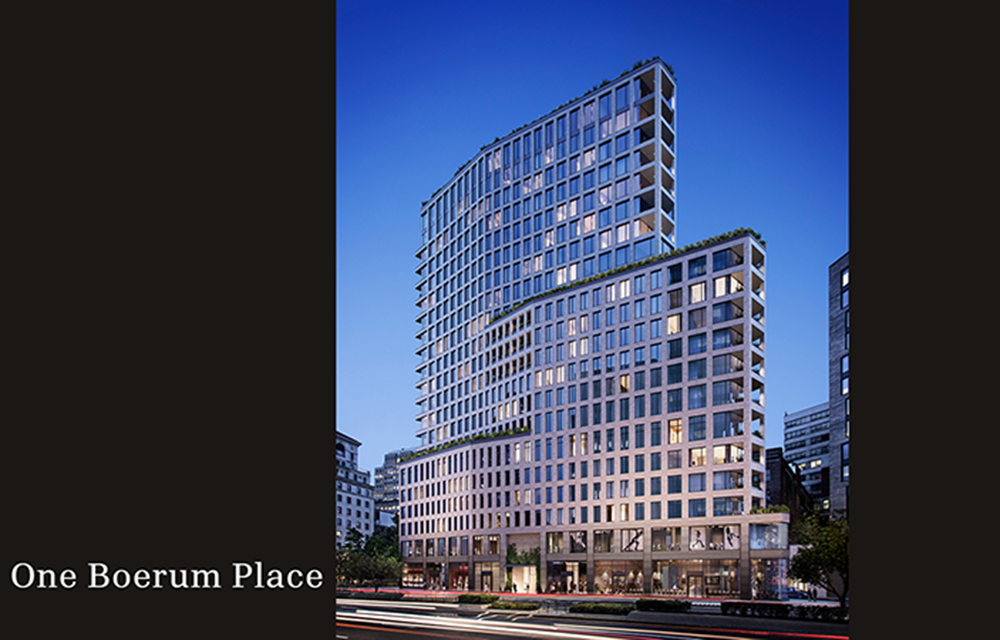
200E20TH sells out in Gramercy, penthouse A closes out sales at the CetraRuddy-designed condominium residences
Manhattan, NY 200E20TH, the CetraRuddy-designed architectural masterwork that brought a curved, contemporary sensibility to Gramercy’s Beaux-Arts streetscape, has


 (2).gif)
Columns and Thought Leadership

Hunt CRE question and answer: Choosing a real estate agent - by David Hunt
First, we will only work with one agent exclusively. The primary reason is that we want that agent to legally represent our client’s interests. In New York State, a real estate agent has a fiduciary

New York’s streets are full again, and the retail numbers prove it - by Noam Aziz
Walk down any New York block this year and you can feel it. The sidewalks are crowded, the storefronts are lit, and the energy that defines this city is back at full volume.

The art of investing in real estate - by Thomas Donovan
Real estate investing is as much an art as it is a skill. No one can time the market, or the factors that drive it, perfectly. Location, zoning, size, transportation, and neighborhood density give you a baseline for

Hunt commercial real estate question and answer: Fortune 500 wisdom - by David Hunt
Yes, there are lessons to be learned from the largest companies in America when comes to managing your real estate. But the decision to buy or lease real estate may not be one of
.gif)