



News:
Brokerage
Posted: January 21, 2020
Changing strategies in New York City - by Andrew Dansker
 The New York real estate industry is facing challenges in 2020. Major regulatory reforms have been enacted which have severe negative impacts on values and cash flows for owners of stabilized multifamily units. Further regulatory reforms are under discussion which could have similar consequences for free market units as well as retail units. There are a variety of strategies that are currently being explored by New York operators to address these issues.
One strategy which is taking root in New York is for owners with a long time horizon to buy assets at the lowest cost per s/f that they can find, or at the highest cap rate. These properties are financed with long-term, low-cost, fixed-rate debt in the hope that the regulatory environment will experience a shift in the future and that the latent value in these assets will become accessible. The ability to make this type of investment is predicated not just on a long-time horizon for holding the assets, but a willingness to accept very meager returns until there is significant regulatory change.
Other operators have begun to focus their efforts exclusively on assets with fewer than six units (not rent-regulated) or with significant retail exposure. These investment thesis behind these strategies is based on the belief that the regulatory reforms currently under discussion which would impact free market and/or retail units will not ultimately become law. Not all operators as so confident of their abilities to predict what has proven to be an unusual legislative environment.
Many owners have begun to focus their attention on out-of-state properties. Our team has seen significant anecdotal evidence of a major shift in attention, particularly towards Florida. Philadelphia, Los Angeles, Austin/San Antonio, Denver, Nashville, Detroit and others have also appeared on our radar screen. These shifts, though, are predicated on management-free assets (NNN retail), some ground operations capabilities in the local market, or local operating partners/managers. Not all owners are comfortable with the requirements for operating at a distance and this sentiment is to some extent holding back the capital migration.
While bridge lending came in to vogue over the course of several years as asset prices climbed and many owners sought ways to generate a return at a lower cost basis exposure, this business is not in particularly good shape looking forward into 2020. Many of these transactions were executed based on a short-term value-add strategy. Now that such investment activity has been significantly curtailed by the change in rent laws, the market for these loans is rapidly drying up. There were already an overabundance of bridge lenders in the marketplace at 2018 sale volumes—now it will be increasingly hard for owners pursuing this strategy to find deals.
An alternative to lending that is the subject of today’s conversation is the purchase of existing mortgage notes. Because the changes in rent laws have not significantly impacted cash flows in the short term, but have mostly hurt values, it seems likely that we will learn today that most loans in NYC are still performing. What this means for this avenue as a means of viable investment going forward, remains to be discussed.
Overall the changes which are taking place in New York are forcing real estate investors to think creatively and seek out new business models, or new locations to practice their existing business models. We will continue to explore these models going forward as we hope to bring value to our clients by exposing them to as much information as possible in a time when the flow of new ideas and exposure to new opportunities is more critical than ever.
Andrew Dansker is the first vice president at Marcus & Millichap, Manhattan, N.Y.
Tags:
Brokerage
MORE FROM Brokerage
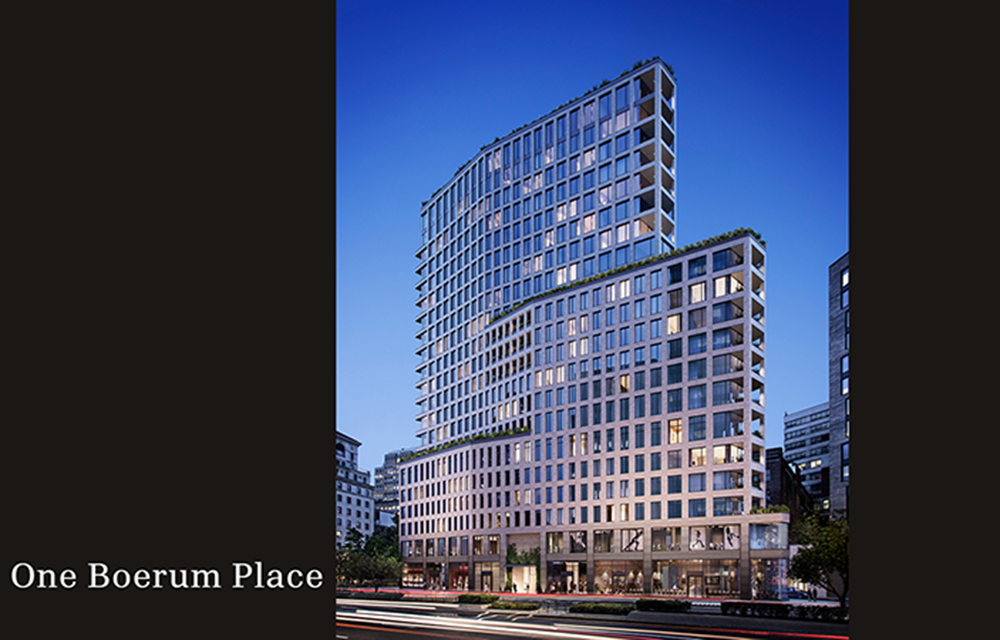
Residential real estate consultancy and brokerage firm Nancy Packes, Inc. rebrands as NPI
Manhattan, NY The NYC-based premier residential real estate consultancy and brokerage firm, Nancy Packes Inc., has rebranded as NPI. Helmed by Seth Rosner, most recently the firm’s managing partner and now president, the company has been intricately involved in hundreds of Tri-State new developments and conversions, spearheading the full project life cycle, from assessment/pre-dev.






Columns and Thought Leadership

The art of investing in real estate - by Thomas Donovan
Real estate investing is as much an art as it is a skill. No one can time the market, or the factors that drive it, perfectly. Location, zoning, size, transportation, and neighborhood density give you a baseline for

New York’s streets are full again, and the retail numbers prove it - by Noam Aziz
Walk down any New York block this year and you can feel it. The sidewalks are crowded, the storefronts are lit, and the energy that defines this city is back at full volume.

Hunt CRE question and answer: Choosing a real estate agent - by David Hunt
First, we will only work with one agent exclusively. The primary reason is that we want that agent to legally represent our client’s interests. In New York State, a real estate agent has a fiduciary

Hunt commercial real estate question and answer: Fortune 500 wisdom - by David Hunt
Yes, there are lessons to be learned from the largest companies in America when comes to managing your real estate. But the decision to buy or lease real estate may not be one of
.gif)