



News:
Brokerage
Posted: March 24, 2020
Hastings Capital completes total renovation for 327 Skidmore Rd. in Deer Park, Long Island
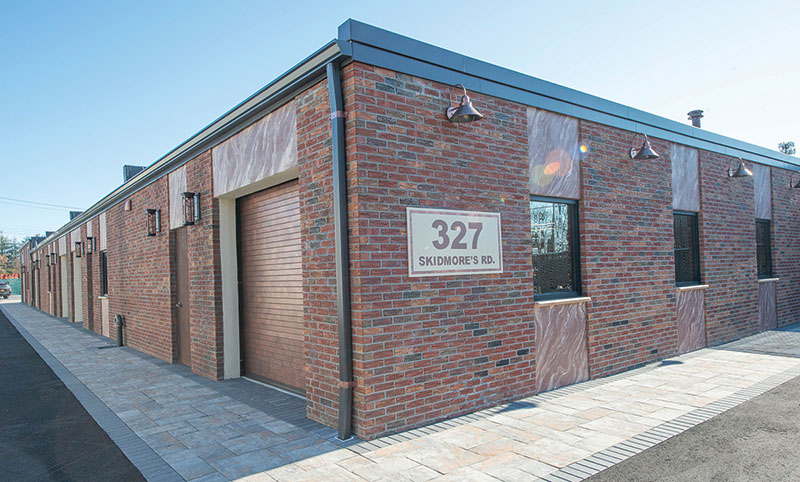
Deer Park, NY Hastings Capital, LLC continues to demonstrate an ongoing commitment to excellence and to turning Long Island’s underperforming properties into valuable resources. 327 Skidmore Rd. is Hastings’ latest turn-around.
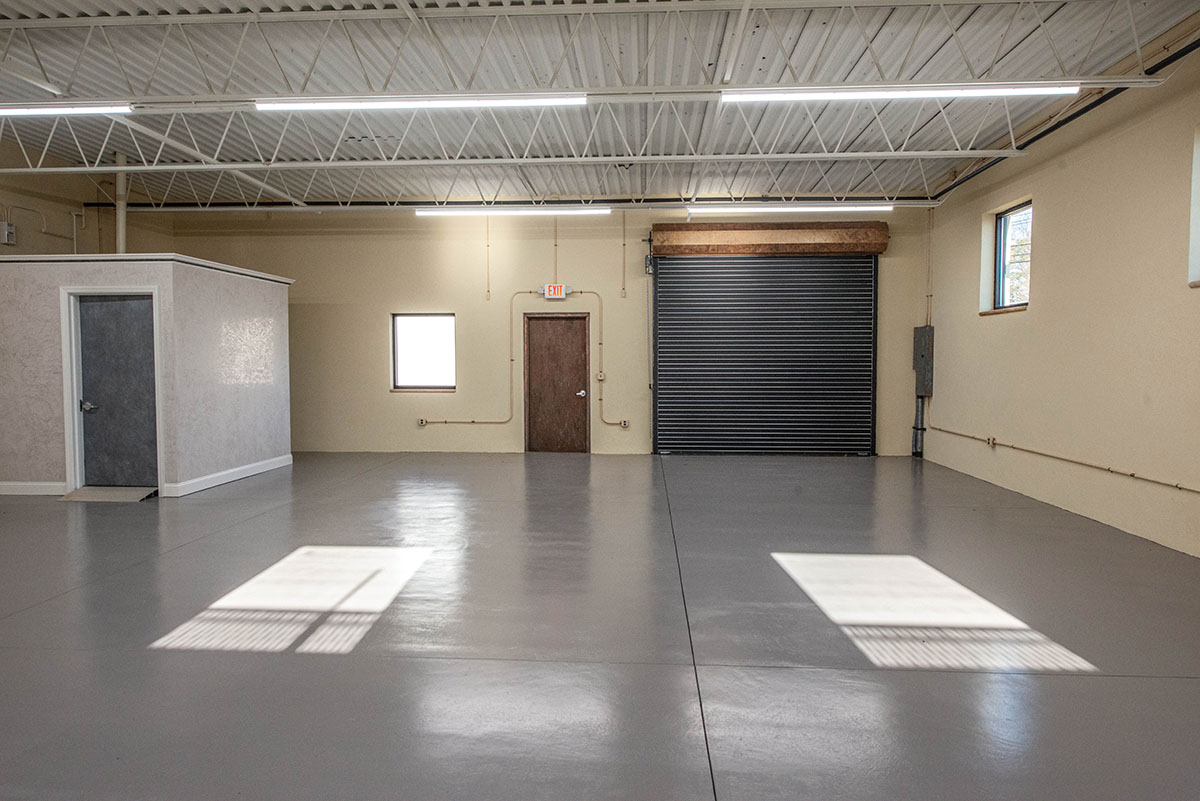 When Hastings Capital purchased 327 Skidmore Rd., the 7,000 s/f one-story building was in decline. “Yet, coming across an intact, multi-tenancy 7,000 s/f building in the Deer Park area is a rare find, and I saw an opportunity to create a desirable commercial/warehouse property for the region,” said Hastings Capital owner Bob Birnbaum. “This was a tired, vintage 1970s building that we brought into the 21st Century.”
With long-time tenants leases expiring—which included an engine rebuilder, a metal finishing company, and a warehousing operation—Birnbaum took the opportunity to leverage his skills at redesigning and renovating.
“Our team did a total gut renovation, gutting all five existing units—and installing new power, plumbing, office spaces, floors and removed outside masts,” said Birnbaum. “We kept the brick façade and simply did a chemical clean and power wash, added all new windows and doors, LED lighting, renovated bathrooms, new heating units, a new roof, faux finishes, and recessed panels.”
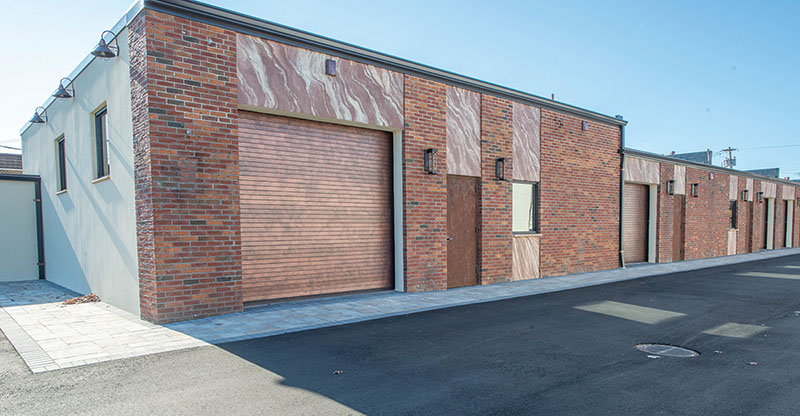 “The team is proud to unveil what is truly a brand-new building, ready for the next era of leasees,” he said. Powerlines are now underground.
The result is a completely new building, with five rental units ranging from 1,200-1,500 s/f. Tenants now include a food distributer, sculptor studio and communications/audio visual production studio. Each unit is unique, with differing types of faux finishes and stucco walls. In addition, every unit is separated by a parapet wall which provides autonomy and protects from fire and mishap. One unit is still available for lease.
The exterior recessed panels are faux finishes to replicate marble, creating a clean finished look, with each tenant having a separate entrance.
“We are proud to say that the building could not have been completed without our amazing team,” Birnbaum said.
Team members included Milicia Electric, Adam Weik Contracting, Arrow Cement, Six Gs Roofing, Impact Media, Par Contracting, R.S. Painting, Designs by Vera, JM2 Architects, Eric Weinstock and Wood Consulting, Ardito Mason Construction, Ira Levine, attorney, and Nick Romano from Metro Reality.
Tags:
Brokerage
MORE FROM Brokerage

Adirondack Capital Partners arranges $45 million sale of West Chelsea development site to Toll Brothers
Manhattan, NY Adirondack Capital Partners (ACP) closed the $45 million sale of 126/128 Tenth Ave. and 456 W. 18th St. to Toll Brothers City Living. The acquisition forms part of a broader





Quick Hits
 (2).gif)

Columns and Thought Leadership

New York’s streets are full again, and the retail numbers prove it - by Noam Aziz
Walk down any New York block this year and you can feel it. The sidewalks are crowded, the storefronts are lit, and the energy that defines this city is back at full volume.

Hunt commercial real estate question and answer: Fortune 500 wisdom - by David Hunt
Yes, there are lessons to be learned from the largest companies in America when comes to managing your real estate. But the decision to buy or lease real estate may not be one of

A guide to finding the right NYC property management company - by Sanjay Gandhi
Being a small to midsize landlord in NYC is an increasingly demanding endeavor. From navigating complex regulations, increased compliance demands to dealing with tenant issues and remediating violations. It is wise to enlist the assistance of a partner, a professional

Positive forecast for New York’s pro-housing push? - by Philip Butler
New York’s housing crisis remains a hot button topic despite growing consensus that varied and affordable housing is desperately needed statewide. Governor Hochul has recently introduced several initiatives to overcome N.Y.’s anti-housing
.gif)