



News:
Brokerage
Posted: March 1, 2016
Gorjian of Namdar Realty Group acquires 11,000 s/f retail property
Holly Hill, SC Joel Gorjian, vice president of acquisitions & dispositions at Namdar Realty Group, has completed the acquisition of the 8522 Old State Rd. retail property. The one-story, single-tenant building is currently leased by Advance Auto Parts. Namdar is a national commercial real estate investment and management firm headquartered in Great Neck, NY. The seller was a private investor.
“The current lease for the 11,000 s/f property is below the market value and the tenant is doing phenomenally well thanks to the highly visible and trafficked location at the intersection of Old State Rd. and Eutaw Rd., with neighboring retailers including a CVS Pharmacy, a Piggly Wiggly supermarket, Hardees, and ACE Hardware. The transaction was negotiated off-market,” said Gorjian.
Built in 1996, the structure sits on a 1.29-acre property. Advance Auto Parts has been operating at this location since 2005. The property is situated within a retail corridor that serves approximately 5,400 people residing within a five-mile radius. The median household income in the area is $44,800. The town of Holly Hill is located in the close vicinity of the intersection of interstate highways 95 and 26.
“The recent increase of the federal funds rate creates buying opportunities for long-term investor/operators such as Namdar by reducing demand and lowering the cost of commercial real estate,” said Gorjian. “We are currently negotiating six deals in Michigan, Iowa, and New York, and are looking for additional acquisition opportunities in the Southeast, including South Carolina. Our focus is on underperforming properties with high cap rates negotiated through off-market deals.”
Namdar Realty Group is a privately held commercial real estate investment and management firm headquartered in Great Neck, NY. The firm owns and operates more than 20 million square feet of commercial real estate nationwide. Namdar’s portfolio includes more than 100 retail centers, medical buildings, and office properties. These include: the Desoto Square Mall and the Jacksonville Regional Shopping Center, both in Jacksonville, FL; the Regency Square Mall in Richmond, VA; the Brewton Shopping Center in Brewton, AL; the Northwest Arkansas Mall in Fayetteville, AR; the Phillipsburg Mall in Phillipsburg, NJ; the Centereach Plaza in Centereach, NY; the Massapequa Strip Center in Massapequa, NY; the Eastridge Commons Shopping Center in Flint, MI; and the Mall of the Bluffs in Council Bluffs, IA.
Tags:
Brokerage
MORE FROM Brokerage
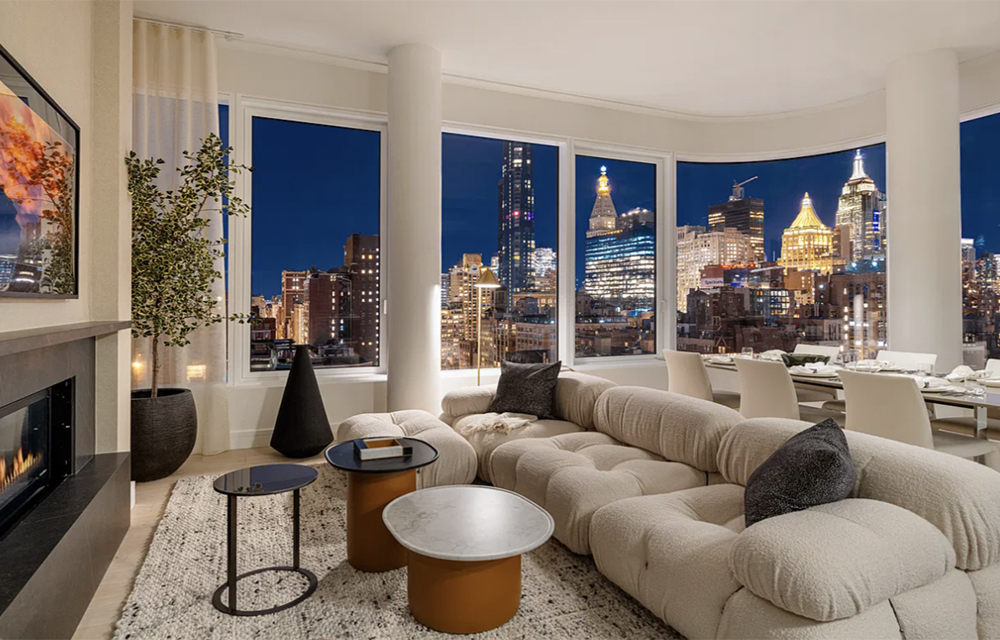
200E20TH sells out in Gramercy, penthouse A closes out sales at the CetraRuddy-designed condominium residences
Manhattan, NY 200E20TH, the CetraRuddy-designed architectural masterwork that brought a curved, contemporary sensibility to Gramercy’s Beaux-Arts streetscape, has




Columns and Thought Leadership

Hunt CRE question and answer: Choosing a real estate agent - by David Hunt
First, we will only work with one agent exclusively. The primary reason is that we want that agent to legally represent our client’s interests. In New York State, a real estate agent has a fiduciary

Hunt commercial real estate question and answer: Fortune 500 wisdom - by David Hunt
Yes, there are lessons to be learned from the largest companies in America when comes to managing your real estate. But the decision to buy or lease real estate may not be one of

New York’s streets are full again, and the retail numbers prove it - by Noam Aziz
Walk down any New York block this year and you can feel it. The sidewalks are crowded, the storefronts are lit, and the energy that defines this city is back at full volume.

The art of investing in real estate - by Thomas Donovan
Real estate investing is as much an art as it is a skill. No one can time the market, or the factors that drive it, perfectly. Location, zoning, size, transportation, and neighborhood density give you a baseline for
.gif)