



News:
Brokerage
Posted: March 6, 2026
GFP Real Estate, Newmark and JLL lease 28,687 s/f at 675 Ave. of the Americas to Candid Health
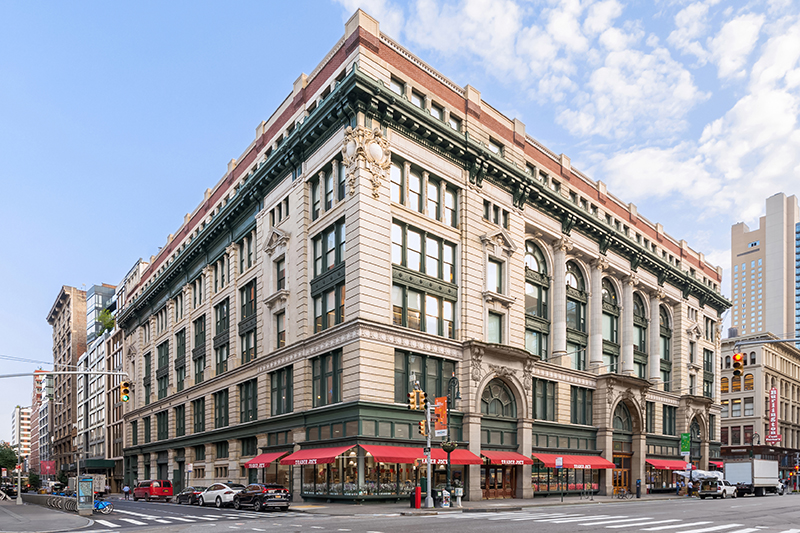
Manhattan, NY GFP Real Estate said that Candid Group, Inc. (d/b/a Candid Health), a healthcare revenue cycle software, has signed a new, seven-year lease for 28,687 s/f on the third floor of 675 Ave. of the Americas in Chelsea.
Jeffrey Gural and Alphie Toro of GFP Real Estate, along with Anthony Sciacca and Scott Gutnick of Newmark — represented the landlord, GFP Real Estate, in the transaction. Justin Haber, Kyle Riker and Emma Gill of JLL represented the tenant.
“Candid Health is exactly the type of forward-thinking, high-growth company we’re proud to welcome to 675 Avenue of the Americas,” said Jeffrey Gural, chairman of GFP Real Estate. “In addition to space that supports their current needs and long-term growth, the company was drawn to a location surrounded by its technology peers in what has become known as New York City’s Silicon Alley. We were pleased to deliver a flexible solution that aligns with how Candid Health is scaling, and we look forward to a long-term partnership as the company continues to expand.”
“We have been intentional about building an in-office culture because it raises the bar on how we collaborate and how we build,” said Bethany Hale, chief marketing officer at Candid Health. “Our new NYC office is an investment in our team and in creating a workspace that enables our best thinking and strongest execution.”
Originally built in 1901 as the Adams Dry Goods department store, 675 Avenue of the Americas spans a full city block between West 21st and 22nd Sts. Located in Chelsea, the building is five blocks north of Union Square Park and one avenue west of Madison Square Park, with access to Gramercy Park and New York City’s Silicon Alley.
Image credit: GFP Real Estate
Tags:
Brokerage
New York City
MORE FROM Brokerage

Law Firm Nutter expands space to 11,438 s/f at 5 Grand Central East
Manhattan, NY According to the Durst Organization, full-service law firm Nutter is expanding their office at 5 Grand Central East to 11,438 s/f. Nutter will take the entire 25th floor, in addition to renewing the firm’s existing office space on the 27th floor of the building.




Quick Hits
 (2).gif)

Columns and Thought Leadership

Positive forecast for New York’s pro-housing push? - by Philip Butler
New York’s housing crisis remains a hot button topic despite growing consensus that varied and affordable housing is desperately needed statewide. Governor Hochul has recently introduced several initiatives to overcome N.Y.’s anti-housing

A guide to finding the right NYC property management company - by Sanjay Gandhi
Being a small to midsize landlord in NYC is an increasingly demanding endeavor. From navigating complex regulations, increased compliance demands to dealing with tenant issues and remediating violations. It is wise to enlist the assistance of a partner, a professional

New York’s streets are full again, and the retail numbers prove it - by Noam Aziz
Walk down any New York block this year and you can feel it. The sidewalks are crowded, the storefronts are lit, and the energy that defines this city is back at full volume.

Hunt commercial real estate question and answer: Fortune 500 wisdom - by David Hunt
Yes, there are lessons to be learned from the largest companies in America when comes to managing your real estate. But the decision to buy or lease real estate may not be one of
.gif)