



News:
Brokerage
Posted: October 25, 2022
Ferrara and Stenson of Brax Realty sell 126-units for $6.7 million
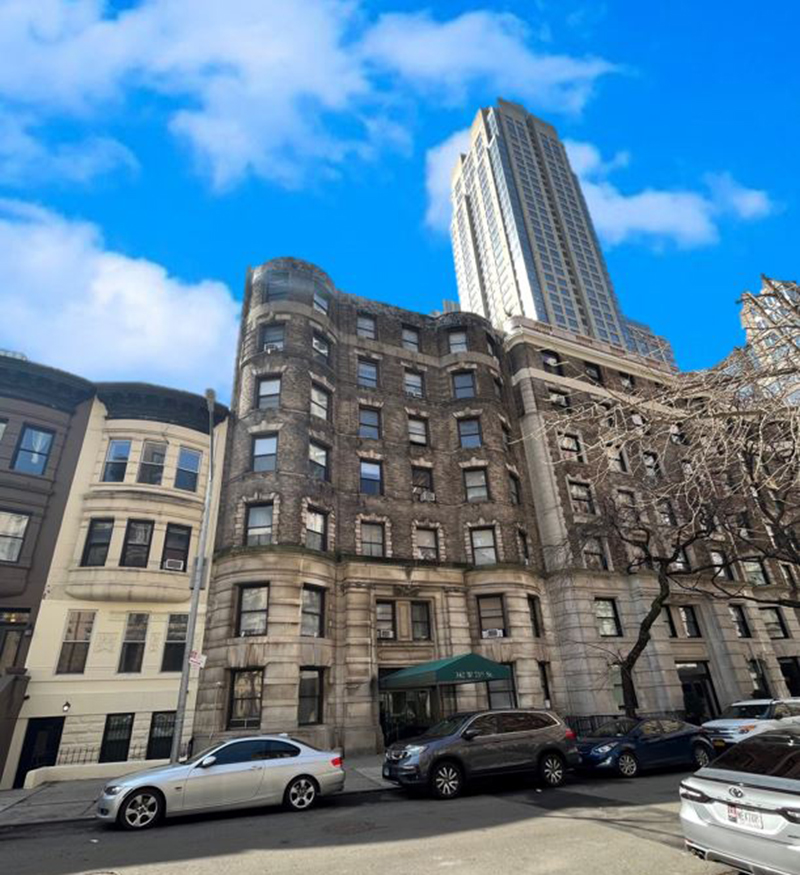
New York, NY Michael Ferrara and Alan Stenson of Brax Realty brokered the $6.7 million sale of a 126-unit SRO building in the Upper West Side. The property, 342 West 71st St., is a 7-story elevator building with 34,312 s/f and 52 ft. of frontage on 71st St.
Brax represented the buyer, Sapphire Acquisitions, and the seller, Riverside Studios, in the off-market transaction.
The price per unit was $53,174.
Tags:
Brokerage
MORE FROM Brokerage
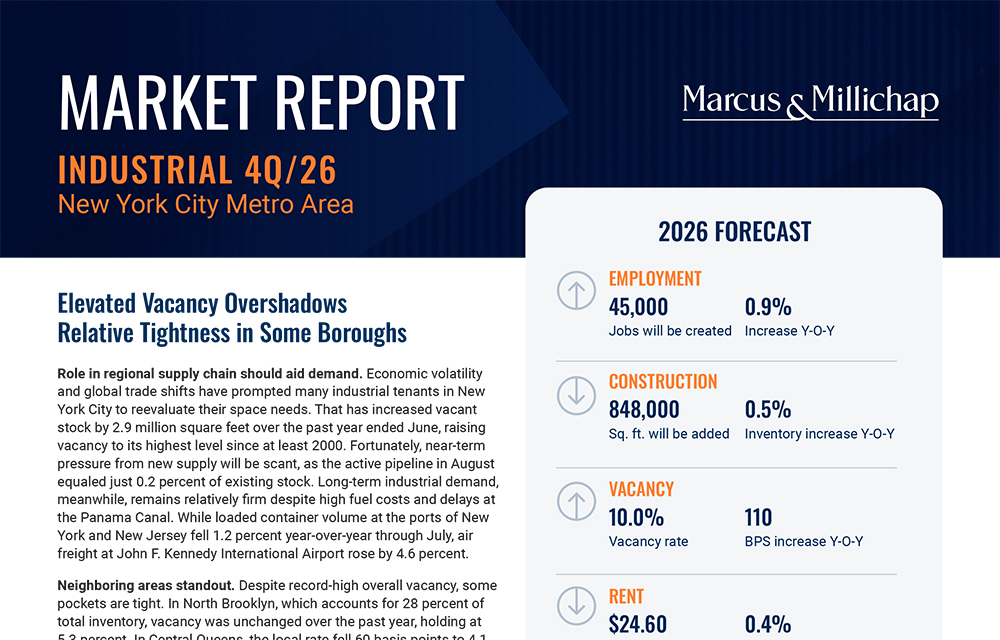
Marcus & Millichap releases fourth-quarter 2026 NYC industrial market report
Manhattan, NY Marcus & Millichap has published its fourth-quarter 2026 New York City Industrial Market Report. “New York City’s industrial market is showing a clear



Quick Hits
 (2).gif)

Columns and Thought Leadership

Hunt commercial real estate question and answer: Fortune 500 wisdom - by David Hunt
Yes, there are lessons to be learned from the largest companies in America when comes to managing your real estate. But the decision to buy or lease real estate may not be one of

The art of investing in real estate - by Thomas Donovan
Real estate investing is as much an art as it is a skill. No one can time the market, or the factors that drive it, perfectly. Location, zoning, size, transportation, and neighborhood density give you a baseline for

Hunt CRE question and answer: Choosing a real estate agent - by David Hunt
First, we will only work with one agent exclusively. The primary reason is that we want that agent to legally represent our client’s interests. In New York State, a real estate agent has a fiduciary

New York’s streets are full again, and the retail numbers prove it - by Noam Aziz
Walk down any New York block this year and you can feel it. The sidewalks are crowded, the storefronts are lit, and the energy that defines this city is back at full volume.
.gif)