



News:
Brokerage
Posted: December 17, 2007
Fed to the rescue: Economy is likely headed to recession
Today's economy is starting to look and feel like past downturns. While current forecasts still call for the national economy to just skirt a downturn, now it feels more likely the economy is headed into recession.
Parts of the economy are clearly already there. The housing, mortgage, and auto industries are the most obvious cases, Wall St. is now contracting; nondurable manufacturers producing apparel, textile, paper, and furniture are reeling; the print media is in decline; and large parts of retailing are on the precipice. Together, these industries account for more than 20% of the nation's GDP. Regionally, it appears that California, Florida,Michigan, Ohio, Nevada and Wisconsin are now slipping into recession.
These state economies account for over 25% of the nation's GDP.
Fed to the Rescue
At the current 4.5% federal funds rate target, the federal reserve has substantial latitude to rescue the economy by lowering interest rates and offsetting the tighter credit conditions. Surprisingly, fed policymakers seem hesitant to do so. Policymakers said threats to economic growth and of higher inflation were equally balanced. But the risks are not balanced and the economic expansion is coming undone. San Francisco fed president Yellen expressed her concern about recent data on consumer spending. She acknowledged that the much-awaited slowdown in consumption growth is here. Her tone furthers the view that fed policymakers are leaning toward further rate cuts when they meet over the next couple of meetings. Yellen acknowledged that she favors aggressive easing to make sure the fed does not "fall behind the curve." Yellen said economic downturns can be difficult to reverse once they take hold.
This hints that she believes more, and possibly more aggressive easing may be needed to steer the economy away from a recession.
Banks at risk
Major financial institutions are suffering large write-downs on their exposure to the U.S. housing and mortgage markets. Substantially more losses are expected through the remainder of 2007 and into 2008. Based on early estimates losses on mortgage-related investments range from $275 billion to over $300 billion. There is danger that a number of major financial institutions may fail or become so capital-impaired they are forced to severely rein in their activities. Capital reductions of $300 billion could remove some $6 trillion of lending from the economy almost guaranteeing a hefty recession. According to the federal reserve's October senior loan officer survey, commercial banks tightened up their lending standards, especially for non-conforming residential mortgage loans, but also for most other consumer loans, commercial mortgage loans, and commercial and industrial loans.
Bruce Mason is the chief economist at Union State Bank, Orangeburg, N.Y.
Tags:
Brokerage
MORE FROM Brokerage
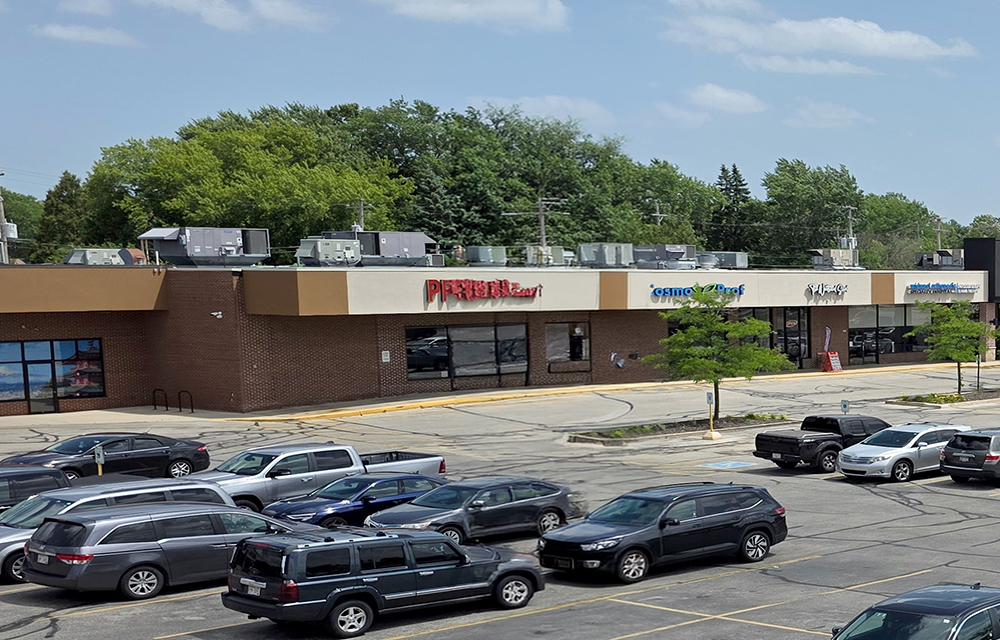
United Properties Corp. expands Wisconsin and Illinois retail presence adding 200,000 s/f
West Allis, WI United Properties Corp. completed two retail acquisitions totaling $27.4 million across Illinois and Wisconsin, adding 205,000 s/f of shopping center space to its portfolio




Quick Hits
 (2).gif)

Columns and Thought Leadership

Hunt commercial real estate question and answer: Fortune 500 wisdom - by David Hunt
Yes, there are lessons to be learned from the largest companies in America when comes to managing your real estate. But the decision to buy or lease real estate may not be one of

New York’s streets are full again, and the retail numbers prove it - by Noam Aziz
Walk down any New York block this year and you can feel it. The sidewalks are crowded, the storefronts are lit, and the energy that defines this city is back at full volume.

Positive forecast for New York’s pro-housing push? - by Philip Butler
New York’s housing crisis remains a hot button topic despite growing consensus that varied and affordable housing is desperately needed statewide. Governor Hochul has recently introduced several initiatives to overcome N.Y.’s anti-housing

A guide to finding the right NYC property management company - by Sanjay Gandhi
Being a small to midsize landlord in NYC is an increasingly demanding endeavor. From navigating complex regulations, increased compliance demands to dealing with tenant issues and remediating violations. It is wise to enlist the assistance of a partner, a professional
.gif)