



News:
Long Island
Posted: December 6, 2016
Executive of the Month: Baker, partner in the real estate and land use & zoning groups at Certilman Balin Adler & Hyman LLP
 Certilman Balin Adler & Hyman LLP" width="240" height="300" /> Daniel Baker, Certilman Balin Adler & Hyman LLP
East Meadow, NY The New York Real Estate Journal recently sat down with Daniel Baker, partner in the real estate and land use & zoning groups at Certilman Balin Adler & Hyman LLP for a question and answer session.
Q: Tell me about your practice.
A: I am currently a partner in the real estate and land use & zoning groups at Certilman Balin. Our firm has two offices on Long Island and one in New Jersey, and we celebrated our 50th anniversary last year. We have 15 different areas of practice. While I also have experience in real estate tax certiorari and condemnation law, public and private sector labor law and other areas I have pursued over the years, my real interest has always been with the three specific areas of real estate law that I now focus on: real estate transaction matters, land use and zoning and municipal incentive and industrial development agency (IDA) benefits. My experience allows me to work with clients that range from small “mom and pop” operations and local developers to national and international shopping center owners and retailers. I provide them with the legal expertise, as well as the knowledge of local laws and customs, all of which are necessary to navigate through the real estate transactional and municipal processes. I feel strongly about committing my time and resources to not only prominent developers, but also to those clients seeking their first home or entering into their first commercial retail lease.
Q: What differentiates your real estate practice?
A: I provide our clients with, what I like to think of, as a “triple threat.” Unlike many attorneys in a general real estate practice group, I diversified my practice by focusing on the three areas I previously mentioned to benefit our clients who are involved with complex development projects primarily on Long Island. I take pride in servicing our clients by handling their entire project from start to finish. For example, a client may be purchasing a property that typically involves the traditional acquisition of the property, as well as lender financing. In addition, a client may also seek benefits from an IDA while simultaneously acquiring property. The client then may need to obtain land use and zoning approvals from the local municipality in order to finalize the IDA benefits and move ahead with development. The ability to serve our clients through the entire process is extremely challenging and gratifying to me.
 Baker co-chaired the Touro Law Center’s 12th Annual Golf Classic which was held at the Seawane Club - Hewlett Harbor, NY
Q: What trends are you seeing in the Long Island real estate market?
A: There are two different trends that I see. The Internet has affected how people shop. Developers and major retailers have to find a way to continue to draw shoppers to frequent brick and mortar stores. The Internet has changed the dynamic of shopping centers and malls by including more service and entertainment uses, such as restaurants, fitness centers, movie theaters and other attraction-type uses. This mixed-use form of development focuses on bringing in consumers who will use more than the shopping component. Another major trend involves transit-orientated development and the ability to retain people on Long Island who are entering the work force. This concept includes the rebuilding of local downtown areas, usually centered around train stations, which includes the construction of new and affordable housing for millennials and others in addition to attracting new restaurants and shops to support the residential components. The creation of TOD’s provides the younger generation with more incentives to stay here on Long Island, with less reliance on traveling by car and more on public transportation.
Q: Do you donate time to your community?
A: I think it’s important to give back to my community, and I have made that a priority. Since 1993, I have been an active member of the New York State and Nassau County Bar Associations. I now serve as the tenth judicial district representative to the real property law section of the New York Bar Association. From 2010 until 2012, I served as chairman of the Nassau County Bar Association’s real property law committee. I am presently a member of the New York State Commission on Quality Care for the Mentally Disabled’s Surrogate Decision Making Committee (SDMC) Program, which I have had the honor to serve for close to ten years. Having graduated from Touro Law Center in 1992, I presently serve as a member of the dean’s advisory council; an advisory board member for the Law Center’s Institute of Land Use and Sustainable Development Law; and an active member of its alumni association. I became involved with the Leukemia & Lymphoma Society, a cause close to my heart, and I was honored to serve as trustee of its Long Island chapter for over 15 years. I also provide pro bono legal services for those less fortunate. When I am not working, I spend my free time with my family and children and find the time to enjoy life. I’m an advanced open water diver, and I snowboard and play basketball and lacrosse. I have coached in the Huntington Village lacrosse and basketball programs when my sons were younger, and I currently coach Long Island CYO basketball and Huntington Village girls lacrosse with my daughter.
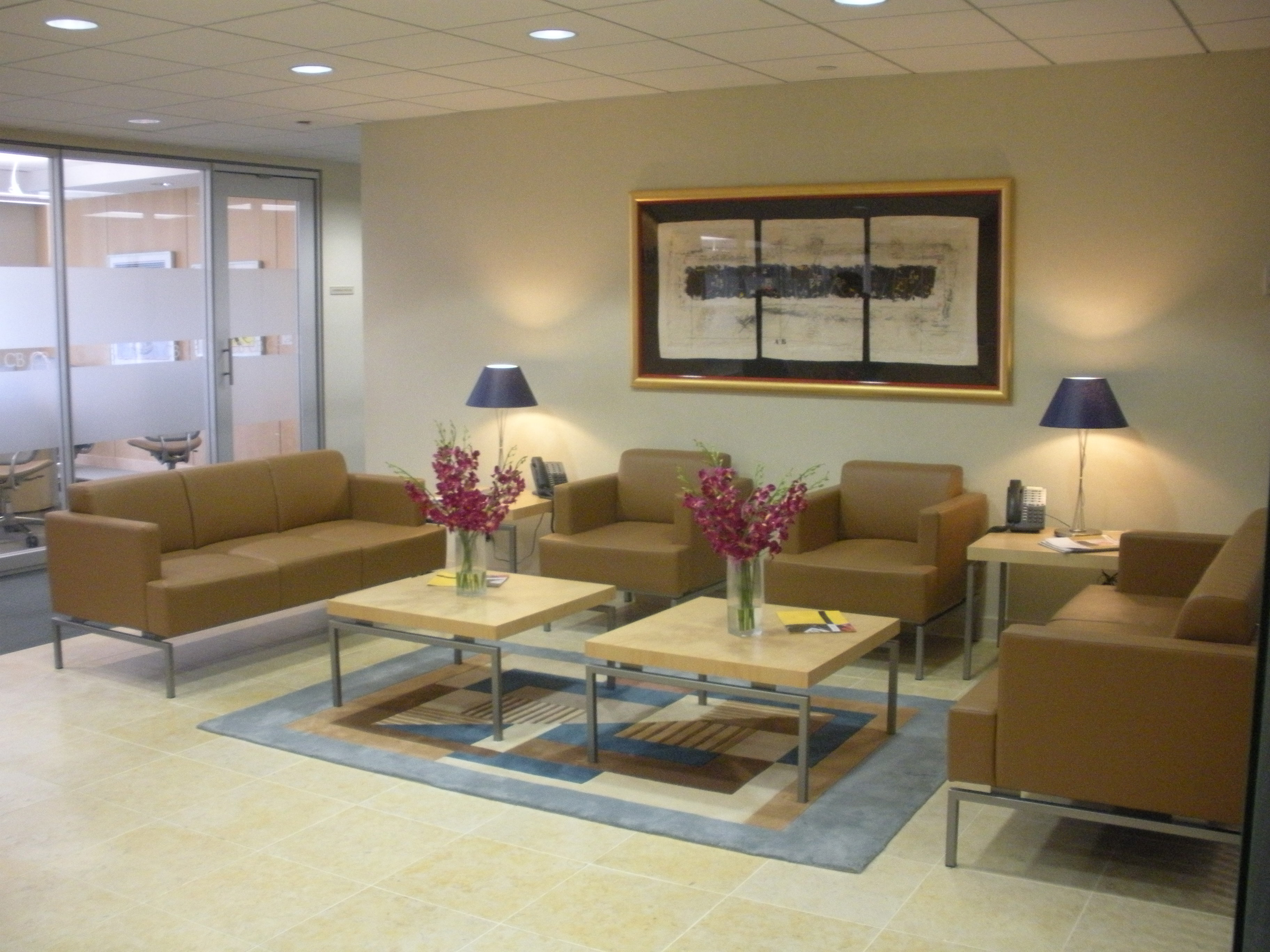 Certilman Balin’s East Meadow office lobby." width="300" height="225" /> Certilman Balin’s East Meadow office lobby.
Q: How would you best describe your day-to-day?
A: My bulldog and two golden retrievers start my day with some play time at about 6 a.m. From there, I drive to my office and start with telephone calls to and from clients. I’m in and out of the office meeting with clients, visiting properties and meeting with officials from local municipalities and agencies regarding the various land use and IDA projects of which I am currently involved. Many of my days end late into the night with appearances before the various municipal boards I frequent to obtain approvals for clients and their projects.
Q: How do you continue to build upon your practice?
A: I continue to represent my clients in all phases of their development and projects. I continue to gain experience with each new deal, learning and sometimes creating new law and policies to assist my clients in all phases of their development. I continue to be involved in challenging projects and transactions as well as continuing my legal education by attending various seminars and conferences in these areas of law.
Q: What are the biggest challenges for your clients and how do you help?
A: The two biggest challenges are dealing with the various municipalities in obtaining the necessary and required land use and zoning approvals for the development and re-development of property. The other challenge is dealing with the rising costs of real estate taxes here on Long Island. I assist our clients with all phases of the IDA process in helping to obtain the benefits afforded by the IDA which may include sales tax exemption, mortgage recording tax exemption and, most importantly, real estate tax relief in the form of a PILOT.
Tags:
Long Island
MORE FROM Long Island

Suffolk County IDA supports expansion of A&Z Pharmaceuticals
Hauppauge, NY The Suffolk County Industrial Development Agency (IDA) has granted preliminary approval of a financial incentive package that will assist a manufacturer in expanding its business by manufacturing more prescription (Rx) pharmaceuticals in addition to its existing over-the-counter



Quick Hits
 (2).gif)