



News:
Long Island
Posted: June 22, 2010
Environmental lessons for New York state from the current condition of the Gulf of Mexico
The recent events in the Gulf of Mexico resulting from the BP oil spill has resulted in substantial criticism of the federal government for not acting to mitigate the problem. These events offer important insights on making New York state government more efficient in protecting our environment.
In New York state, there are thousands of subsurface contamination problems where soil or groundwater is adversely affected principally by petroleum or industrial solvents. Past disposal activities, leaking underground storage tanks, discharges to cesspools, and other events have resulted in subsurface contamination issues that must be addressed. There are a few basic steps that must be followed. Initially, the release of contaminants must be stopped. An investigation must be performed to define the extent of the contamination, followed by remediation, a potentially lengthy process that will typically take years. The cost for this process is often in the millions for any individual problem. In New York State, the New York state Department of Environmental Conservation will usually take the lead. However, local agencies, such as a county department of health or the U.S. Environmental Protection Agency, may take the lead on a problem.
The government agency will seek to have a private party, usually either the current owner or a party that otherwise caused the contamination, pay for and perform the necessary work, similar to BP performing the work in the Gulf, with the U.S. Coast Guard providing oversight.
In cases where a private party is not available, the governmental body will typically perform the work using available funds allocated for remedial activity.
There are problems with this process. A private party will usually hire a consulting or engineering firm that will have to prepare work plans for the investigation and cleanup process. Often, multiple work plans will be required for each stage. The work plans must be submitted to a governmental body that will review and comment on the work plan with revisions being performed by the consulting or engineering firm. This can result in a lengthy process just for the approval of the work plans, which would not include the performance of the actual investigation or cleanup work. After the work is performed, investigation or remedial reports would also have to be prepared for submission to the agency for their review and comment.
There is an alternative approach that has been adopted in other states that can save a significant amount of time and taxpayer funds. The state would authorize Licensed Environmental Professionals to perform the investigation and remediation work independently without direct oversight by a governmental body. The regulatory agency would have to issue detailed requirements and standards that the Licensed Environmental Professionals would follow in the performance of an investigation and cleanup. If the Licensed Environmental Professional deviated from the regulatory requirements, the Licensed Environmental Professional would be subject to revocation of their license, a harsh result. The Licensed Environmental Professional's work could be subject to government review through a final report submitted by the Licensed Environmental Professional to the agency with jurisdiction. The Licensed Environmental Professional's work would be paid for by a private party who would otherwise be paying for a consulting or engineering firm under the current procedures. Private parties should be willing to pay for a Licensed Environmental Professional to perform this work since the process should proceed more expeditiously.
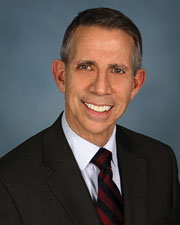
James Rigano is an attorney with Certilman Balin, Hauppauge, New York.
Tags:
Long Island
MORE FROM Long Island

Suffolk County IDA supports expansion of A&Z Pharmaceuticals
Hauppauge, NY The Suffolk County Industrial Development Agency (IDA) has granted preliminary approval of a financial incentive package that will assist a manufacturer in expanding its business by manufacturing more prescription (Rx) pharmaceuticals in addition to its existing over-the-counter


Quick Hits
