



News:
Construction Design & Engineering
Posted: December 31, 2018
Engel Burman, Northwell Health and BBS receive site plan approval for $90 million, six-building Wellbridge Residential Substance-Abuse Treatment Campus
Calverton, NY Developer The Engel Burman Group, partner and operator Northwell Health, and architect and engineer BBS Architects, Landscape Architects and Engineers received site plan approval from the town of Riverhead for the 134,000 s/f, $90 million, six-building Wellbridge Residential Substance-Abuse Treatment Campus located on 40 undeveloped acres.
The Engel Burman Group is a leading regional real estate developer with properties throughout the tri-state area. The firm develops, builds, owns, and manages commercial, residential, industrial, and retail properties. The most known assets in its portfolio are The Bristal Assisted Living communities and The Seasons Active Adult communities. Northwell Health is New York State’s largest health care provider and private employer, with 23 hospitals, approximately 650 outpatient facilities, and nearly 15,000 affiliated physicians.
BBS serves as architect and mechanical, electrical, and plumbing (MEP) engineer for the Wellbridge development, which is expected to open in late 2019/early 2020.
BBS founding principal Roger Smith, AIA, LEED AP, who was lead architect on the project, said, “Wellbridge will provide a total of 80 beds for those suffering from substance abuse disorder: 20 detox beds in a medically stabilized unit, 40 residential treatment beds for patients staying for an average of 30 days, and 20 beds for those staying for extended aftercare. The facility will be unique in that it will not only provide the latest in detoxification and rehabilitation, but will also conduct state-of-the-art addiction research, incorporating brain imaging and other neuroscience tools.”
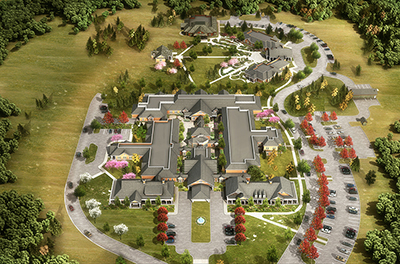
Treatment Campus - Riverhead, NY
Jonathan Morgenstern, PhD, director of substance abuse services at Northwell Health, said, “We intend to make this facility a center for addiction research and treatment together, which is the first of its kind in this country attached to a major health system. Having patients down the hall from researchers is very rare in addiction treatment centers.”
Engel Burman partner, Andrew Drazan, noted that the current opioid epidemic has reached “chilling proportions.” He said, “Over five hundred Long Islanders died in 2017 from opioids. There is not a single one of us who does not know some family that has been harmed by this scourge. This facility will help fill a major gap in substance abuse treatment in our community.” Both Northwell Health and Engel Burman anticipate the facility drawing upon patients not only from Long Island, but from throughout the country, due to the national reputation of its staff combined with Wellbridge’s research capabilities.
Terry Lynam, Northwell’s senior vice president and chief public relations officer, noted that 30 clinicians and 60 support staff members will be hired for Wellbridge, and that the campus is part of Northwell’s long-term commitment to meeting the needs of the community as well as responding to a major health crisis. “What makes Wellbridge unique is it combines treatment with addiction research, and that includes brain imaging of the clients, other neuroscience investigational methods, and pursuing other alternative treatments,” Lynam said.
“First and foremost, we had to create a harmonious campus that combines the top-notch treatment of addiction and drug- and alcohol-related diseases with research facilities into those diseases,” said Smith. “We were tasked with creating facilities that thoroughly addressed the different types and stages of the treatment process, including the detoxification section, the primary-care section, and both men’s and women’s areas of the long-term residential section. All the while, these areas have to provide a genuine aura of comfort, calm, and support,” he added. To this end, the BBS team used high-end, residential-style interior finishes within the patient buildings, in order to provide the appropriate atmosphere.
In addition to BBS, the team included the rehabilitation facility design consultant Olsen Design Group Architects, site and civil engineer Cameron Engineering & Associates, structural engineer Reilly Tarantino Engineering, and interior designer Directions in Design.
Overall Campus Program
BBS’ program for the Wellbridge campus includes a total of six buildings, all of which are one story high except for the main building, which is a partial two-story structure. The main treatment facility, at 101,866 s/f, will welcome patients, visitors, and staff members with a spacious and warm main lobby that is furnished with comfortable chairs and a reception desk. This building will house the main treatment facility, incorporating the detoxification facility, primary-care section, and research laboratories, as well as the main dining room, auditorium, consultation offices, and a non-denominational chapel fitted with extensive millwork for a warm and welcoming feel. In addition, the main treatment facility will house administrative offices and a property-management office. When the campus is complete, this main building will be connected to the other buildings via paved garden paths.
The short-term care building is where patients will reside after their first 30 days of treatment. The design team planned for 30 beds located in multiple one- and two-bed rooms, each room having its own bathroom. This facility also features a recreation room/lounge that will be outfitted with a large-screen television, ping-pong table, and other recreational offerings. A resident gathering off the entry lobby and a nutrition station – complete with snacks and soft drinks – round out the 17,188-square foot space.
The third structure is the wellness center, at 11,110 s/f. Many of the amenities within the wellness center are provided to help patients develop healthy daily routines. As part of the wellness center research program, patients will be evaluated to assess how physical activities help with the recovery from addiction. The building welcomes patients with a reception/lobby area and is equipped with massage and physical therapy rooms, gym/weight rooms with a golf simulator, a yoga studio, a therapy/soaking pool, and a hair and nail salon. It is also equipped with multiple offices for therapists.
The art barn is a 2,172 s/f facility with rooms for both music lessons and performances, as well as spaces for handicrafts such as drawing, painting, and pottery.
While the above-mentioned structures are all tailored to residents, the final two buildings are for staff only: there is the maintenance building, at 1,301 s/f, and the smaller gatehouse/security booth, at 200 square feet.
In terms of design, BBS developed an architectural design that is reminiscent of the traditional, shingle-style Long Island East End architecture. According to BBS project manager, James Weydig, AIA, LEED AP, “We wanted to incorporate building forms and materials that would be common in local residential construction to make the campus feel more like a neighborhood and less like an institution. The common architectural elements in all of the center’s buildings are gables, pitched and hip roofs, deep overhang soffits, traditional round columns, and fenestrations.” Building materials are consistent as well – architectural-style asphalt shingles, cedar shingles, composite trip boards, vinyl clad windows, and aluminum entry doors.
Further, to ensure each structure has an open, welcoming element, Weydig noted, “All patient buildings will incorporate at least one covered porch into its design.” The main building will be equipped with two such porches: one in the front and one in the back. While the main treatment building has a partial basement underneath the administration section, the rest of the structures all have slab-on-grade foundations.
The inviting interior spaces will be equipped with elaborate lighting fixtures, residential-style floor finishes, high-end vinyl wall coverings, extensive millwork trim and detailing, and artwork throughout. These high-end touches serve to enhance the residential feel of the treatment sections of the main building, despite their hospital-type beds and associated monitoring equipment.
BBS’ Douglas Glass, PE, who spearheaded the electrical design of the campus, noted, “We specified a robust UPS generator to be placed in each building. We needed to ensure that patients will have fully functioning facilities, even during the most dire hurricane conditions.” BBS’s project team also included Nicholas Cianciotti, who served as the mechanical and plumbing designer.
Finally, the designers specified a perimeter of decorative fencing that surrounds the campus. Residents, guests, visitors, and staff members enter the campus via an entry gate. The main driveway splits into parking lots located adjacent to each of the campus’ buildings.
The primary challenge related to the Wellbridge campus was the extraordinary amount of coordination that had to be undertaken with the myriad public entities that either regulate these types of facilities or had authority over the site. For example, when first developing the master plan, BBS and Cameron Engineering had to work with the New York State Department of Environmental Conservation (NYS DEC) to establish the building area within the overall site, which incorporates wetlands and protected habitats for reptiles and other wildlife. Other environmental agencies and departments, including NYS DEC’s Wild Scenic Recreational Rivers (WSRR) office, had to be consulted with as well.
In addition, the team negotiated with the U.S. Navy to obtain a section of their property for one of the access roads and for a utility connection. Meanwhile, the designers also had to work with the Federal Aviation Administration (FAA), since the property had been home to a former Grumman facility that was equipped with a runway along the property line. Although the runway is not currently active, there is the possibility that it could be recalled into service. Thus, the FAA placed limitations on the structures that could be built around it, in terms of distance from the runway and the new buildings’ height. Because of the proximity to the runway, the design team designed the exterior walls to improve their noise mitigation properties, in the event airplanes use the runway again in the future.
Other entities with which BBS worked included the local department of buildings, local utilities, the fire department, and the New York State Office of Alcoholism and Substance Abuse Services (OASAS).
MORE FROM Construction Design & Engineering
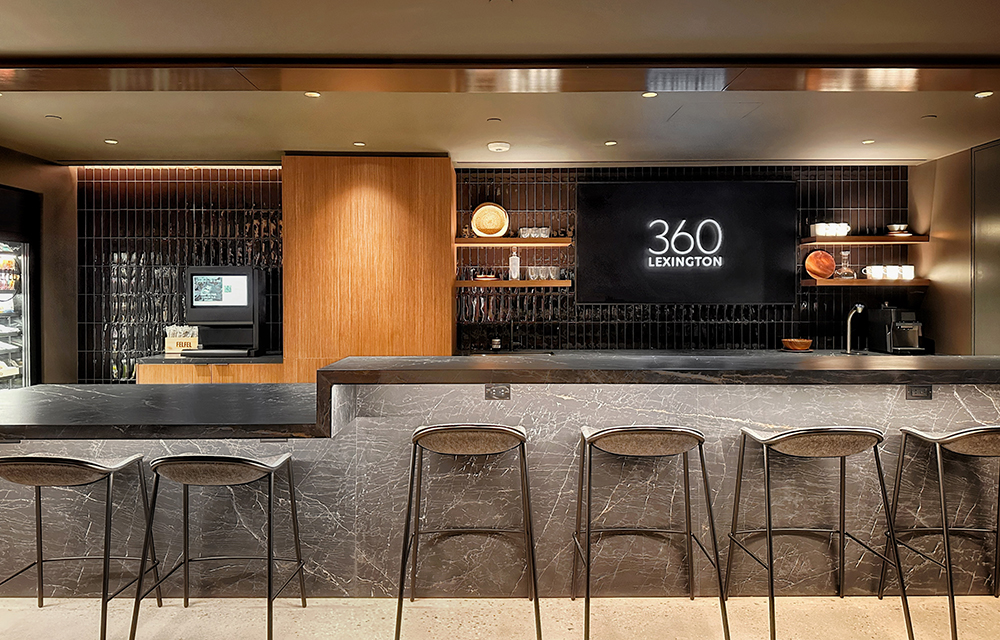
AmTrustRE and MdeAS Architects complete modernization of 360 Lexington Ave. in Midtown
Manhattan, NY AmTrustRE has completed a comprehensive modernization at 360 Lexington Ave. Led by New York-based architecture firm MdeAS Architects, the project reimagines the 268,000 s/f office building as a modern, hospitality-driven workplace designed to meet the evolving needs of tenants.

Quick Hits


Columns and Thought Leadership

We support green construction. Just not this kind - by Tammy Smith
Most people think of St. Patrick’s Day as a fun footnote on the calendar. In construction logistics, however, it’s a full-scale operational variable — especially if your work touches major metro areas with major parades and, let’s call it what it is, enthusiastic celebrants.

Premium experiences, proven returns: The New revenue playbook for sports venues - by Terry McIntyre
Investing in the Fan Experience as a Revenue Strategy The sports and entertainment venues that bet on premium experiences years ago are now seeing those investments pay off in packed seats, increased revenue, and industry recognition.

The Façade is no longer just a finish. It’s a risk strategy. - by Bentley Zhao
Twelve-billion-dollar weather disasters have already hit the U.S. through the first half of 2026, causing at least $31.9 billion in damage, according to Climate Central, the nonprofit that now maintains the disaster database NOAA discontinued.
