



News:
Construction Design & Engineering
Posted: April 11, 2011
Don't tell them anything because you might scare them: What tenants need to know
Urban Myth #1: "Tenants in high-rise office buildings are like mushrooms; during an incident, keep them in the dark and feed them as little information as possible so they will not panic."
Urban Myth #2: "During an incident, the building staff and first responders have a "lock" on situational awareness."
Unfortunately, these myths endure. Too many building staffs and first responders seem to believe that tenants do not have the wherewithal to think for themselves during an incident and therefore provide tenants insufficient information. One trend found during post-incident reviews is that, either by commission or omission, tenants are not provided adequate information in a timely fashion. Often these are unintended errors of omission as the building staff is scrambling to decipher incident details and to provide information to tenants via all-building announcements, notification systems or mass emails. Incredibly, there have been recent "errors of commission" where first responders have prohibited the building staff from making announcements to the tenants, even though the tenants could see police, fire and EMS activity outside their windows. Why can't we get the audio to match the video?
Since we live in a world of metrics, let's do some comparisons. Let's poll the available "information conduits" between tenants and building staff and see which group has the largest number of information sources. Ready? Here we go . . . televisions: tenants; computer interfaces: tenants; ability to tweet, IM and text: tenants; windows: tenants. And probably the most convincing statistic of all: the tenant to building staff eyes and ears ratio. In most commercial high-rise buildings there are at least tenfold (and often a hundredfold) more tenants than there are building staff. Why, then, are building staffs and first responders either unwilling or unable to provide tenants timely and accurate information? Why are tenants told to "stand by for instructions" when, in fact, they may have a better understanding of what is occurring?
Obviously, we do not want to have building occupants put themselves in harm's way; but most tenants, given their options (evacuate, relocate or shelter-in-place); the types of incidents which coincide with each of these protocols; and integrated, thoughtful training, will usually make the right decision in the absence of other guidance.
So let's ask ourselves the next obvious question: are we training our tenants, in the absence of information, to think on their feet? Are we acknowledging the current reality that tenants may have more accurate information than the building staff or first responders? Or are we telling them to disregard their information conduits and to "standby" for instructions, even if that information is delayed or, in the worst case, never comes. Are we conducting drills and training to meet compliance or to truly enhance preparedness? Are we training our tenants to understand the nuances of incident decision making? Are we encouraging and allowing them to get involved and "role play" during drills and training? And, in the absence of information, are we teaching them not to panic but to consider their options and make their best choice? If not, it is certainly high time we begin to do so.
Walter Ulmer III is the president of Remlu, Inc., New York, N.Y.
MORE FROM Construction Design & Engineering
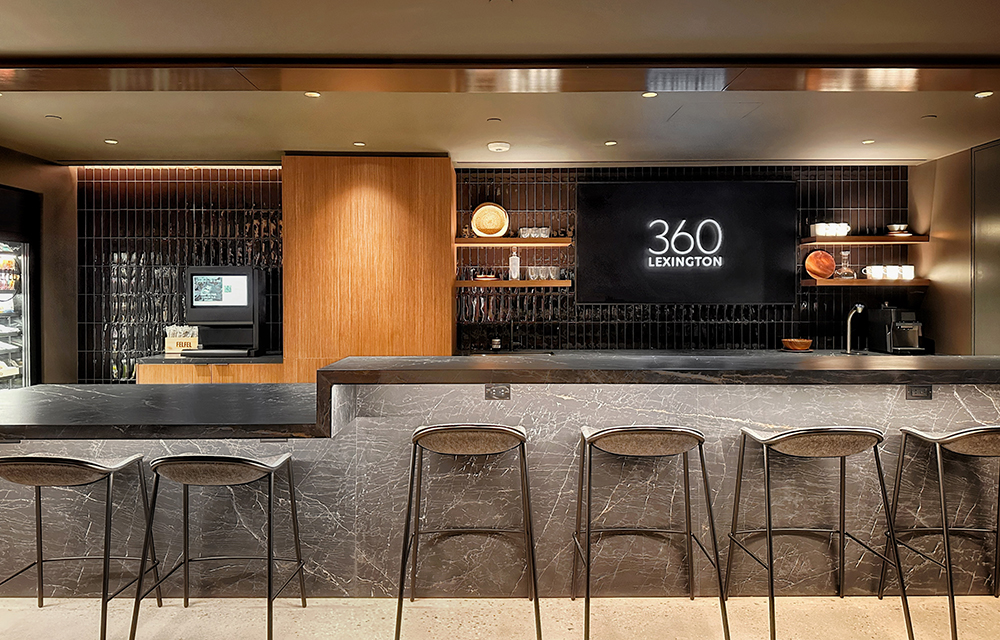
AmTrustRE and MdeAS Architects complete modernization of 360 Lexington Ave. in Midtown
Manhattan, NY AmTrustRE has completed a comprehensive modernization at 360 Lexington Ave. Led by New York-based architecture firm MdeAS Architects, the project reimagines the 268,000 s/f office building as a modern, hospitality-driven workplace designed to meet the evolving needs of tenants.


Quick Hits

Columns and Thought Leadership

Premium experiences, proven returns: The New revenue playbook for sports venues - by Terry McIntyre
Investing in the Fan Experience as a Revenue Strategy The sports and entertainment venues that bet on premium experiences years ago are now seeing those investments pay off in packed seats, increased revenue, and industry recognition.

We support green construction. Just not this kind - by Tammy Smith
Most people think of St. Patrick’s Day as a fun footnote on the calendar. In construction logistics, however, it’s a full-scale operational variable — especially if your work touches major metro areas with major parades and, let’s call it what it is, enthusiastic celebrants.

The Façade is no longer just a finish. It’s a risk strategy. - by Bentley Zhao
Twelve-billion-dollar weather disasters have already hit the U.S. through the first half of 2026, causing at least $31.9 billion in damage, according to Climate Central, the nonprofit that now maintains the disaster database NOAA discontinued.
