



News:
Spotlight Content
Posted: July 27, 2009
Doing business in Binghamton makes a lot of sense: Location, economy, technology
In these challenging times, doing business in Binghamton makes a lot of sense. Our region is an easy three hours northwest of midtown Manhattan, situated strategically between Syracuse and Scranton along the bustling I-81 corridor. Greater Binghamton is Upstate New York's sixth largest economy generating nearly $7 billion in business activity per year.
Binghamton is affordable and a haven for high technology. We rank-along with San Jose, Cambridge, and Austin-as one of the strongest areas for innovation in the U.S. We have company clusters in aerospace, software, advanced manufacturing, communications, simulation, distribution and the services.
We are home to household name companies like Lockheed Martin, Gannett, Rockwell Collins, IBM, Frito Lay, L-3 Communications and BAE Systems along with a range of smaller firms who like our combination of work and play.
VMR Electronics, a fast-growing maker of electronic cables and wire harnesses for the defense business, is relocating and consolidating its operations into the former Ascendia building, a 160,000 s/f facility in downtown Binghamton. The company is making a $4.5 million investment including new equipment and plans to create more than 50 jobs. Financing for the project is being provided through a public/private partnership involving NBT Bank, the City of Binghamton, the New York State Zone Capital Corporation, the New York Business Development Corporation, and the Broome County IDA.
Impress, one of the world's leading can makers, is moving forward on a $40 million state-of-the-art metal packaging plant in Conklin. The plant will be approximately 100,000 s/f and initially employ 75 people. There are plans for an expansion where employment could eventually be doubled.
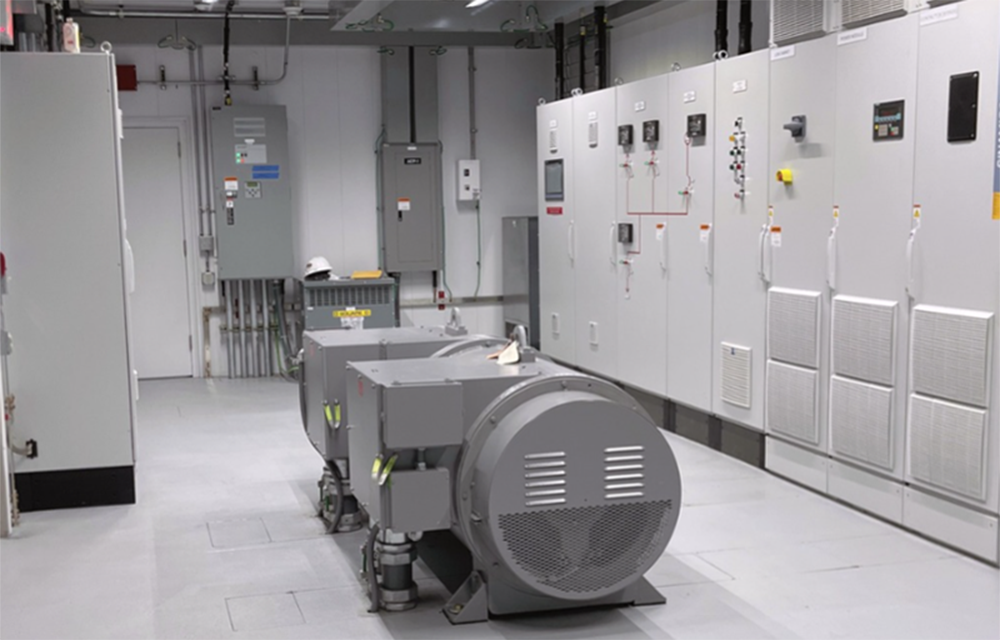
Emerson Network Power has opened a new 40,000 s/f headquarters in the Charles Street Business Park in Binghamton. This world-class facility is already hosting visitors from around the world to showcase the company's global-leading technologies in power protection. There are several 5-6 acre sites available in the Charles Street Business Park. The park is in a New York Empire Zone as well as a federal HUB Zone. Visit www.bcida.com for more information.
Many regional companies enjoy a strong partnership with Binghamton University, a premier global public institution ranked by Kiplinger's Personal Finance as one of the best values in public colleges anywhere. The university features stellar academics, amazing research, a strong international focus, and a major commitment to the regional economy.
In Binghamton, we like to brag about our quality of life. It means excellent schools, an opera and a symphony, strong minor league baseball and hockey, Division I athletics, and a fast-growing arts scene. According to U.S. News and World Report, Binghamton is the most affordable place to retire in the U.S. The median sale price for an existing single family home in the first quarter 2009 was $104,000 up nearly 12% from the first quarter 2008.
Summer is the perfect time to explore Greater Binghamton. We will host three national events in August, the Spiedie Fest & Balloon Rally, featuring live music and something for the whole family, the Levene Gouldin & Thompson Tennis Challenger, a tune-up for the U.S. Open, and the Chris Thater Memorial, one of the top cycling and running events in the U.S.
Binghamton's superb transportation system makes it possible to get to the Adirondacks, the Poconos, and the tremendous fly-fishing along the Delaware River in a matter of hours. And if you like winery tours and tastings we are a short distance from the Finger Lakes, one of the Wine Spectator's emerging wine regions in the world.
For more on business in Binghamton, visit the BCIDA's website, including a searchable property database, an interactive profile of the region, and a link to our incentives and programs. As quality of life becomes increasingly important to overall business success, we encourage you to consider Binghamton.
Patrick Doyle is the director, business development, Broome County IDA, Binghamton, N.Y.
Tags:
Spotlight Content
MORE FROM Spotlight Content

NYREJ's 2026 Developing Long Island Spotlight is here!
This spotlight showcases projects completed and currently under construction across Long Island as well as highlights improvements made to the region through Industrial and Economic Development Agencies and BIDs.



.png)



Columns and Thought Leadership

CRE Guide Featured Company: Merritt Environmental Consulting Corp.
Merritt Environmental Consulting Corp. (MECC) was established in June of 2009 after being part of a larger engineering firm for almost 20 years. The focus of the company is to assist lending institutions, attorneys, real estate investors, and property owners with environmental concerns. Today, MECC has offices in New York, Florida, and Vermont and has grown into a regional consulting firm serving clients along the East Coast.

2026 Developing Queens: Long Island Board of Realtors advances commercial growth and advocacy in Queens
The Long Island Board of Realtors (LIBOR) Commercial Network continues to play a key role in advancing opportunities and strengthening the commercial real estate landscape across Queens. Through targeted programming and global outreach

Properly serving a lien law Section 59 Demand - by Bret McCabe
Many attorneys operating within the construction space are familiar with the provisions of New York Lien Law, which allow for the discharge of a Mechanic’s Lien in the event the lienor does not commence an action to enforce following the service of a “Section 59 Demand”.

From vacancy to vitality: How adaptive reuse is reshaping Long Island’s CRE landscape - by Andrea Tsoukalas Curto
Adaptive reuse has become one of the most important conversations in commercial real estate today. Long Island has a large inventory of aging retail, office and industrial