



News:
Brokerage
Posted: March 6, 2018
Disposing of multiple properties through a parking exchange - by Russell Gullo
You have put together a portfolio of many doubles, duplexes and other small multifamily properties over the years that are scattered in different locations. You are at the point in your life that you would like to stay in real estate as an investment, but you are tired of managing these scattered assets. If you dispose of these properties you may see as much as a third of your selling price go to Uncle Sam in the form of taxation.
So, what’s the solution to this problem that many people are exposed to today? The answer is what’s called a “parking exchange.” A parking exchange is a form of a “1031 exchange” that allows you to dispose of many scattered properties and use the funds from the scattered properties to consolidate and acquire one large replacement property and have the transaction qualify under a 1031 exchange. A 1031 exchange is not new, it has been part of the Internal Revenue Code (IRC) since the early 1900s when the first exchange laws were enacted.
The following is an example of how this concept can benefit you. Let’s say that you own five different doubles in five different locations. Each property is valued at $100,000, for a total of $500,000 in value with no mortgage, so the equity is $500,000. You have found a 32-unit multifamily investment property through a professional multifamily investment advisor (all in one location for a price of $1.6 million). And would like to use the five doubles as the down payment and finance the difference to acquire the 32-unit multifamily property as a 1031 exchange.
Sounds great, but how do you make this happen when you need to dispose of five doubles in five different areas (meaning five different buyers)? You understand once the first double is disposed of, you then have 180 days to sell the other four doubles—and purchase and close the 32-unit deal—in order for the 1031 exchange to work. The best part is that you don’t have the required equity (cash) from the sales to use as your down payment against your new purchase because you have not closed on your five doubles. What to do?
A “parking exchange” to the rescue. Step one, you bring into the transaction a professional qualified intermediary who is in the business of structuring 1031 exchanges and can help meet your objectives explained above. We then go to a lender who can work with you by using your current properties equity of $500,000, and advance you 80% of that equity—$400,000 in cash—so you now have the down payment to acquire the $1.6 million, and finance the difference in the 32-unit multifamily deal.
Once you have the cash from your equity, you can bring into the picture a professional multifamily investment property specialist to tie up the replacement property by going into contract with the 32-unit multifamily acquisition.
The key in making this whole transaction work so that it qualifies for a 1031 exchange, meaning the sale of the five doubles, the purchase of the 32-unit multifamily property, is working with professionals. Through a parking exchange the qualified intermediary can get an extra 180 days for a possible total of one year to dispose all of the five doubles and acquire the 32-unit multifamily with the proper direction and help of the multifamily investment property specialist.
In addition, when all of the five doubles are sold there is an extra $100,000 left from the sale because you only received $400,000 from the lender who advanced you the funds when placing a mortgage against the five doubles. This difference would be used to cover all the transaction expenses on the five sales and one purchase and have the whole process qualify under a 1031 exchange.
Sound confusing? It does not have to be with the use of a professional qualified intermediary and a multifamily investment property specialist, who can make this happen for you.
Russell Gullo, CCIM, CEA, is founder and CEO of the R. J. Gullo Cos., Buffalo, N.Y.; and a national exchange/investment trainer for the American Institute of Real Estate Exchangors.
Tags:
Brokerage
MORE FROM Brokerage

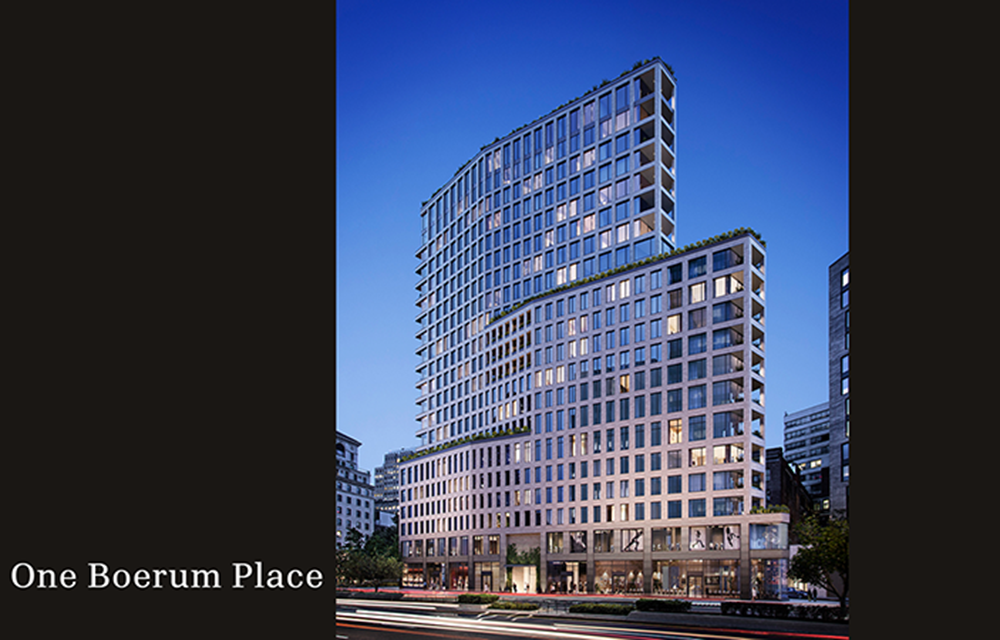
200E20TH sells out in Gramercy, penthouse A closes out sales at the CetraRuddy-designed condominium residences
Manhattan, NY 200E20TH, the CetraRuddy-designed architectural masterwork that brought a curved, contemporary sensibility to Gramercy’s Beaux-Arts streetscape, has



Quick Hits

Columns and Thought Leadership

New York’s streets are full again, and the retail numbers prove it - by Noam Aziz
Walk down any New York block this year and you can feel it. The sidewalks are crowded, the storefronts are lit, and the energy that defines this city is back at full volume.

Hunt CRE question and answer: Choosing a real estate agent - by David Hunt
First, we will only work with one agent exclusively. The primary reason is that we want that agent to legally represent our client’s interests. In New York State, a real estate agent has a fiduciary

Hunt commercial real estate question and answer: Fortune 500 wisdom - by David Hunt
Yes, there are lessons to be learned from the largest companies in America when comes to managing your real estate. But the decision to buy or lease real estate may not be one of

The art of investing in real estate - by Thomas Donovan
Real estate investing is as much an art as it is a skill. No one can time the market, or the factors that drive it, perfectly. Location, zoning, size, transportation, and neighborhood density give you a baseline for
.gif)