



News:
Brokerage
Posted: January 30, 2024
Cushman & Wakefield arranges $27 million sale of commercial townhouse
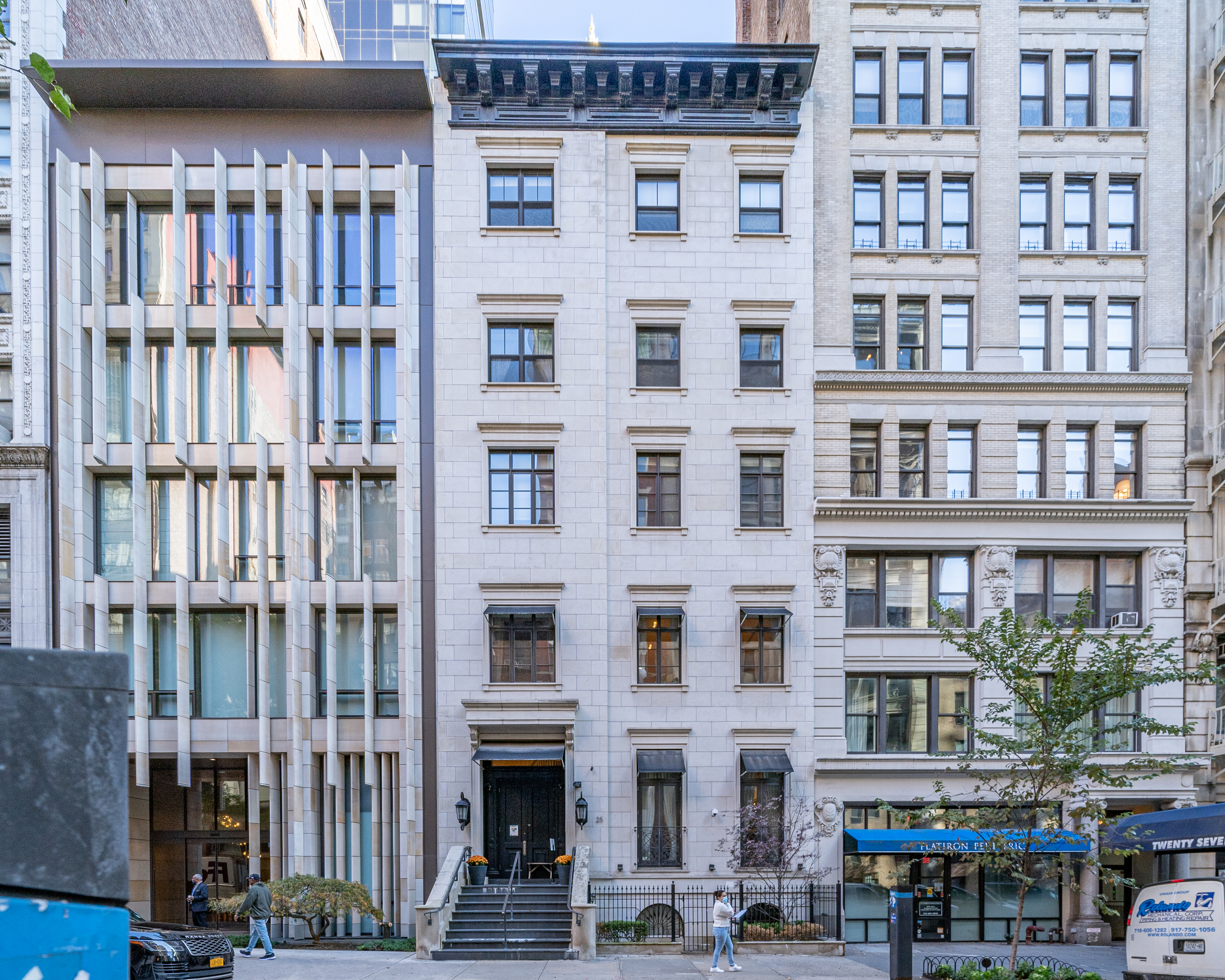
Manhattan, NY Cushman & Wakefield has arranged the sale of 25 East 22nd St., a 17,185 s/f office building. The final sale price was $27 million equating to $1,571 per s/f.
Cushman & Wakefield’s Craig Waggner, John Ciraulo and Jack Stephen, in coordination with Carri Lyon and Mark Mandell, represented the seller, Audrey Cappell (neé Simons). The property was acquired by Kodansha USA Publishing, a Japanese publishing and comic book company.
The building was previously occupied by three nonprofit tenants founded by Audrey Cappell, including Foundation for a Just Society, Felicity House and AC & JC Foundation. The organizations have each outgrown the current space and will take up residence in a nearby property. Prior to Cappell’s ownership, the property was home to David Chu, the founder of international clothing company Nautica, as a home and clothing showroom, as well as the headquarters for Nike, Inc. in the 1990s.
“This property has a unique history, once serving as the headquarters for Nike,” said Ciraulo. “David Chiu, the founder of international clothing company Nautica, gut renovated the property to redevelop it into what it is today. Renovations included the addition of the two top floors, which served as a remarkable pied-à-terre apartment for him and later an office with magnificent outdoor terraces.”
The six-story plus mezzanine and basement property features an elevator, event hall with 13-ft. ceilings, flexible meeting rooms, wellness rooms, lounges, 15 private offices, open office areas, five conference rooms, two full kitchens and two landscaped outdoor roof decks, as well as new office installation, mechanicals and infrastructure.
“Users are prioritizing buying properties that they can occupy. Assets that are renovated or have unique qualities, distinct features, a premier address or that are landmarked and have a true wow factor are very appealing to users in today’s market,” said Waggner. “We are looking forward to seeing how Kodansha utilizes this tremendous prewar building for their New York headquarters.”
The property is located in close proximity to Madison Sq. Park and Union Sq., one block away from the 23rd St. subway stations servicing the 4, 5, 6, N, Q, R, M, F and L subway lines.
Tags:
Brokerage
MORE FROM Brokerage

Residential real estate consultancy and brokerage firm Nancy Packes, Inc. rebrands as NPI
Manhattan, NY The NYC-based premier residential real estate consultancy and brokerage firm, Nancy Packes Inc., has rebranded as NPI. Helmed by Seth Rosner, most recently the firm’s managing partner and now president, the company has been intricately involved in hundreds of Tri-State new developments and conversions, spearheading the full project life cycle, from assessment/pre-dev.




Quick Hits

Columns and Thought Leadership

New York’s streets are full again, and the retail numbers prove it - by Noam Aziz
Walk down any New York block this year and you can feel it. The sidewalks are crowded, the storefronts are lit, and the energy that defines this city is back at full volume.

Hunt commercial real estate question and answer: Fortune 500 wisdom - by David Hunt
Yes, there are lessons to be learned from the largest companies in America when comes to managing your real estate. But the decision to buy or lease real estate may not be one of

A guide to finding the right NYC property management company - by Sanjay Gandhi
Being a small to midsize landlord in NYC is an increasingly demanding endeavor. From navigating complex regulations, increased compliance demands to dealing with tenant issues and remediating violations. It is wise to enlist the assistance of a partner, a professional

Hunt CRE question and answer: Choosing a real estate agent - by David Hunt
First, we will only work with one agent exclusively. The primary reason is that we want that agent to legally represent our client’s interests. In New York State, a real estate agent has a fiduciary
.gif)