



News:
Brokerage
Posted: January 14, 2025
Construction is progressing at Crow Holdings Development’s Golden Triangle Logistics Center
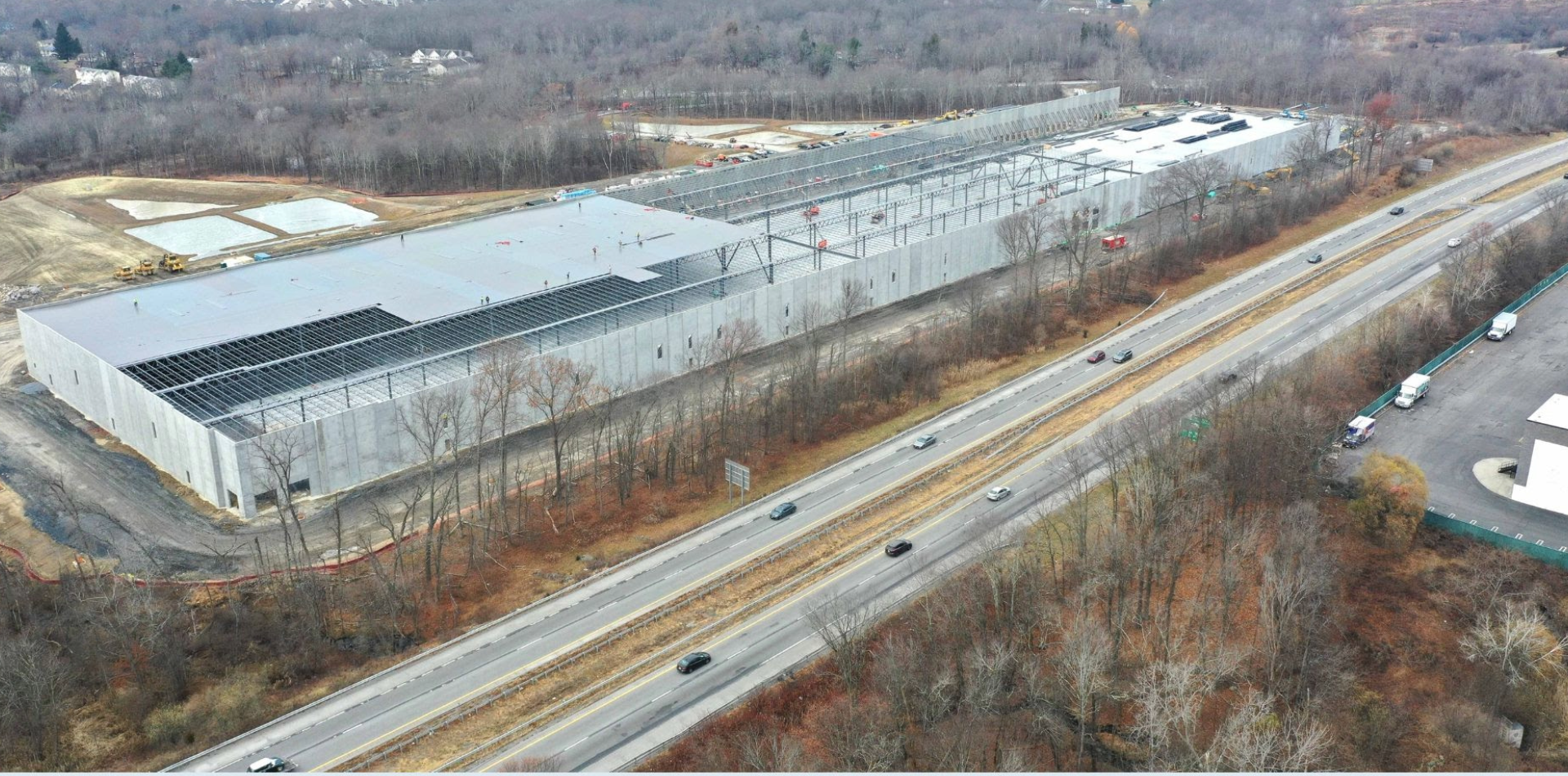
Wallkill, NY With walls up and steel installation underway, construction is progressing on track at Golden Triangle Logistics Center, according to Crow Holdings Development. The Class A, two-building warehouse/distribution property sits on 92 acres in Orange County and marks the company’s first New York State industrial venture.
Golden Triangle Logistics Center, located at 2 and 4 Katy Trail, is fully approved for 834,800 s/f. Situated at the intersection of I-84 and Route 17 (future I-86) just 60 miles north of New York City, the campus offers reach to more than 50 million consumers in a day’s drive. This includes connectivity to service the Boston to Baltimore corridor.
“Orange County has come into its own,” said Crow Holdings Development’s Brad Vander Vliet, vice president. “The Hudson Valley is a natural extension of the Northern New Jersey market, while offering rents 30% lower, greater regional connectivity characteristics, and port proximity comparable to that of Exit 8A. A strong labor pool and reasonable taxes add to its appeal.”
Vander Vliet added that the market’s progress was instrumental in Crow Holdings Development purchasing in 2024. “In the past, this region posed barriers to entry from a cost standpoint,” he said. “However, market conditions have reached a point that justifies development. For us, Golden Triangle is a strong initial investment in Orange County and New York State as a whole.”
A Summer 2025 delivery is anticipated for the property’s first, 535,600 s/f building, which is divisible. It features 36-foot ceiling heights, 88 dock doors, and parking for 83 trailers and 422 cars. Office space will be built to suit.
A JLL team headed by James Panczykowski and Rob Kossar is marketing the campus for lease to tenants or turnkey sale to users. Golden Triangle also includes plans for a second, 299,200 s/f building – a build-to-suit opportunity.
Crow Holdings Development’s Northeast regional presence is well established. Its projects also include 2900 Grant Avenue and Crow Holdings at I-95 in Philadelphia, as well as the recently completed Crow Holdings at Carteret in Carteret, NJ, 25 Market Street in Elmwood Park, NJ, and others comprising more than 3.5 million s/f of new development in New Jersey and Pennsylvania over the past two years.?
Tags:
Brokerage
MORE FROM Brokerage
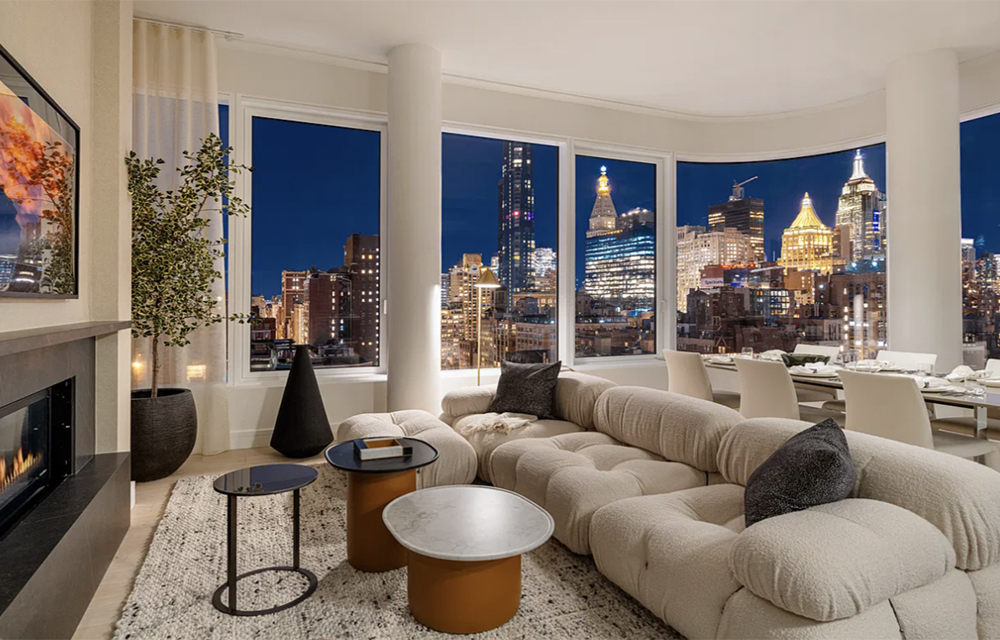
200E20TH sells out in Gramercy, penthouse A closes out sales at the CetraRuddy-designed condominium residences
Manhattan, NY 200E20TH, the CetraRuddy-designed architectural masterwork that brought a curved, contemporary sensibility to Gramercy’s Beaux-Arts streetscape, has



Quick Hits
 (2).gif)

Columns and Thought Leadership

Hunt commercial real estate question and answer: Fortune 500 wisdom - by David Hunt
Yes, there are lessons to be learned from the largest companies in America when comes to managing your real estate. But the decision to buy or lease real estate may not be one of

Hunt CRE question and answer: Choosing a real estate agent - by David Hunt
First, we will only work with one agent exclusively. The primary reason is that we want that agent to legally represent our client’s interests. In New York State, a real estate agent has a fiduciary

The art of investing in real estate - by Thomas Donovan
Real estate investing is as much an art as it is a skill. No one can time the market, or the factors that drive it, perfectly. Location, zoning, size, transportation, and neighborhood density give you a baseline for

New York’s streets are full again, and the retail numbers prove it - by Noam Aziz
Walk down any New York block this year and you can feel it. The sidewalks are crowded, the storefronts are lit, and the energy that defines this city is back at full volume.
.gif)