



News:
Brokerage
Posted: March 23, 2015
Colliers International promotes Nuzzolese and Leiderman
Colliers International LI Inc. unvieled the promotions of Gus Nuzzolese, Esq. to president and Darren Leiderman to chief operating officer of the Long Island operations, effective immediately.
In his new role as president, Nuzzolese will develop stronger and extensive relationships with Colliers' existing and new clients on Long Island, while advancing the activity level and performance of the operations' pool of brokers and incoming salespersons. As COO, Leiderman will focus on operations and strategic initiatives to execute Colliers' growth plans for the Long Island office.
Both Nuzzolese and Leiderman previously held the titles of senior executive director.
"Throughout their tenure, Gus and Darren have done a tremendous job in driving and expanding our business on Long Island," said Herbert Agin, Chief Executive Officer for the Long Island operations at Colliers International. "They consistently exude professionalism and excellence through their expert deal-making skills, and I am proud to welcome them to these key leadership positions."
Nuzzolese has served at Colliers International for nearly 30 years and arranged transactions on behalf of leading corporations including AT&T, Catholic Health Services, TDK Electronics, and other major banks, accounting firms, and law firms. He has been recognized as a three-time Top Power Broker for Long Island by CoStar and was named Broker of the Year for 2014 by Rechler Equity.
He is a graduate of St. John's University's School of Law and serves as the President of the Executive Board for Chaminade High School's Alumni Association and Treasurer of the Alumni Association for Williams College. He resides in Port Washington with his wife of 31 years, Mary Frances, and four children.
During his 20-year tenure, Leiderman has completed transactions on behalf of property owners and tenants including CLK Properties, GE Capital, North Shore Long Island Jewish Health System, and Coca-Cola, in addition to major financial institutions, international and local corporations, and numerous healthcare companies. He has been recognized as a two-time Top Power Broker for Long Island by CoStar, received numerous honors for his work with charitable organizations and business excellence, and is a graduate of Binghamton University. He currently resides in Port Washington with his wife Marni and two children.
Tags:
Brokerage
MORE FROM Brokerage
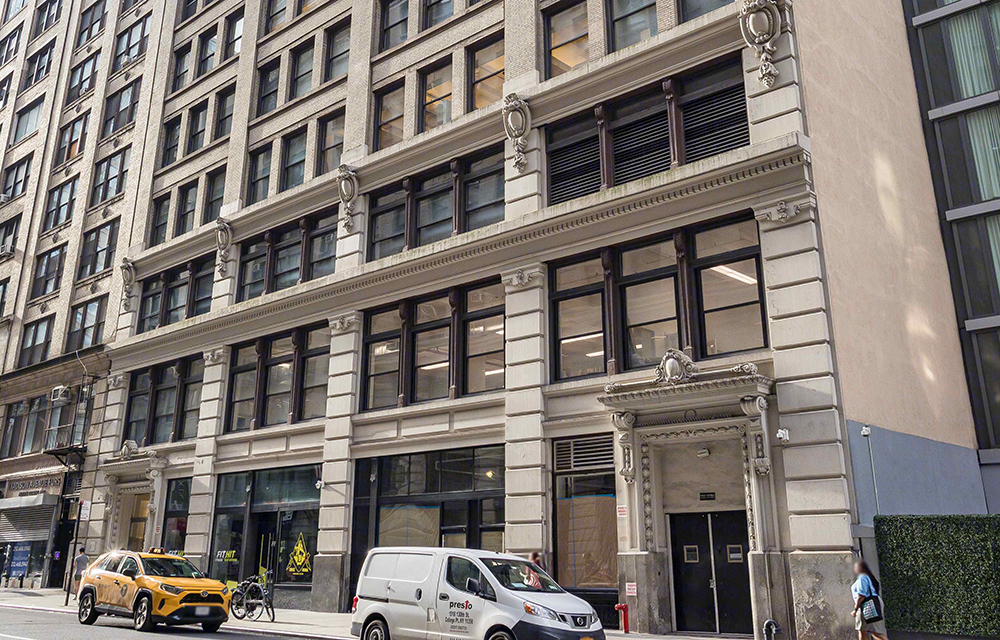
Koeppel Rosen inks 16-year 33,783 s/f lease for coworking firm Nomadworks at 122 West 27th St.
Manhattan, NY According to Koeppel Rosen LLC, leasing and management agent for the Rosen family portfolio, Nomadworks has signed a new 16-year, two-month lease totaling 33,783 s/f at 122 West




Quick Hits
 (2).gif)

Columns and Thought Leadership

Hunt CRE question and answer: Choosing a real estate agent - by David Hunt
First, we will only work with one agent exclusively. The primary reason is that we want that agent to legally represent our client’s interests. In New York State, a real estate agent has a fiduciary

Hunt commercial real estate question and answer: Fortune 500 wisdom - by David Hunt
Yes, there are lessons to be learned from the largest companies in America when comes to managing your real estate. But the decision to buy or lease real estate may not be one of

New York’s streets are full again, and the retail numbers prove it - by Noam Aziz
Walk down any New York block this year and you can feel it. The sidewalks are crowded, the storefronts are lit, and the energy that defines this city is back at full volume.

The art of investing in real estate - by Thomas Donovan
Real estate investing is as much an art as it is a skill. No one can time the market, or the factors that drive it, perfectly. Location, zoning, size, transportation, and neighborhood density give you a baseline for
.gif)