


 (2).gif)
News:
Spotlight Content
Posted: August 26, 2013
City of Peekskill and village of Brewster jointly seek state funding
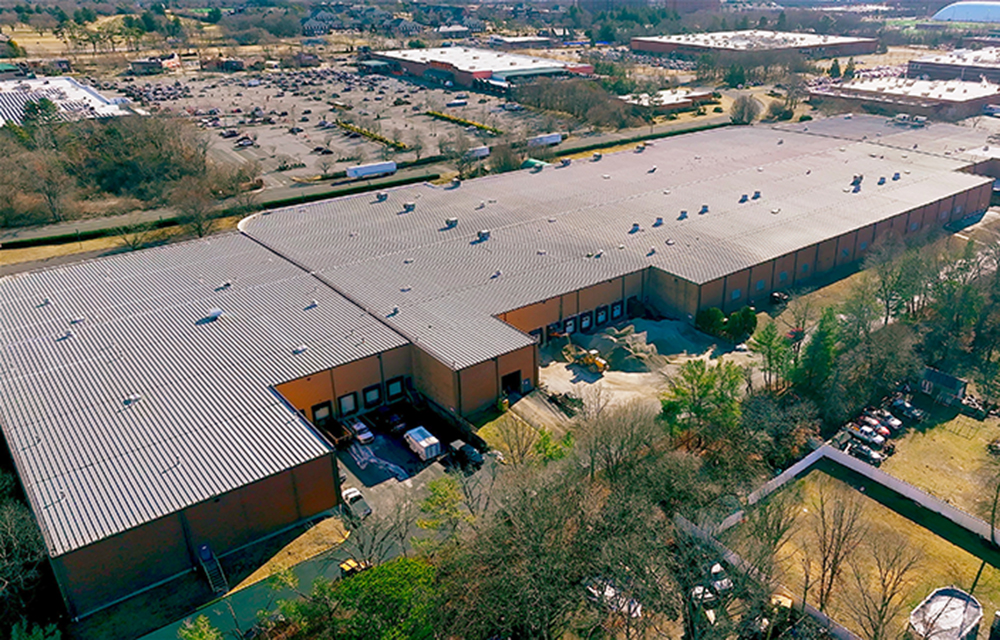
Mary Foster, mayor of the city of Peekskill, announced that the city formally submitted a joint grant application with the village of Brewster to the governor's Mid-Hudson Regional Economic Development Council (MHREDC) to fund a feasibility study about property to be redeveloped. In Peekskill, monies from the grant would jumpstart revitalization efforts at 407 and 427 Highland Ave., and 418 N. Division St., the seven-building site vacated by White Plains Linen when it relocated to larger facilities within Peekskill in 2012. The city will study possible uses for the property, including the possible development of a business incubator and housing and activities for young professionals. Brewster will study its Main St. Corridor.
Mayor Foster also announced that sections of the city of Peekskill and village of Brewster were selected as the 2013 Opportunity Areas in the Mid-Hudson Region by the MHREDC. This designation allows both to work collaboratively to compete for special grant funding from Empire State Development for economic revitalization and workforce development. Additionally, Westchester Community College is seeking MHREDC funding to implement workforce training in Peekskill and Brewster.
"This is a tremendous opportunity for Peekskill," said Foster. "The city envisions incubator space for emerging entrepreneurs and the development of a partnership for workforce development with Westchester Community College that will benefit Peekskill's business community and underemployed and unemployed residents."
With an emphasis on regional planning, the MHREDC chose to name the city of Peekskill and village of Brewster as opportunity areas as both municipalities are looking to revitalize underused properties and are experiencing similar demographic changes.
"There was unanimous support on the regional council to create an opportunity area with Peekskill and Brewster to foster joint grant applications," said Jonathan Drapkin, CEO of Pattern for Progress and member of the MHREDC. "Both municipalities wrote excellent applications and both share regional resources, changing demographics, and have the capacity to grow. They are truly representative of the region," Drapkin said.
Developing Tomorrow's
Economy
Peekskill's growing population stands to gain from a series of grants. "The city is already experiencing entrepreneurial investment from its minority communities and this trend will continue to escalate," said Foster. "Peekskill has several successful women-owned and minority -owned businesses, ranging from professional and personal service firms, real estate development companies, and artist studios and galleries, to flourishing restaurants and retail establishments," Foster said.
Grant funding would be applied to programming through Westchester Community College's (WCC) FITT To Grow NY: Flexible Innovation Training and Technical Assistance Supporting Economic and Workforce Development program, providing English as a second language training and business support services. The college has also applied to the MHREDC for funding.
"Building on governor Cuomo's vision for regional economic development, the collaborative approach between Peekskill, Brewster, and WCC provides the right environment for revitalization and workforce development," said Dr. Marsha Gordon, member of the MHREDC and CEO of the Business Council of Westchester. "I applaud mayor Foster for aggressively pursuing this opportunity."
Peekskill's and Brewster's joint application requests $100,000 in state grants ($70,000 for Peekskill and $30,000 for Brewster). If funded, Peekskill will match state grant funds of $60,000 in cash and $10,000 in-kind services. The grant application was submitted August 12th, and city expects to hear back from the MHREDC by year's end.
Tags:
Spotlight Content
MORE FROM Spotlight Content

NYREJ's 2026 Developing Long Island Spotlight is here!
This spotlight showcases projects completed and currently under construction across Long Island as well as highlights improvements made to the region through Industrial and Economic Development Agencies and BIDs.

.png)

Quick Hits


Columns and Thought Leadership

Properly serving a lien law Section 59 Demand - by Bret McCabe
Many attorneys operating within the construction space are familiar with the provisions of New York Lien Law, which allow for the discharge of a Mechanic’s Lien in the event the lienor does not commence an action to enforce following the service of a “Section 59 Demand”.

From vacancy to vitality: How adaptive reuse is reshaping Long Island’s CRE landscape - by Andrea Tsoukalas Curto
Adaptive reuse has become one of the most important conversations in commercial real estate today. Long Island has a large inventory of aging retail, office and industrial

2026 Developing Queens: Long Island Board of Realtors advances commercial growth and advocacy in Queens
The Long Island Board of Realtors (LIBOR) Commercial Network continues to play a key role in advancing opportunities and strengthening the commercial real estate landscape across Queens. Through targeted programming and global outreach

CRE Guide Featured Company: Merritt Environmental Consulting Corp.
Merritt Environmental Consulting Corp. (MECC) was established in June of 2009 after being part of a larger engineering firm for almost 20 years. The focus of the company is to assist lending institutions, attorneys, real estate investors, and property owners with environmental concerns. Today, MECC has offices in New York, Florida, and Vermont and has grown into a regional consulting firm serving clients along the East Coast.