


 (2).gif)
News:
Finance
Posted: May 25, 2010
Can distressed debt be acquired in a Section 1031 exchange?
Given the state of the commercial market, many investors are interested in buying distressed notes and mortgages. Often these investors ask whether such assets may be acquired as replacement property in a §1031 exchange. The answer is "no" as the regulations specifically state that "evidences of indebtedness" (mortgages and notes) do not qualify as "like-kind" property. However, the property secured by the mortgage may be acquired in a §1031 exchange. Thus, if the investor is either the owner of the mortgage/note and can also acquire the property securing the mortgage, the property may qualify as "like-kind" notwithstanding that the debt would not. In the last decade, lending from non traditional sources such as REITs, hedge funds, private equity firms and real estate conglomerates rose significantly resulting in many of these entities becoming lenders and now owning mortgages and notes secured by distressed real estate. Since many of these lenders also own significant real estate, structuring the acquisition of the property to qualify under §1031 may add significant value to the transaction.
It is important to note that property acquired via foreclosure of a mortgage will not qualify as "like-kind" since the IRS would view the property acquired as the mortgage. Thus, to qualify as replacement property under §1031, the transaction must be structured as a deed in lieu of foreclosure. While this strategy obviously requires the borrower's consent, this strategy may be a good solution for a non-traditional lender which owns other property and is seeking to minimize its losses. Of course, there are practical issues which must be addressed to ensure that property acquired by deed in lieu of foreclosure is marketable and of worth to the investor. Many times junior liens and mortgages are outstanding but may be satisfied at a price acceptable to the investor. If this can be accomplished, the property may qualify as "like-kind" if directly deeded from the borrower to the investor/lender under §1031. A deed in lieu may satisfy this requirement. Investors must ensure that a Qualified Intermediary is engaged and an exchange properly initiated prior to the deed in lieu of being executed for the property to qualify as replacement property in a "safe harbor" exchange. Thus, advance planning is essential.
If a distressed asset is being acquired as replacement property in a §1031 exchange, the investor should also use caution to ensure compliance with all other §1031 requirements. Accordingly, a lender/investor desiring to pursue such course of action should be sure the purchase of the distressed asset is structured to occur within 180 calendar days from the sale of the relinquished property presuming a "safe harbor" exchange is contemplated. Alternatively, a lender/investor may structure the transaction as a reverse exchange. A reverse exchange would permit the investor to acquire the replacement property (distressed asset) in a deed in lieu transaction before the relinquished property is sold. In current times where sales may be slower than usual, structuring the exchange as a reverse exchange may permit the investor to defer capital gain taxes on the subsequent sale of relinquished property. This structure also allows the investor to acquire control of the distressed property sooner rather than later. A reverse exchange requires that the investor have sufficient funds available to pay the consideration for the replacement property to the extent any consideration is required above the amount of the mortgage owned by the investor to acquire title to the distressed property. This amount may be limited to the amount needed to satisfy the claims of junior lien holders. The entities referenced above may be well positioned to use these creative strategies since they own significant real property and may be selling one or more properties which can be used as the relinquished property in a §1031 exchange. Thus, while an investor cannot buy a mortgage or note pertaining to a distressed asset in a §1031 exchange, an investor could perform a tax deferred exchange if the investor can structure the transaction so that the investor actually acquires the distressed real property.
There are also tax issues of which the owner of the property in distress must be aware. As discussed in our prior newsletter, titled "1031 Exchanges in Foreclosure" investors owning a distressed asset may incur a significant tax liability if debt relief arises from the modification of debt instruments securing the asset or if the mortgaged property is transferred by deed in lieu to the lender. Thus, whenever considering any debt restructuring, investors need to consider the tax consequences before proceeding. As with any commercial transaction, investors should seek appropriate legal and tax advice before proceeding.
Pamela Michaels is an attorney
and vice president of Asset Preservation, Inc., Manhattan, N.Y.
Tags:
Finance
MORE FROM Finance
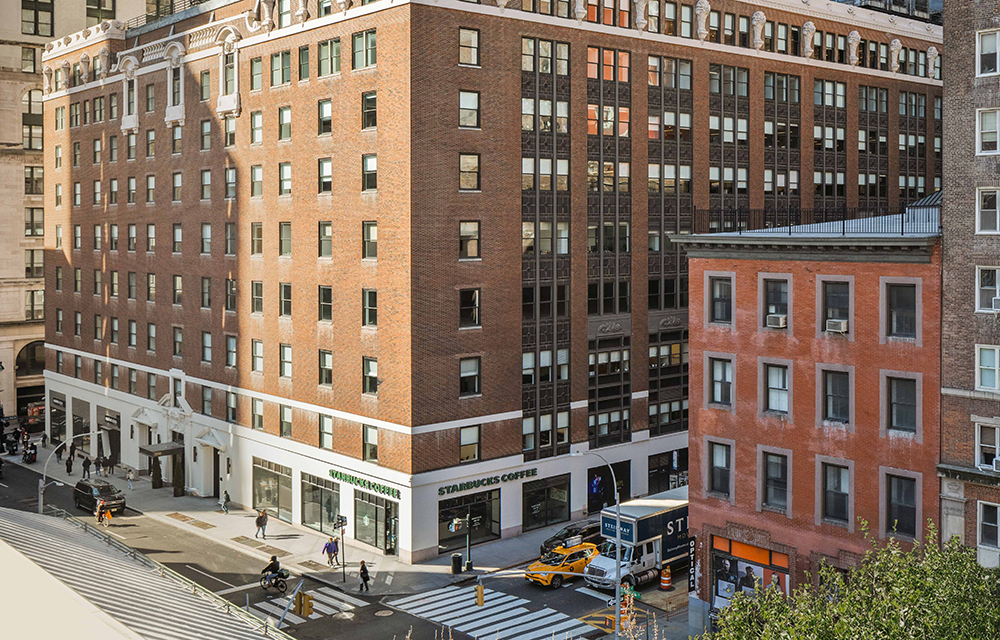
George Comfort & Sons completes $386 million refinance of 200 Madison Ave.
Manhattan, NY George Comfort & Sons, and its partners Loeb Partners Realty and Jamestown, completed a $386 million refinancing of 200 Madison Ave., its 750,000 s/f Grand Central district office

 (2).gif)

Quick Hits
.jpg)

