



News:
Brokerage
Posted: June 5, 2009
Cambridge Rlty. provides $90.6m in HUD-insured loan 10-bldg. portfolio
Cambridge Realty Capital Cos. has closed $90.6 million in HUD-insured Section 232 loans to refinance a portfolio of 10 intermediate and skilled care nursing facilities. The 10 HUD-insured loans were closed and funded simultaneously to accommodate the payoff of a single credit facility.
Loans for properties in the portfolio ranged in size between $3.1 million and $14.8 million. The 10-loan portfolio includes Southview Manor and Community Care Center in the city, and the West Chicago Terrace, Frankfort Terrace, Crestwood Terrace, Kankakee Terrace, Bourbonnais Terrace, Joliet Terrace, The Terrace of Waukegan, and Sycamore Terrace of Quincy. Combined, the properties include 1,488 intermediate-care and 65 skilled-care beds. Terms for the fully-amortizing loans ranged between 27 and 35 years.
Cambridge chairman Jeffrey Davis said the first-mortgage loans were arranged for the owner, an Illinois limited liability company, utilizing HUD's Section 232/223(f) program. The loans were underwritten by Cambridge Realty Capital Ltd. of Illinois, the Cambridge subsidiary that underwrites HUD-insured loans for healthcare facilities. "The ability to obtain HUD financing to close complex transactions of this kind sends an important message to multi-facility operators," he said. "The transaction is indicative of the role HUD 232 financing can play for multi-facility owners in the current capital-constrained environment."
Cambridge worked with Catalyst/Cambridge Healthcare Finance's national originations manager, Hymie Barber. Catalyst/Cambridge's longstanding and successful relationship with Cambridge enabled Catalyst/Cambridge to facilitate the transaction from start to closing with aid and assistance from Cambridge at key and critical points in the transaction.
Tags:
Brokerage
MORE FROM Brokerage
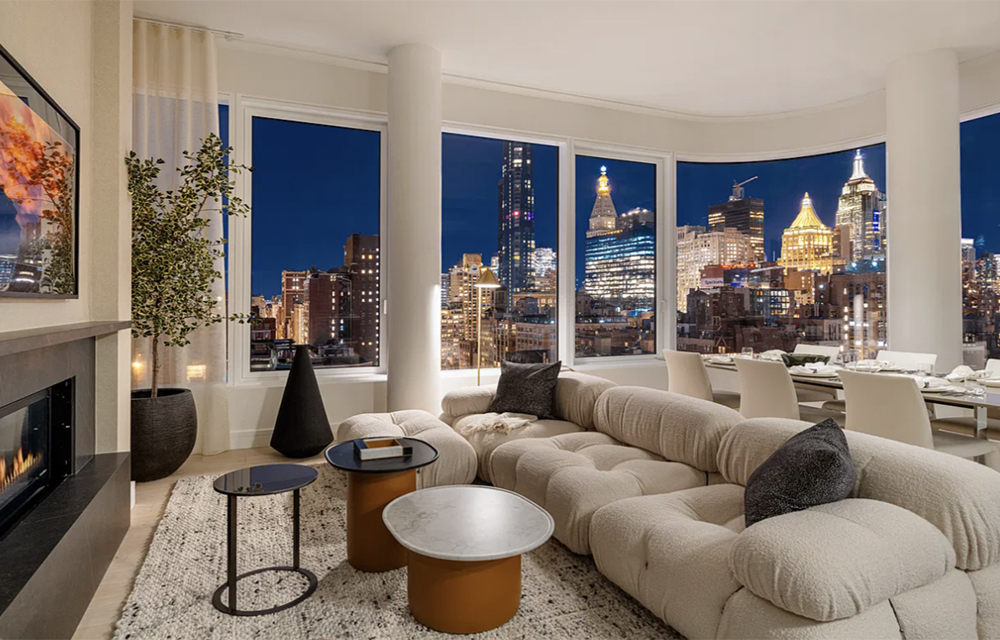
200E20TH sells out in Gramercy, penthouse A closes out sales at the CetraRuddy-designed condominium residences
Manhattan, NY 200E20TH, the CetraRuddy-designed architectural masterwork that brought a curved, contemporary sensibility to Gramercy’s Beaux-Arts streetscape, has




Quick Hits

Columns and Thought Leadership

The art of investing in real estate - by Thomas Donovan
Real estate investing is as much an art as it is a skill. No one can time the market, or the factors that drive it, perfectly. Location, zoning, size, transportation, and neighborhood density give you a baseline for

Hunt commercial real estate question and answer: Fortune 500 wisdom - by David Hunt
Yes, there are lessons to be learned from the largest companies in America when comes to managing your real estate. But the decision to buy or lease real estate may not be one of

Hunt CRE question and answer: Choosing a real estate agent - by David Hunt
First, we will only work with one agent exclusively. The primary reason is that we want that agent to legally represent our client’s interests. In New York State, a real estate agent has a fiduciary

New York’s streets are full again, and the retail numbers prove it - by Noam Aziz
Walk down any New York block this year and you can feel it. The sidewalks are crowded, the storefronts are lit, and the energy that defines this city is back at full volume.
.gif)