



News:
Brokerage
Posted: August 16, 2016
Broker motivation: Intrinsic versus extrinsic by Mark Schnurman
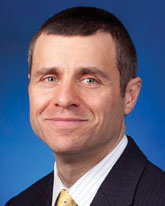 Mark Schnurman, Eastern Consolidated
A broker’s level of success is predicated on a lot of factors such as skills and ability, the firm’s platform and market conditions. However, few factors are more important than motivation. That begs the question: Why are some brokers motivated when others are not?
There are different theories of motivation but a simple one that I would like to focus on is intrinsic versus extrinsic motivation. In its simplest terms, intrinsic motivation engages people in behavior because they find performing the actual activity personally rewarding. In contrast, extrinsic motivation occurs when people are motivated to behave a certain way or engage in an activity to gain a reward or avoid being punished.
In other words, intrinsic motivation is performed for the sake of the activity and extrinsic is performed because of what you get, or do not get, as a consequence of the behavior. A few simple examples will clarify the point.
Intrinsic motivation examples include:
• Playing a sport or a game because you enjoy the activity.
• Cold calling because you enjoy matching wits with the other person.
• Canvassing the streets because you enjoy exploring and learning about neighborhoods.
Intrinsic motivation is driven by an internal desire to engage in a behavior for its own sake.
Extrinsic motivation examples include:
• Reading a book on real estate so you can pass the salesperson’s test.
• Showing up for work on time so you avoid getting punished.
• Making a lot of cold calls because you want to make a lot of money.
Extrinsic motivation is driven by a desire to gain a reward or avoid an adverse outcome.
Which form of motivation is better for high achieving brokers? There is no easy answer, but in a perfect world, brokers would love the individual activities and tasks they needed to engage in and were also motivated by rewards.
The hard part for a lot of brokers is that they do not gain intrinsic motivation from cold calling, researching and analyzing. Instead, most brokers are motivated by the rewards that they gain from being brokers. In other words, most brokers are extrinsically motivated. Things like money, press and the trappings of success motivate brokers.
One of the things that Eastern Consolidated has had success with is creating a culture of achievement that increases intrinsic motivation. It does this by making some of the more rote tasks enjoyable because brokers do them alongside peers. The team atmosphere and collaboration go a long way in increasing intrinsic motivation, while the clear set of expectations increase extrinsic motivation. In the end, though, the brokers who succeed at the highest levels are motivated by both.
Mark Schnurman is chief sales officer, principal at Eastern Consolidated, New York, N.Y.
Tags:
Brokerage
MORE FROM Brokerage
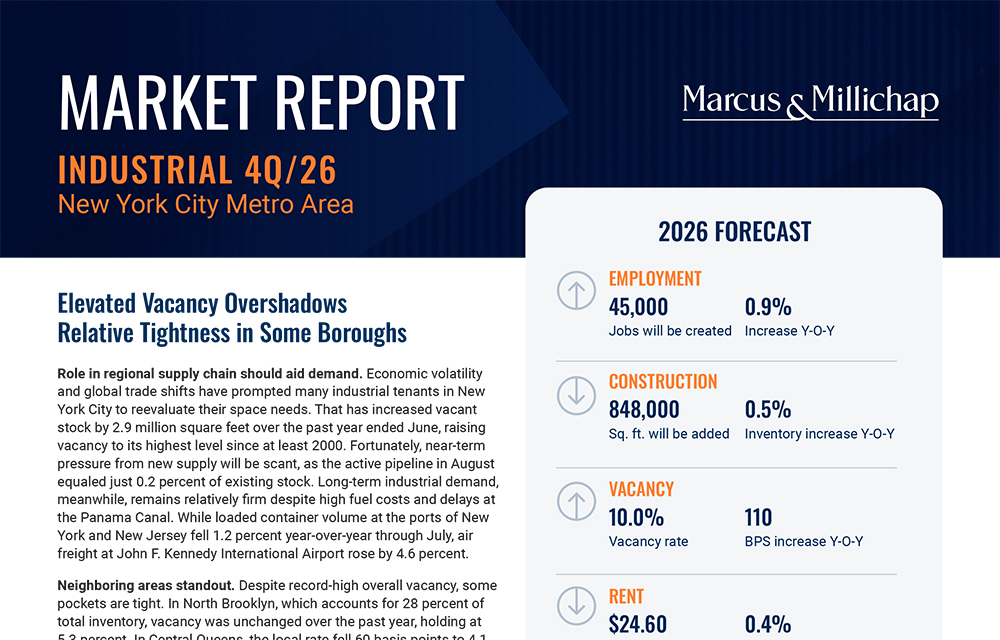
Marcus & Millichap releases fourth-quarter 2026 NYC industrial market report
Manhattan, NY Marcus & Millichap has published its fourth-quarter 2026 New York City Industrial Market Report. “New York City’s industrial market is showing a clear



Quick Hits

Columns and Thought Leadership

Hunt CRE question and answer: Choosing a real estate agent - by David Hunt
First, we will only work with one agent exclusively. The primary reason is that we want that agent to legally represent our client’s interests. In New York State, a real estate agent has a fiduciary

The art of investing in real estate - by Thomas Donovan
Real estate investing is as much an art as it is a skill. No one can time the market, or the factors that drive it, perfectly. Location, zoning, size, transportation, and neighborhood density give you a baseline for

Hunt commercial real estate question and answer: Fortune 500 wisdom - by David Hunt
Yes, there are lessons to be learned from the largest companies in America when comes to managing your real estate. But the decision to buy or lease real estate may not be one of

New York’s streets are full again, and the retail numbers prove it - by Noam Aziz
Walk down any New York block this year and you can feel it. The sidewalks are crowded, the storefronts are lit, and the energy that defines this city is back at full volume.
.gif)