



News:
Brokerage
Posted: December 6, 2016
Borah, Goldstein, Altschuler, Nahins & Goidel, P.C hires eight attorneys
Manhattan, NY Borah, Goldstein, Altschuler, Nahins & Goidel, P.C has hired eight attorneys: Virginia Trunkes, Patricia Feldman, Elizabeth Lentini, Bruce Goldstein, Kacey Sou, Daniel Sodroski, Jeri Essagof and Ka Ni Li.
Trunkes has joined the firm as a partner focusing on appellate court litigation, supreme court litigation and construction law. She brings commercial, real estate and construction litigation experience in advocating on behalf of real property owners, tenants in common, landlords, tenants, developers, condominium and cooperative boards and individual unit owners. She was previously with the firm of Ganfer & Shore LLP.
Feldman has joined as counsel in the firm’s commercial division where she handles non-payment and holdover proceedings. She previously served as in-house counsel to Newcastle Realty Services LLC, a real estate management and development company with a portfolio of over 2,500 units, and prior thereto was in private practice where she gained extensive experience in real estate litigation, with a focus on commercial and residential landlord-tenant litigation in NYC, leasing and real estate transactions.
Lentini is an associate in the firm’s administrative division, concentrating primarily in the areas of rent regulatory compliance and related landlord-tenant litigation. Prior to joining the firm, she was general counsel to Public Housing Authorities in New Jersey.
Goldstein has joined the firm as a senior associate in the firm’s landlord/tenant division representing residential and commercial clients. Previously in private practice, he has over 25 years and his background includes in depth experience with residential and commercial real estate contracts and closings.
Sou is now practicing as an associate in our supreme court litigation division, focusing on commercial and residential landlord litigation. She significantly contributed to the team since 2013 as a summer intern and then as a law graduate.
Sodroski is now practicing as an associate in the firm’s supreme court litigation division where he focuses on residential and commercial landlord-tenant litigation. He had been a summer associate with the firm in 2013 and 2014.
Essagof has joined the firm as an associate in its administrative division, maintaining administrative cases before the DHCR.
Li has joined as an associate in the firm’s supreme court division.
Tags:
Brokerage
MORE FROM Brokerage
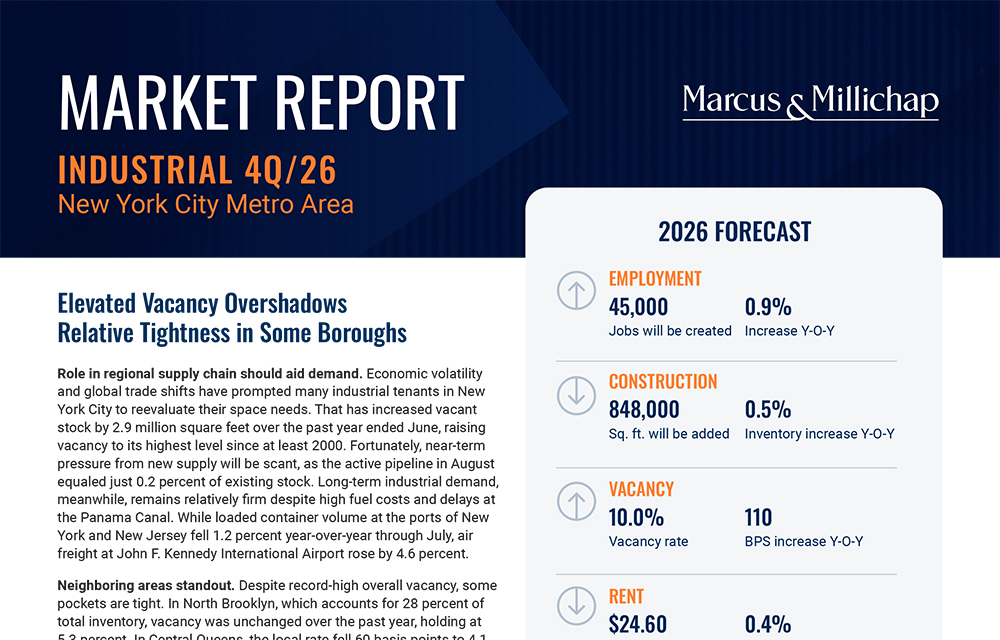
Marcus & Millichap releases fourth-quarter 2026 NYC industrial market report
Manhattan, NY Marcus & Millichap has published its fourth-quarter 2026 New York City Industrial Market Report. “New York City’s industrial market is showing a clear
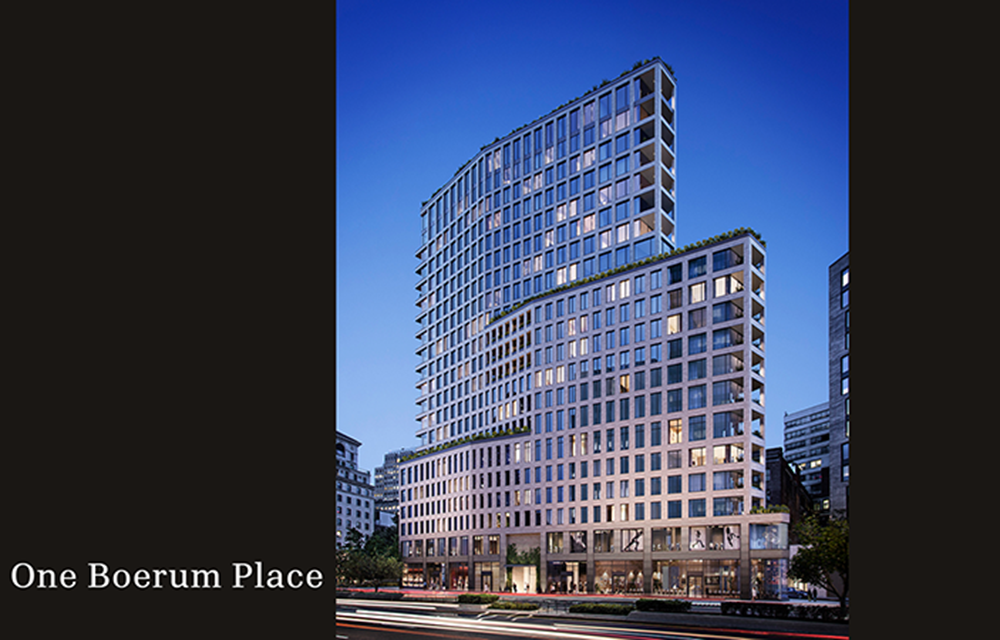




 (2).gif)

Columns and Thought Leadership

New York’s streets are full again, and the retail numbers prove it - by Noam Aziz
Walk down any New York block this year and you can feel it. The sidewalks are crowded, the storefronts are lit, and the energy that defines this city is back at full volume.

Hunt CRE question and answer: Choosing a real estate agent - by David Hunt
First, we will only work with one agent exclusively. The primary reason is that we want that agent to legally represent our client’s interests. In New York State, a real estate agent has a fiduciary
The art of investing in real estate - by Thomas Donovan
Real estate investing is as much an art as it is a skill. No one can time the market, or the factors that drive it, perfectly. Location, zoning, size, transportation, and neighborhood density give you a baseline for

Hunt commercial real estate question and answer: Fortune 500 wisdom - by David Hunt
Yes, there are lessons to be learned from the largest companies in America when comes to managing your real estate. But the decision to buy or lease real estate may not be one of
.gif)