


 (2).gif)
News:
Spotlight Content
Posted: December 23, 2013
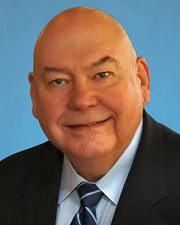
Arthur Mirante, Avison Young
What was your greatest professional accomplishment in 2013?
Assisting in the growth and continued development of Avison Young in the TriState area consisting of 130 professionals today; including the opening of our offices in New Jersey and Long Island , the development of our Valuation, Project Management, Research and nvestment Banking and Debt and Equity capabilities.
What was your most notable project, deal or transaction in 2013?
The marketing as exclusive agent of the elegant FX Fowle designed 1.8 million sq ft world class tower known as 3 Hudson Boulevard on behalf of The Moinian Group; The closing of a 99 year triple net lease of the 800,000 sq ft prominent building at 75 Rockefeller Plaza to RXR Realty.
What are your predictions for commercial real estate in 2014?
The commercial market will continue to be very healthy manifested by improving fundamentals, stable or rising rents, steady increases in office using employment, strong demand for product, continued investment in infrastructure and historically low cap rates.
What are your resolutions for 2014?
To do my very best to exceed the expectations of each and every one of Avison Young's clients, deliver the results we promised and demonstrate to them that we are a "different kind" of real estate services company.
Tags:
Spotlight Content
MORE FROM Spotlight Content

The commercial classroom: 1031 tax-deferred exchanges - by Edwad Smith Jr.
The sale of real estate may trigger capital gains taxes on the net profits of that sale. These taxes may be deferred by participating in a 1031 tax exchange, in essence, by purchasing property(s) to replace the



.png)

Quick Hits


Columns and Thought Leadership

2026 Developing Long Island: ERG Commercial Real Estate launches its new Retail Leasing division
North Hempstead, NY ERG Retail Leasing is the dedicated leasing division of ERG Commercial Real Estate, an established full-service commercial real estate brokerage for over 35 years.

2026 Developing Queens: Long Island Board of Realtors advances commercial growth and advocacy in Queens
The Long Island Board of Realtors (LIBOR) Commercial Network continues to play a key role in advancing opportunities and strengthening the commercial real estate landscape across Queens. Through targeted programming and global outreach

From vacancy to vitality: How adaptive reuse is reshaping Long Island’s CRE landscape - by Andrea Tsoukalas Curto
Adaptive reuse has become one of the most important conversations in commercial real estate today. Long Island has a large inventory of aging retail, office and industrial

CRE Guide Featured Company: Merritt Environmental Consulting Corp.
Merritt Environmental Consulting Corp. (MECC) was established in June of 2009 after being part of a larger engineering firm for almost 20 years. The focus of the company is to assist lending institutions, attorneys, real estate investors, and property owners with environmental concerns. Today, MECC has offices in New York, Florida, and Vermont and has grown into a regional consulting firm serving clients along the East Coast.