



News:
Brokerage
Posted: May 12, 2026
Adaptive Security relocates to 51,220 s/f office at 120 Broadway
Manhattan, NY Savills represented Adaptive Security, an AI-powered cybersecurity company, in securing a 51,220 s/f long-term sublease at 120 Bdwy. The relocation positions Adaptive Security to support its accelerated growth and expanding team. Savills vice chairman Zev Holzman, corporate managing director Christopher Foerch, associate director Will Demuth and associate Riley Scanlon represented Adaptive Security in the transaction.
“The Manhattan office market remains highly competitive, particularly for AI and technology tenants seeking move-in-ready space that supports their continuing innovations,” said Holzman. “As demand has tightened across core Midtown and surrounding submarkets, securing a large, modern office such as 120 Broadway required creativity and market insight. We identified a solution that meets Adaptive Security’s current needs while providing room to grow and scale.”
Ross Zimbalest, senior vice president at CBRE, represented the sublandlord, BarkBox.
Adaptive Security is on a growth trajectory, most recently occupying an 18,200 s/f office before this relocation as demand for its AI-driven approach to preventing social engineering and impersonation attacks continues to rise. In its most recent Series B funding round, the company raised $81 million, with participation from several of the AI industry’s most prominent leaders. This underscores confidence in the firm’s human-centered cybersecurity solutions amid AI-enabled threats.
“As we continue to expand our team and capabilities, finding space that aligns with our long-term strategy was critical,” said Andrew Jones, Adaptive’s co-founder. “This relocation gives us the flexibility to support increased recruitment and operations while remaining deeply connected to the city’s technology ecosystem. We’ve trusted Savills to help us navigate each step of our real estate journey, with this new space reflecting their commitment to meeting our evolving needs.”
120 Broadway offers an elevated workplace environment with high-end, turnkey office space that supports flexible planning and collaboration without requiring additional capital improvements. Its premium FiDi location also places Adaptive Security in a vibrant business district with easy access to transit, amenities, and companies across the media, finance, and technology sectors.
MORE FROM Brokerage
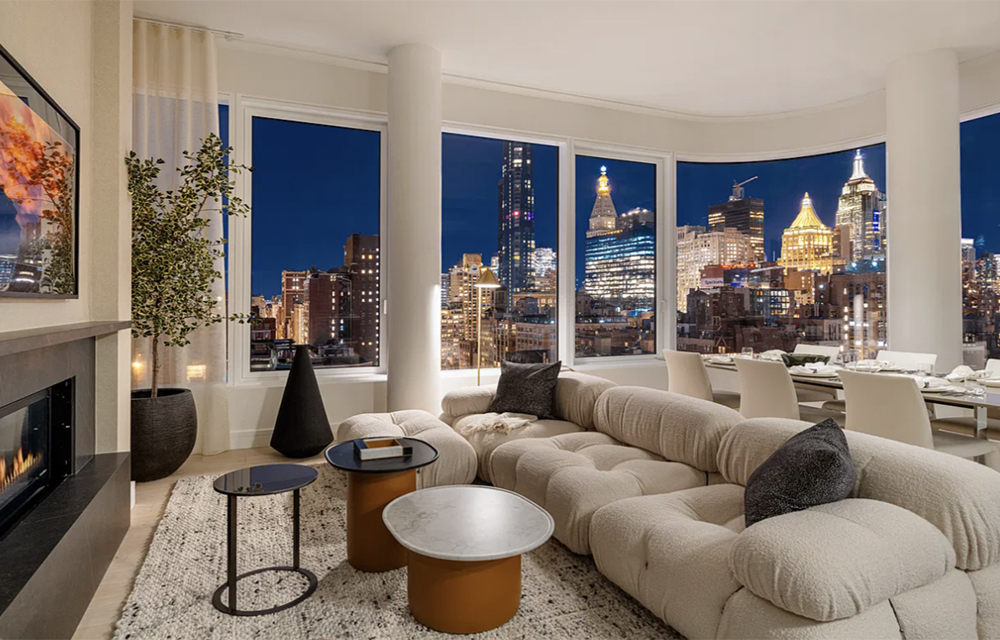
200E20TH sells out in Gramercy, penthouse A closes out sales at the CetraRuddy-designed condominium residences
Manhattan, NY 200E20TH, the CetraRuddy-designed architectural masterwork that brought a curved, contemporary sensibility to Gramercy’s Beaux-Arts streetscape, has



Quick Hits

Columns and Thought Leadership

The art of investing in real estate - by Thomas Donovan
Real estate investing is as much an art as it is a skill. No one can time the market, or the factors that drive it, perfectly. Location, zoning, size, transportation, and neighborhood density give you a baseline for

New York’s streets are full again, and the retail numbers prove it - by Noam Aziz
Walk down any New York block this year and you can feel it. The sidewalks are crowded, the storefronts are lit, and the energy that defines this city is back at full volume.

Hunt commercial real estate question and answer: Fortune 500 wisdom - by David Hunt
Yes, there are lessons to be learned from the largest companies in America when comes to managing your real estate. But the decision to buy or lease real estate may not be one of

Hunt CRE question and answer: Choosing a real estate agent - by David Hunt
First, we will only work with one agent exclusively. The primary reason is that we want that agent to legally represent our client’s interests. In New York State, a real estate agent has a fiduciary
.gif)