



News:
Construction Design & Engineering
Posted: March 11, 2013
Active shooter preparedness/response: Addressing security, safety and prevention master plans
It is saddening to read the newspaper or watch the evening news and learn about another horrible tragedy as a result of an active shooter incident somewhere in our country.
It is apparent that an active shooter situation can occur at any time or any place. Active shooter incidents occur in our schools, our shopping centers, our hospitals, our theaters and in our workplaces. The statistics are shocking.
The best response to an active shooter situation is the fastest response you could gather. It should be an automatic, reflexive action without thinking. It should be impulsive.
The only way to react impulsively is to train your memory to take immediate action when confronted with a dangerous or life threatening situation.
It's like when we instinctively jump out of the way of a harmful object that we didn't anticipate coming our way: flying debris, falling rocks, thrown objects. How did we learn to do that, to react instantaneously?
Regrettably, today there are too many dangerous situations that we didn't grow up with, with one exception: fire drills in school.
No one has to tell a child what to do when they hear the fire bells. The children line up, remain quiet and swiftly follow their teacher along a prescribed evacuation route to safety. And as adults in the workplace, we too have periodic fire drills in business.
Without those regular drills, there would be chaos, confusion and disorientation with horrific results. Fortunately, because of the periodic drills, everyone is prepared to respond according to plan. It was ingrained in our heads growing up.
In our workplaces, the buildings that we own and operate, preparedness for any emergency contingency is paramount. Most corporations, industrial sites and institutions make some semblance of preparations for emergencies, i.e., natural or man-made disasters. They may have professionally written emergency preparedness manuals, e.g., Emergency Action Plans that are neatly stored in bookcases or on office shelves. The manuals should have a section on the awareness and response to the random possibility of an active shooter situation. How often are they pulled off the shelves and read or, even more importantly, drilled on the contents?
Because the subject of the active shooter is taking a priority in the security of America, we must re-address our security, safety and prevention master plans.
An active shooter may be a disgruntled employee or may be an outsider attempting to take revenge on a person or group inside of a facility.
The first thing we can do is assess the "hardness" of our sites. Are our outer perimeters as secure as they can be? Is access to our facilities easily attainable? Can we deploy our existing video surveillance system's cameras more efficiently? The hovering threat of an active shooter mandates that we make changes, improvements or additions to our current systems.
We can then address the early warning signs of potential workplace violence. Our Human Resources Departments play a vital role in helping all employees to identify "patterned disgruntled behavior" which manifests itself in many forms: consistent arguing, belligerence towards coworkers, spreading vicious rumors, disobeying company policies, engaging in vandalism or sabotage.
Once we understand and accept that an active shooter situation can occur, we can now reinforce, through training and repeated drilling, the reflexive action that all employees and managers must take to save lives.
Anyone committed to performing mayhem can find a way to get to any floor in any commercial building.
Upon hearing an emergency coded "Lockdown" signal over the PA system, or hearing actual "shots fired," the reflexive drills teach us to secure all doors, i.e., "Lockdown," to cover all interior and exterior windows with blinds or drapes, to get out-of-sight by hiding in closets, under desks, behind cabinets, to remain silent, silence cell phones and not to move until the authorities instruct you to.
If the shooter doesn't see or hear movement he will move on.
By practicing these active shooter responses or "Lockdown" drills, on a periodic basis, they will become ingrained as a reflexive response. When the emergency occurs, we don't have time to think about what to do, we must do it instinctively.
Remember, there is nothing more important than reacting quickly, and then we must run, hide or fight.
When all else fails, use whatever you can get your hands on to ward off the shooter: use a fire extinguisher to spray the gunman; aim for the eyes; long reaching hornet spray or pepper spray can blind an assailant from 20 feet away. And you can always throw heavy objects at the attacker: tables or chairs.
Please, think about this horrific epidemic in our society and have regular "active shooter" drills. In today's times, we are constantly requested to assist in formalized "active shooter" training and drills.
Allan Schwartz, CPP, CHS-III is president and CEO of Safeguards International, Inc., Yonkers, N.Y.
MORE FROM Construction Design & Engineering
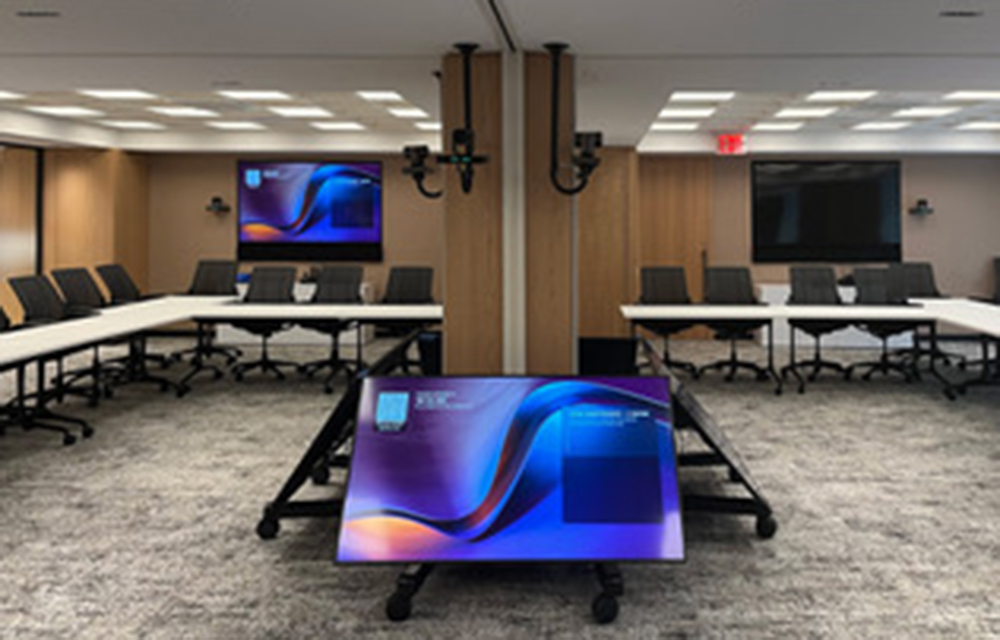
Kajima Building & Design Group completes workplace renovation for Marubeni America Corp. at 90 Park Ave.
Manhattan, NY Kajima Building & Design Group (KBDG) has completed a 1,500 s/f workplace renovation for Marubeni America Corp. at 90 Park Ave. in Midtown, renovating interior workspace designed to support both


Quick Hits


Columns and Thought Leadership

Premium experiences, proven returns: The New revenue playbook for sports venues - by Terry McIntyre
Investing in the Fan Experience as a Revenue Strategy The sports and entertainment venues that bet on premium experiences years ago are now seeing those investments pay off in packed seats, increased revenue, and industry recognition.

We support green construction. Just not this kind - by Tammy Smith
Most people think of St. Patrick’s Day as a fun footnote on the calendar. In construction logistics, however, it’s a full-scale operational variable — especially if your work touches major metro areas with major parades and, let’s call it what it is, enthusiastic celebrants.
