



News:
Brokerage
Posted: January 11, 2022
79.7-megawatt solar project Roaring Brook Wind Farm now operational
Martinsburg, NY According to governor Kathy Hochul, the 79.7-megawatt Roaring Brook Wind farm is now operational in the North Country, representing one of the latest large-scale wind facilities to enter commercial operation in the state and pushing the state’s installed land-based wind power to nearly 2,200 megawatts—enough to serve more than half a million homes. The Roaring Brook Wind farm is helping to spur $167 million in private investment and created more than 200 construction jobs to help grow New York’s green economy. When combined with the dozens of large-scale renewable energy projects under development and the state’s robust pipeline of distributed solar projects, this project accelerates progress towards New York’s goal to generate 70% of state’s electricity from renewable sources by 2030 on its path to a zero-emission grid.
“Renewable energy has a critical role to play in both rebuilding New York’s economy and combatting the very real threat of climate change,” Hochul said. “Large-scale wind energy projects like Roaring Brook Wind not only move us one step closer to a zero-emission future, but bring vital investments, good-paying jobs and community benefits to the state at a time when New Yorkers are still recovering from the financial challenges caused by the pandemic.”
Roaring Brook Wind was developed by Avangrid Renewables and is comprised of 20 wind turbines spread across 4,700 acres. After starting operations in October 2021, the project will generate more than 229,000 megawatt-hours of renewable energy annually, enough to power over 31,000 homes, reducing emissions by 114,000 metric tons annually - the equivalent of taking nearly 25,000 cars off the road.
NYSERDA president and CEO Doreen Harris said, “Roaring Brook Wind is another example of New York’s commitment to growing our clean energy economy and highlights a North Country wind project that is powering thousands of upstate residents and businesses with clean, renewable energy. Under governor Hochul’s leadership, the state remains steadfast in its commitment to work with local governments and community stakeholders throughout the development of all our large-scale renewable energy projects to ensure they proceed in a way that supports community goals, brings economic benefits, and avoids significant impacts to wildlife and the environment.”
Jose Antonio Miranda, Onshore president and CEO, Avangrid Renewables said, “AVANGRID and Avangrid Renewables are proud to partner with the state of New York in its efforts to source 70% of its electricity from renewable sources by 2030. Every wind turbine and solar panel we bring online to harness the power of our natural resources gets this state and our nation closer to a clean, sustainable energy future.”
New York’s advancement of renewable energy has resulted in significant private investment and new jobs and economic development for local communities in more than 30 counties across the state. Through a payment in lieu of taxes (PILOT) agreement with the Lewis County Industrial Development Agency for this project, Avangrid Renewables will make annual payments of more than $600,000, escalating over 30 years to more than $1 million, to be shared among the Town of Martinsburg (30%), the Lowville Academy and Central School District (37%), and Lewis County (33%). The project will also deliver an estimated $22 million in total landowner payments to 35 landowners over the next 30 years. Roaring Brook Wind complements efforts by the North Country Regional Economic Development Council to encourage and support economic growth in the region’s small cities and rural communities.
NYSERDA strongly encourages and supports the responsible siting of renewable energy projects to avoid, minimize, and mitigate impacts to wildlife and wildlife habitats. During the summer of 2020, in consultation with the New York State Department of Environmental Conservation (DEC), Avangrid installed a specialized metal cave gate across a large entrance to the Barton Hill Mine in Essex County to mitigate potential impacts to bat habitats from the wind project. This cave gate, which prevents human interference and provides adequate space for bat access to the abandoned mine shaft, will protect several species of bats including the federally endangered Indiana Bat, the federally and New York State threatened Northern long-eared Bat, as well as Little Brown, Big Brown and Eastern Pipistrelle bats in support of DEC’s mission to protect threatened and endangered bat species throughout New York.
In July 2019, Avangrid Renewables, the U.S. Department of Defense, and Fort Drum established an agreement that will limit any adverse impacts from the project on weather radar systems during critical weather events, thus supporting Fort Drum’s national security mission.
Roaring Brook Wind was one of 19 projects awarded as part of NYSERDA’s 2018 Renewable Energy Standard Solicitation and adds to New York’s robust pipeline of large-scale renewable energy projects moving towards operation, comprised of over 100 solar, land-based wind and offshore wind projects under development that will deliver over 12,000 megawatts of clean power to the grid when completed - enough to power nearly five million New York homes. The State’s commitment to building out new green energy transmission, led by 250 miles of new major upgrades already underway throughout the state, with recently announced Clean Path New York and Champlain Hudson Power Express green energy infrastructure projects, will allow the current pipeline of renewables to power over 60 percent of New York’s electricity from renewable sources once operational.
Tags:
Brokerage
MORE FROM Brokerage
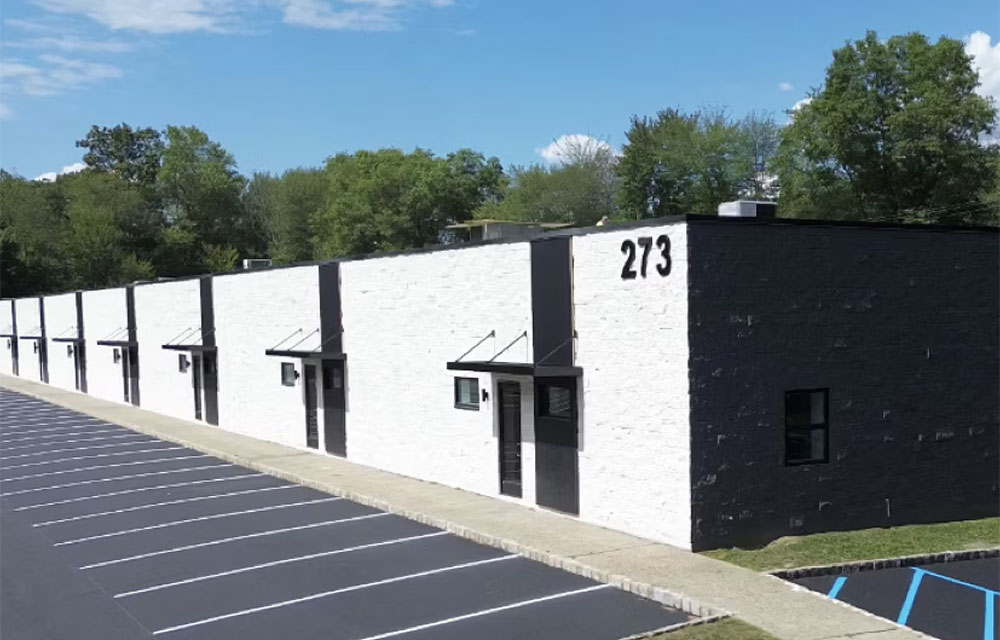
Resource Realty of Northern NJ delivers complete lease-up of 235 Franklin Rd. for Commerce Park Investors
Randolph, NJ Resource Realty of Northern New Jersey (RRNNJ) has completed the lease-up of a 10-unit small-bay industrial property at 273 Franklin Rd., marking the culmination of an investment strategy that began



 (2).gif)

Columns and Thought Leadership

New York’s streets are full again, and the retail numbers prove it - by Noam Aziz
Walk down any New York block this year and you can feel it. The sidewalks are crowded, the storefronts are lit, and the energy that defines this city is back at full volume.

Hunt commercial real estate question and answer: Fortune 500 wisdom - by David Hunt
Yes, there are lessons to be learned from the largest companies in America when comes to managing your real estate. But the decision to buy or lease real estate may not be one of

A guide to finding the right NYC property management company - by Sanjay Gandhi
Being a small to midsize landlord in NYC is an increasingly demanding endeavor. From navigating complex regulations, increased compliance demands to dealing with tenant issues and remediating violations. It is wise to enlist the assistance of a partner, a professional

Positive forecast for New York’s pro-housing push? - by Philip Butler
New York’s housing crisis remains a hot button topic despite growing consensus that varied and affordable housing is desperately needed statewide. Governor Hochul has recently introduced several initiatives to overcome N.Y.’s anti-housing
.gif)