



News:
Spotlight Content
Posted: February 25, 2025
2025 Women in Construction:
Wilson Kimball, Municipal Housing Authority of Yonkers
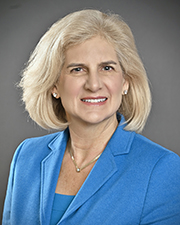
Chief Executive Officer
Municipal Housing Authority of Yonkers
What is one project or achievement in your career that you are most proud of, and how did it impact your organization or community?
Building sustainable, modern affordable housing for the future is my passion. The Municipal Housing Authority for the City of Yonkers has built and rehabbed thousands of units of housing for families and seniors. Most notable is the 2024 opening of La Mora Senior Housing complex in Southwest Yonkers. The $49.5 million project includes 60 affordable housing units for seniors and is the first modular, Passive House design project in New York. Another major achievement is the Ridgeway, now in its sixth phase, it transformed an aging 1950s public housing complex into 500 modern units.
What trends or innovations do you believe will shape the future of your field, and how are you positioning yourself (or your firm) to be at the forefront?
Sustainable housing is the future. With climate change it was very important to MHACY to develop housing that stands up to flooding and weather emergencies, particularly in our senior housing. All of our new construction incorporates energy-saving infrastructure, solar, or meets Passive House standards.
Who or what has inspired you most in your career, and what advice would you share with the next generation of women entering the A/E/C industry?
Hero - Emily Warren Roebling, an engineer who took over the construction of the Brooklyn Bridge when her husband fell ill. What would I tell the next generation? If Emily Roebling could do it in the 1880s, you can do it now. Limitations exist only in your mind.
What’s your favorite way to recharge or get inspired outside of work?
I recharge by listening to music. I love all kinds.
Do you have a hidden talent or a surprising fact about yourself that most people wouldn’t know?
I finished my first coming of age novel and am looking for an agent.
Tags:
Spotlight Content
MORE FROM Spotlight Content

The commercial classroom: 1031 tax-deferred exchanges - by Edwad Smith Jr.
The sale of real estate may trigger capital gains taxes on the net profits of that sale. These taxes may be deferred by participating in a 1031 tax exchange, in essence, by purchasing property(s) to replace the




.png)

 (2).gif)

Columns and Thought Leadership

2026 Developing Queens: Long Island Board of Realtors advances commercial growth and advocacy in Queens
The Long Island Board of Realtors (LIBOR) Commercial Network continues to play a key role in advancing opportunities and strengthening the commercial real estate landscape across Queens. Through targeted programming and global outreach

2026 Developing Long Island: ERG Commercial Real Estate launches its new Retail Leasing division
North Hempstead, NY ERG Retail Leasing is the dedicated leasing division of ERG Commercial Real Estate, an established full-service commercial real estate brokerage for over 35 years.

From vacancy to vitality: How adaptive reuse is reshaping Long Island’s CRE landscape - by Andrea Tsoukalas Curto
Adaptive reuse has become one of the most important conversations in commercial real estate today. Long Island has a large inventory of aging retail, office and industrial

CRE Guide Featured Company: Merritt Environmental Consulting Corp.
Merritt Environmental Consulting Corp. (MECC) was established in June of 2009 after being part of a larger engineering firm for almost 20 years. The focus of the company is to assist lending institutions, attorneys, real estate investors, and property owners with environmental concerns. Today, MECC has offices in New York, Florida, and Vermont and has grown into a regional consulting firm serving clients along the East Coast.