



News:
Spotlight Content
Posted: November 26, 2024
2024 Ones to Watch - Innovators in CRE: Brian Kennedy, Forchelli Deegan Terrana LLP
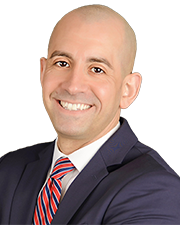
Partner
Forchelli Deegan Terrana LLP
Brian Kennedy is a partner in the firm’s Land Use & Zoning practice group for the last six years. In his practice, Kennedy guides clients through the complex municipal approvals required for all development projects. Kennedy’s experience ranges from single family residential redevelopments through large-scale mixed-use and industrial developments. His practice centers on projects in Suffolk County – and fortunate to work on projects throughout Long Island.
Innovative Solution: Municipal approvals are a critical part of any development project. To ensure a project remains financially viable, clients must expedite the entire approval process. This begins with assembling a top-notch team of attorneys and project consultants who are intelligent, experienced and most importantly, responsive. The local, state, and federal approvals required to entitle commercial projects on Long Island have become increasingly more complex. I’ve been fortunate to work alongside the finest real estate development attorneys, engineers, and architects during my career. Each team member must remain up date with current regulations and be responsive to both clients and municipalities to avoid unnecessary and costly delays.
Innovative Outlook: The most glaring opportunity for innovation on Long Island is the expansion of sewer systems throughout Suffolk County. While this may not be a new initiative, sewers are critical to smart growth and the protection of the Long Island aquifer. The expansion of sewer systems has been a topic of discussion for decades, but there is now bipartisan support for sewer expansion throughout Suffolk County. Installation and expansion of sewers will allow Suffolk to protect its greatest natural resource, while meeting the needs of a diverse community.
“Brian W. Kennedy led the redevelopment of the former New York Institute of Technology Campus in Central Islip. The vacant college campus is undergoing a transformation into a state-of-the-art mixed-use development. This project will provide nearly 700 apartments, 81 condominiums and nearly 120,000 s/f of retail and office space. This project has maintained the historic character of the existing buildings, while bringing the community a modern, walkable development.” - John Terrana, Forchelli Deegan Terrana LLP.
Tags:
Spotlight Content
MORE FROM Spotlight Content

Participate in Developing New York Featuring Westchester County - November 24, 2026
Choose how you’d like to participate in this edition of NYREJ’s Developing New York series featuring Westchester County.



.png)

Quick Hits


Columns and Thought Leadership

CRE Guide Featured Company: Merritt Environmental Consulting Corp.
Merritt Environmental Consulting Corp. (MECC) was established in June of 2009 after being part of a larger engineering firm for almost 20 years. The focus of the company is to assist lending institutions, attorneys, real estate investors, and property owners with environmental concerns. Today, MECC has offices in New York, Florida, and Vermont and has grown into a regional consulting firm serving clients along the East Coast.

2026 Developing Long Island: ERG Commercial Real Estate launches its new Retail Leasing division
North Hempstead, NY ERG Retail Leasing is the dedicated leasing division of ERG Commercial Real Estate, an established full-service commercial real estate brokerage for over 35 years.

From vacancy to vitality: How adaptive reuse is reshaping Long Island’s CRE landscape - by Andrea Tsoukalas Curto
Adaptive reuse has become one of the most important conversations in commercial real estate today. Long Island has a large inventory of aging retail, office and industrial

2026 Developing Queens: Long Island Board of Realtors advances commercial growth and advocacy in Queens
The Long Island Board of Realtors (LIBOR) Commercial Network continues to play a key role in advancing opportunities and strengthening the commercial real estate landscape across Queens. Through targeted programming and global outreach