


 (2).gif)
News:
Spotlight Content
Posted: February 18, 2020
2020 Ones to Watch: Bill Strassman, TerraCRG
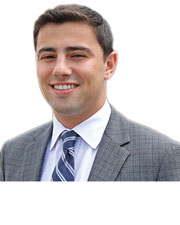
Name: Bill Strassman
Company: TerraCRG
Title: Associate, Retail Leasing
Education: Trinity College; B.A. in Economics with a minor in Environmental Science
Which project, deal, or transaction was the “game-changer” in the advancement of your career?
I had an interesting start to my career as I became licensed while I was away at college and began interning for TerraCRG on my breaks. Before my last semester, we decided I could do a lot of my work remotely, so I took the lead on two transactions and followed both deals to closing which was certainly a pivotal time in the advancement of my career. My team and I were able to identify spaces for Johnny’s Chop Shop in Williamsburg and Hana Makgoelli’s brewery in Greenpoint. Completing those deals was an immensely valuable learning process that set me up for success now that I am full-time and taking on more complex deals.
What do you like most about your job?
One of my favorite things about my job is working with best-in-class tenants who are extremely passionate about their specific industry. Whether we are working with a certified Cicerone (beer sommelier) to open up a craft beer tap room, a gin distiller looking for a production and venue space, or a well-known bakery looking to open a boutique café, we are often involved in cutting edge concepts with some of the most talented or knowledgeable people within that unique industry. These types of operators make the leasing process exciting for us.
What led you to your current profession?
Growing up in Westchester, I would always come into Manhattan where I eventually moved after high school. I fell in love with living here because one of the things that makes New York so great is the unique real estate industry and I knew I wanted to be a part of it. I focused on breaking into commercial brokerage because of how fast-paced it is and the fact that no two days are ever the same. Interacting with different people, working off-site, and getting to really explore spaces and places made this career path very attractive.
Tags:
Spotlight Content
MORE FROM Spotlight Content

NYREJ's 2026 Developing Long Island Spotlight is here!
This spotlight showcases projects completed and currently under construction across Long Island as well as highlights improvements made to the region through Industrial and Economic Development Agencies and BIDs.


.png)

Quick Hits


Columns and Thought Leadership

From vacancy to vitality: How adaptive reuse is reshaping Long Island’s CRE landscape - by Andrea Tsoukalas Curto
Adaptive reuse has become one of the most important conversations in commercial real estate today. Long Island has a large inventory of aging retail, office and industrial

CRE Guide Featured Company: Merritt Environmental Consulting Corp.
Merritt Environmental Consulting Corp. (MECC) was established in June of 2009 after being part of a larger engineering firm for almost 20 years. The focus of the company is to assist lending institutions, attorneys, real estate investors, and property owners with environmental concerns. Today, MECC has offices in New York, Florida, and Vermont and has grown into a regional consulting firm serving clients along the East Coast.

2026 Developing Queens: Long Island Board of Realtors advances commercial growth and advocacy in Queens
The Long Island Board of Realtors (LIBOR) Commercial Network continues to play a key role in advancing opportunities and strengthening the commercial real estate landscape across Queens. Through targeted programming and global outreach

Properly serving a lien law Section 59 Demand - by Bret McCabe
Many attorneys operating within the construction space are familiar with the provisions of New York Lien Law, which allow for the discharge of a Mechanic’s Lien in the event the lienor does not commence an action to enforce following the service of a “Section 59 Demand”.