


 (2).gif)
News:
Spotlight Content
Posted: April 16, 2019
2019 Ones to Watch: Benjamin Williams, Rosenberg & Estis, P.C.
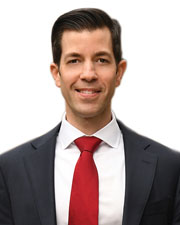 Name: Benjamin Williams
Title: Member – Property Tax
Company: Rosenberg & Estis, P.C.
Year that you entered your current field? 2001
List up to three CRE organizations that you are currently a member of: Condemnation & Tax Certiorari Committee of the New York City Bar, American Society of Appraisers (Accredited Senior Appraiser)
What do you consider to be your greatest professional accomplishment in the past 12 months?
My greatest professional accomplishment in the past year is joining one of the largest (and best) NYC real estate law firms as a member, and starting their Property Tax Department. In just four months, we’ve grown this real estate tax certiorari practice from zero cases to now representing hundreds of properties throughout NYC. I’m fortunate that the firm is so supportive and has the same goal of providing the best client service. I’m excited for the future of the firm and this practice. Watch out for us – we have several cutting-edge property tax solutions in development.
Who or what do you attribute to your success?
I’m successful because I love what I do. I invent creative ways to provide greater property tax reductions more efficiently. I enjoy teaching clients how the City’s tax system works so they can better plan for the future. Lately we’ve been using “big data” to help clients make evidence-based business decisions regarding their sophisticated property tax problems. For example, we’ve been optimizing the timing of 421-a exemption and ICAP tax abatement benefit programs, advising on RPIE and Tax Commission income & expense reporting, and negotiating advantageous real estate tax escalation clauses in leases.
What advice can you offer to someone who is interested in a career in your industry?
To be successful, you must understand the business so you can be your property taxpayer-client’s trusted advisor. Always read the real estate news, especially the NYREJ. Follow legislators on social media to learn the development climate and what changes to expect in the laws. I got started in this career as an engineer-appraiser. I wore a hardhat and toured hundreds of properties around the world. I learned about property economics by walking and talking with the people–building managers, operators, engineers, and superintendents.
Tags:
Spotlight Content
MORE FROM Spotlight Content

The commercial classroom: 1031 tax-deferred exchanges - by Edwad Smith Jr.
The sale of real estate may trigger capital gains taxes on the net profits of that sale. These taxes may be deferred by participating in a 1031 tax exchange, in essence, by purchasing property(s) to replace the




.png)

Quick Hits


Columns and Thought Leadership

CRE Guide Featured Company: Merritt Environmental Consulting Corp.
Merritt Environmental Consulting Corp. (MECC) was established in June of 2009 after being part of a larger engineering firm for almost 20 years. The focus of the company is to assist lending institutions, attorneys, real estate investors, and property owners with environmental concerns. Today, MECC has offices in New York, Florida, and Vermont and has grown into a regional consulting firm serving clients along the East Coast.

From vacancy to vitality: How adaptive reuse is reshaping Long Island’s CRE landscape - by Andrea Tsoukalas Curto
Adaptive reuse has become one of the most important conversations in commercial real estate today. Long Island has a large inventory of aging retail, office and industrial

2026 Developing Long Island: ERG Commercial Real Estate launches its new Retail Leasing division
North Hempstead, NY ERG Retail Leasing is the dedicated leasing division of ERG Commercial Real Estate, an established full-service commercial real estate brokerage for over 35 years.

2026 Developing Queens: Long Island Board of Realtors advances commercial growth and advocacy in Queens
The Long Island Board of Realtors (LIBOR) Commercial Network continues to play a key role in advancing opportunities and strengthening the commercial real estate landscape across Queens. Through targeted programming and global outreach